
NAD 代谢:在衰老调控和老化中的作用。
NAD metabolism: Role in senescence regulation and aging.
机构信息
Metabolism and Molecular Nutrition Laboratory, Kogod Center on Aging, Department of Anesthesiology and Perioperative Medicine, Mayo Clinic College of Medicine, Rochester, Minnesota, USA.
Metabolism and Molecular Nutrition Laboratory, Kogod Center on Aging, Department of Anesthesiology and Perioperative Medicine, Mayo Clinic College of Medicine, Jacksonville, Florida, USA.
出版信息
Aging Cell. 2024 Jan;23(1):e13920. doi: 10.1111/acel.13920. Epub 2023 Jul 9.
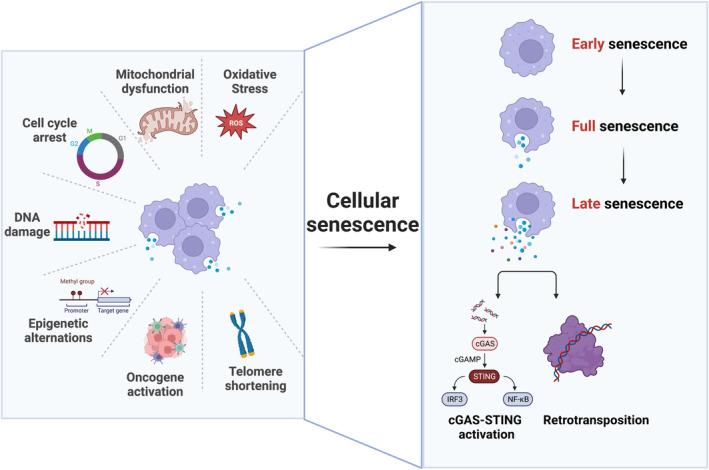
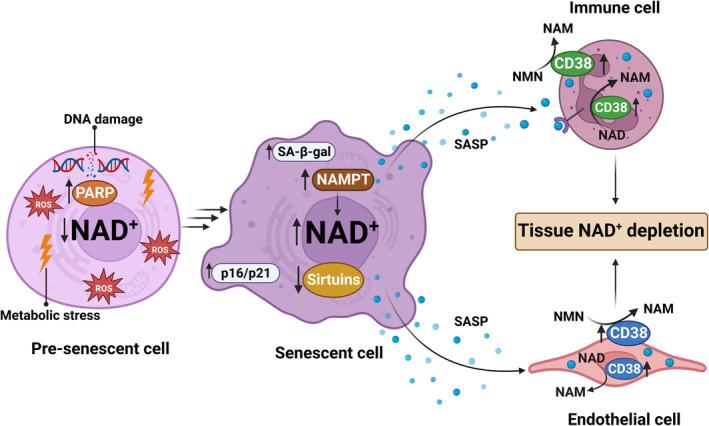
The geroscience hypothesis proposes that addressing the biology of aging could directly prevent the onset or mitigate the severity of multiple chronic diseases. Understanding the interplay between key aspects of the biological hallmarks of aging is essential in delivering the promises of the geroscience hypothesis. Notably, the nucleotide nicotinamide adenine dinucleotide (NAD) interfaces with several biological hallmarks of aging, including cellular senescence, and changes in NAD metabolism have been shown to be involved in the aging process. The relationship between NAD metabolism and cellular senescence appears to be complex. On the one hand, the accumulation of DNA damage and mitochondrial dysfunction induced by low NAD can promote the development of senescence. On the other hand, the low NAD state that occurs during aging may inhibit SASP development as this secretory phenotype and the development of cellular senescence are both highly metabolically demanding. However, to date, the impact of NAD metabolism on the progression of the cellular senescence phenotype has not been fully characterized. Therefore, to explore the implications of NAD metabolism and NAD replacement therapies, it is essential to consider their interactions with other hallmarks of aging, including cellular senescence. We propose that a comprehensive understanding of the interplay between NAD boosting strategies and senolytic agents is necessary to advance the field.
衰老科学假说提出,解决衰老的生物学问题可以直接预防多种慢性疾病的发生或减轻其严重程度。理解衰老的生物学标志的关键方面之间的相互作用对于实现衰老科学假说的承诺至关重要。值得注意的是,核苷酸烟酰胺腺嘌呤二核苷酸(NAD)与衰老的几个生物学标志相互作用,包括细胞衰老,并且 NAD 代谢的变化已被证明与衰老过程有关。NAD 代谢与细胞衰老之间的关系似乎很复杂。一方面,低 NAD 诱导的 DNA 损伤和线粒体功能障碍的积累会促进衰老的发展。另一方面,衰老过程中发生的低 NAD 状态可能会抑制 SASP 的发展,因为这种分泌表型和细胞衰老的发展都需要高度的代谢需求。然而,迄今为止,NAD 代谢对细胞衰老表型进展的影响尚未得到充分表征。因此,为了探索 NAD 代谢和 NAD 替代疗法的意义,必须考虑它们与衰老的其他标志(包括细胞衰老)的相互作用。我们提出,全面了解 NAD 促进策略和衰老细胞选择性清除剂之间的相互作用对于推动该领域的发展是必要的。


 Zotero 插件