
肿瘤微环境中的免疫调节机制及其对靶向治疗的意义。
Mechanisms of immune modulation in the tumor microenvironment and implications for targeted therapy.
作者信息
Czajka-Francuz Paulina, Prendes Maria J, Mankan Arun, Quintana Ángela, Pabla Sarabjot, Ramkissoon Shakti, Jensen Taylor J, Peiró Sandra, Severson Eric A, Achyut Bhagelu R, Vidal Laura, Poelman Martine, Saini Kamal S
机构信息
Fortrea, Inc., Durham, NC, United States.
Labcorp Oncology, Durham, NC, United States.
出版信息
Front Oncol. 2023 Jun 22;13:1200646. doi: 10.3389/fonc.2023.1200646. eCollection 2023.
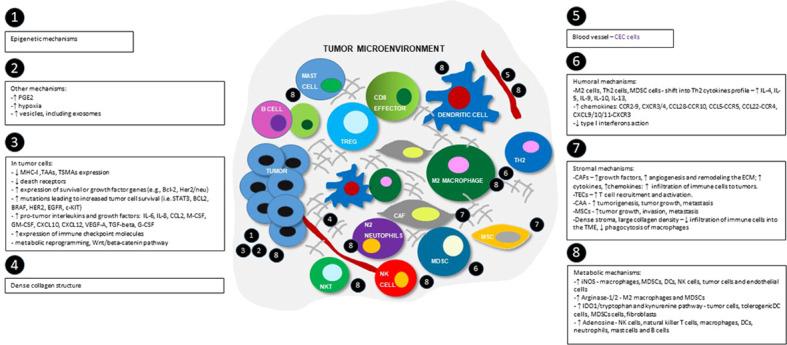
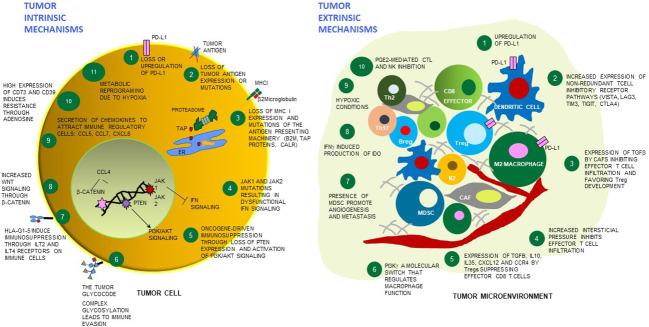
The efficacy of cancer therapies is limited to a great extent by immunosuppressive mechanisms within the tumor microenvironment (TME). Numerous immune escape mechanisms have been identified. These include not only processes associated with tumor, immune or stromal cells, but also humoral, metabolic, genetic and epigenetic factors within the TME. The identification of immune escape mechanisms has enabled the development of small molecules, nanomedicines, immune checkpoint inhibitors, adoptive cell and epigenetic therapies that can reprogram the TME and shift the host immune response towards promoting an antitumor effect. These approaches have translated into series of breakthroughs in cancer therapies, some of which have already been implemented in clinical practice. In the present article the authors provide an overview of some of the most important mechanisms of immunosuppression within the TME and the implications for targeted therapies against different cancers.
癌症治疗的疗效在很大程度上受到肿瘤微环境(TME)内免疫抑制机制的限制。众多免疫逃逸机制已被识别。这些机制不仅包括与肿瘤、免疫或基质细胞相关的过程,还包括TME内的体液、代谢、遗传和表观遗传因素。免疫逃逸机制的识别促使了小分子、纳米药物、免疫检查点抑制剂、过继性细胞疗法和表观遗传疗法的发展,这些疗法能够重新编程TME,并将宿主免疫反应转向促进抗肿瘤效应。这些方法已在癌症治疗中取得了一系列突破,其中一些已在临床实践中得到应用。在本文中,作者概述了TME内一些最重要的免疫抑制机制及其对不同癌症靶向治疗的影响。
 Zotero 插件