
斯里兰卡豹(Panthera pardus kotiya)的 Agouti 信号蛋白(ASIP)基因中的一个独特的单核苷酸多态性使皮毛颜色变为深黑色。
A unique single nucleotide polymorphism in Agouti Signalling Protein (ASIP) gene changes coat colour of Sri Lankan leopard (Panthera pardus kotiya) to dark black.
机构信息
Department of Wildlife Conservation, Battaramulla, Sri Lanka.
Department of Computer Engineering, Faculty of Engineering, University of Peradeniya, Peradeniya, Sri Lanka.
出版信息
PLoS One. 2023 Jul 13;18(7):e0269967. doi: 10.1371/journal.pone.0269967. eCollection 2023.
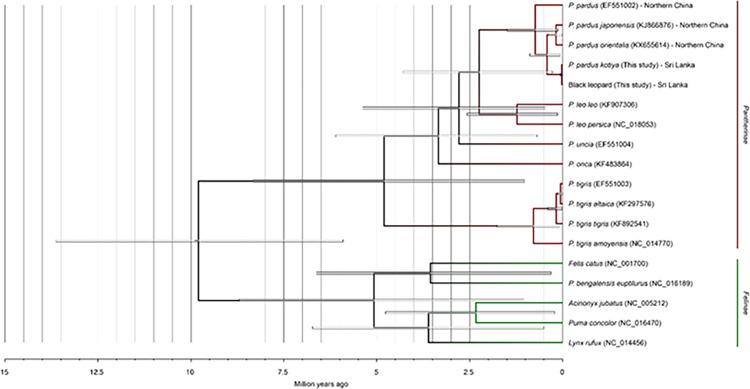
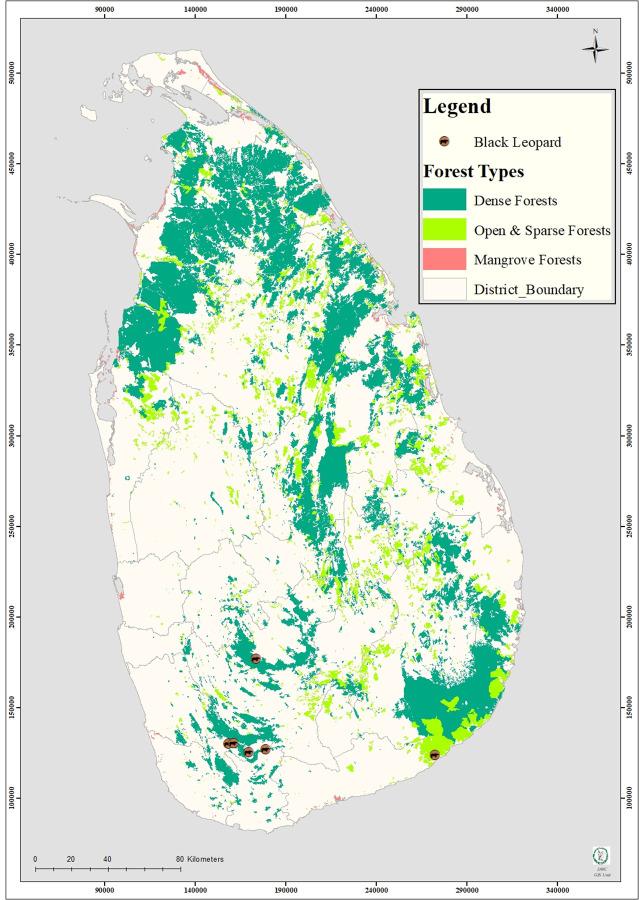
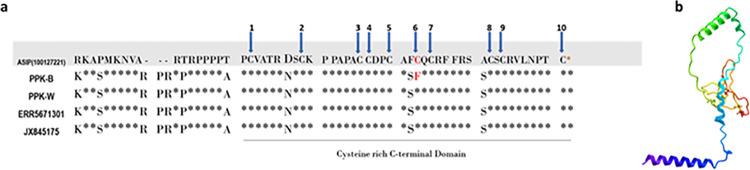
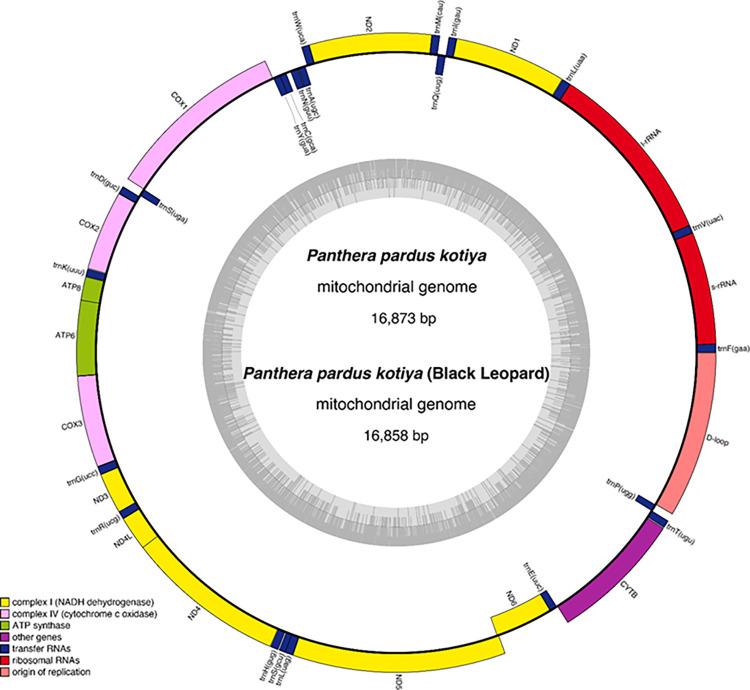
The Sri Lankan leopard (Panthera pardus kotiya) is an endangered subspecies restricted to isolated and fragmented populations in Sri Lanka. Among them, melanistic leopards have been recorded on a few occasions. Literature suggests the evolution of melanism several times in the Felidae family, with three species having distinct mutations. Nevertheless, the mutations or other variations in the remaining species, including Sri Lankan melanistic leopard, are unknown. We used reference-based assembled nuclear genomes of Sri Lankan wild type and melanistic leopards and de novo assembled mitogenomes of the same to investigate the genetic basis, adaptive significance, and evolutionary history of the Sri Lankan melanistic leopard. Interestingly, we identified a single nucleotide polymorphism in exon-4 Sri Lankan melanistic leopard, which may completely ablate Agouti Signalling Protein (ASIP) function. The wild type leopards in Sri Lanka did not carry this mutation, suggesting the cause for the occurrence of melanistic leopords in the population. Comparative analysis of existing genomic data in the literature suggests it as a P. p. kotiya specific mutation and a novel mutation in the ASIP-gene of the Felidae family, contributing to naturally occurring colour polymorphism. Our data suggested the coalescence time of Sri Lankan leopards at ~0.5 million years, sisters to the Panthera pardus lineage. The genetic diversity was low in Sri Lankan leopards. Further, the P. p. kotiya melanistic leopard is a different morphotype of the P. p. kotiya wildtype leopard resulting from the mutation in the ASIP-gene. The ability of black leopards to camouflage, along with the likelihood of recurrence and transfer to future generations, suggests that this rare mutation could be environment-adaptable.
斯里兰卡豹(Panthera pardus kotiya)是一种濒危亚种,仅分布在斯里兰卡的孤立和破碎的种群中。其中,已经有几次记录到黑化的豹子。文献表明,猫科动物家族中已经发生了几次黑化的进化,有三个物种具有明显的突变。然而,包括斯里兰卡黑化豹在内的其余物种的突变或其他变异尚不清楚。我们使用了斯里兰卡野生型和黑化型豹的基于参考的组装核基因组,以及相同的豹的从头组装的线粒体基因组,来研究斯里兰卡黑化豹的遗传基础、适应意义和进化历史。有趣的是,我们在斯里兰卡黑化豹的外显子-4 中发现了一个单核苷酸多态性,它可能完全使 Agouti Signalling Protein (ASIP) 失去功能。斯里兰卡的野生型豹没有携带这种突变,这表明该突变是导致该地区黑化豹出现的原因。对现有文献中基因组数据的比较分析表明,这是一个 P. p. kotiya 特有的突变,也是猫科动物 ASIP 基因中的一个新突变,导致了自然发生的颜色多态性。我们的数据表明,斯里兰卡豹的合并时间约为 50 万年前,与 Panthera pardus 谱系是姐妹关系。斯里兰卡豹的遗传多样性较低。此外,P. p. kotiya 黑化豹是 P. p. kotiya 野生型豹的不同形态型,是由于 ASIP 基因的突变而产生的。黑化豹的黑色能够更好地伪装,而且这种罕见的突变很可能会遗传给后代,这表明这种突变可能具有环境适应性。



 Zotero 插件