
线粒体在癌症中的失调为治疗干预提供了几个潜在的靶点。
Mitochondria Deregulations in Cancer Offer Several Potential Targets of Therapeutic Interventions.
机构信息
Institute of Biomembranes, Bioenergetics and Molecular Biotechnologies (IBIOM), CNR, 70126 Bari, Italy.
Department of Translational Biomedicine and Neuroscience, University of Bari "Aldo Moro", 70124 Bari, Italy.
出版信息
Int J Mol Sci. 2023 Jun 21;24(13):10420. doi: 10.3390/ijms241310420.
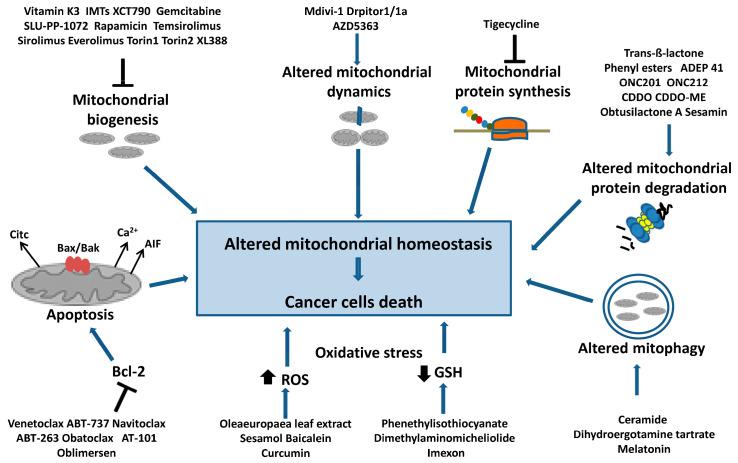
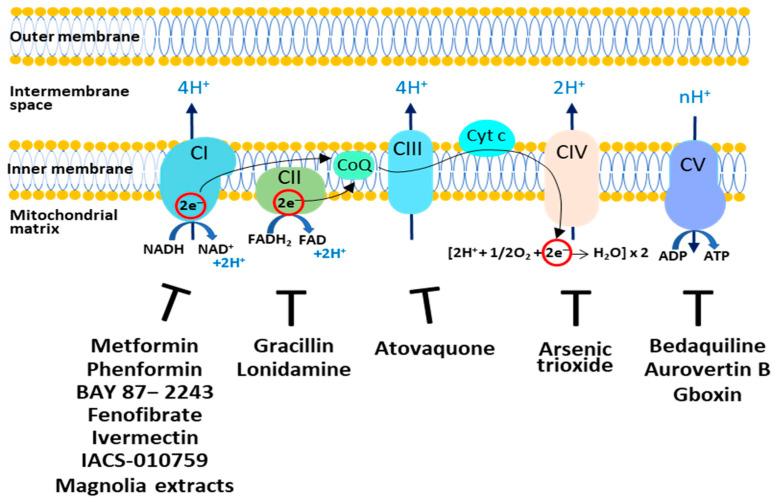
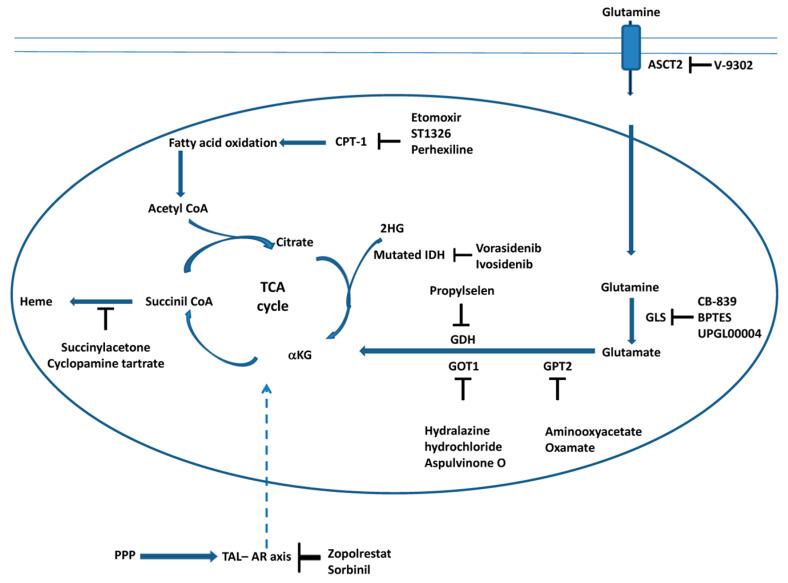
Mitochondria play a key role in cancer and their involvement is not limited to the production of ATP only. Mitochondria also produce reactive oxygen species and building blocks to sustain rapid cell proliferation; thus, the deregulation of mitochondrial function is associated with cancer disease development and progression. In cancer cells, a metabolic reprogramming takes place through a different modulation of the mitochondrial metabolic pathways, including oxidative phosphorylation, fatty acid oxidation, the Krebs cycle, glutamine and heme metabolism. Alterations of mitochondrial homeostasis, in particular, of mitochondrial biogenesis, mitophagy, dynamics, redox balance, and protein homeostasis, were also observed in cancer cells. The use of drugs acting on mitochondrial destabilization may represent a promising therapeutic approach in tumors in which mitochondrial respiration is the predominant energy source. In this review, we summarize the main mitochondrial features and metabolic pathways altered in cancer cells, moreover, we present the best known drugs that, by acting on mitochondrial homeostasis and metabolic pathways, may induce mitochondrial alterations and cancer cell death. In addition, new strategies that induce mitochondrial damage, such as photodynamic, photothermal and chemodynamic therapies, and the development of nanoformulations that specifically target drugs in mitochondria are also described. Thus, mitochondria-targeted drugs may open new frontiers to a tailored and personalized cancer therapy.
线粒体在癌症中起着关键作用,其作用不仅限于产生 ATP。线粒体还会产生活性氧和构建块来维持快速的细胞增殖;因此,线粒体功能的失调与癌症的发展和进展有关。在癌细胞中,通过对线粒体代谢途径(包括氧化磷酸化、脂肪酸氧化、三羧酸循环、谷氨酰胺和血红素代谢)的不同调节,发生了代谢重编程。还观察到癌细胞中线粒体动态平衡、线粒体生物发生、自噬、动力学、氧化还原平衡和蛋白质稳态的改变。使用作用于线粒体不稳定的药物可能代表一种有前途的治疗方法,特别是在以线粒体呼吸为主要能量来源的肿瘤中。在这篇综述中,我们总结了癌细胞中线粒体的主要特征和代谢途径的改变,此外,我们还介绍了最知名的药物,这些药物通过作用于线粒体动态平衡和代谢途径,可能会诱导线粒体改变和癌细胞死亡。此外,还描述了诱导线粒体损伤的新策略,如光动力、光热和化学动力学疗法,以及开发专门针对线粒体药物的纳米制剂。因此,线粒体靶向药物可能为量身定制和个性化的癌症治疗开辟新的前沿。
 Zotero 插件