
埃塞俄比亚少女对人乳头瘤病毒疫苗的接受程度:系统评价和荟萃分析。
Human papillomavirus vaccine acceptance among adolescent girls in Ethiopia: a systematic review and meta-analysis.
机构信息
Department of Public Health, College of Medicine and Health Science, Wolkite University, Wolkite, Ethiopia.
Department of Midwifery, College of Medicine and Health Science, Dilla University, Dilla, Ethiopia.
出版信息
BMC Public Health. 2023 Jul 17;23(1):1369. doi: 10.1186/s12889-023-16305-3.
BACKGROUND
Cervical cancer is the fourth most common cancer affecting females. Human papillomavirus vaccination of adolescent girls is the primary strategy for cervical cancer prevention but in Ethiopia, it lacks emphasis. Despite different studies done and found a highly variable level of vaccine acceptance; however, there was no summarized evidence on the issues as a nation. Thus this systematic review and meta-analysis aimed to assess the pooled prevalence of human papillomavirus vaccine acceptance by adolescent girls and its associated factors in Ethiopia.
METHOD
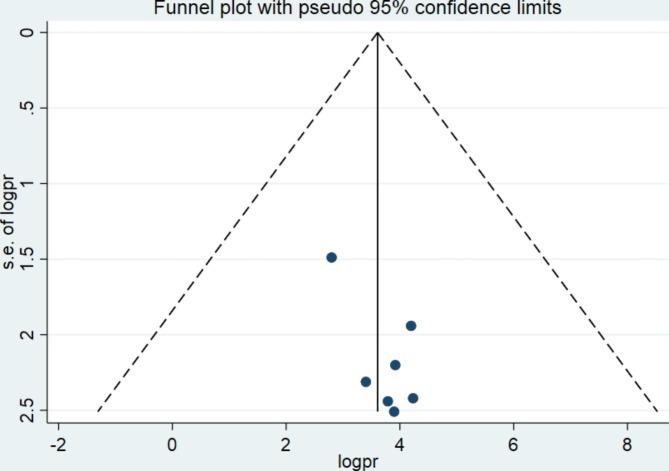
A systematic review and meta-analysis were conducted using PRISMA guidelines. Comprehensive literature was searched in PubMed, Google Scholar, and African Online Journal databases. A weighted inverse variance random effect model was used to estimate pooled prevalence. Cochrane Q-test and I statistics were computed to assess heterogeneity among studies. Funnel plot and Eggers test were done to assess publication bias. Review manager software was used to identify factors associated with vaccine acceptance.
RESULT
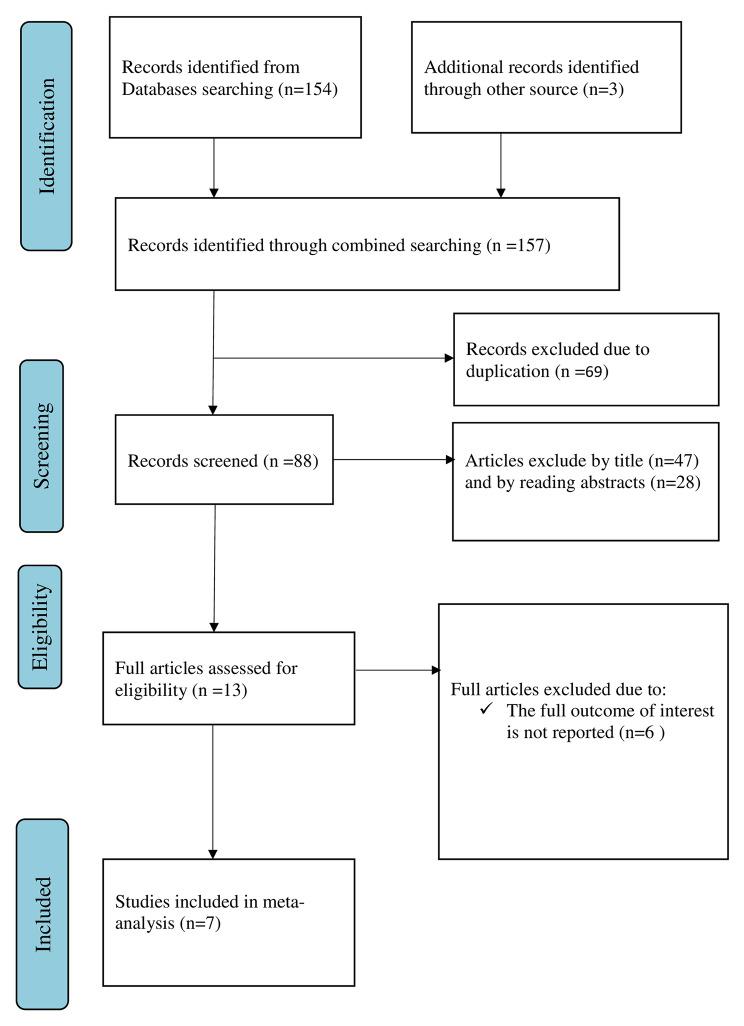
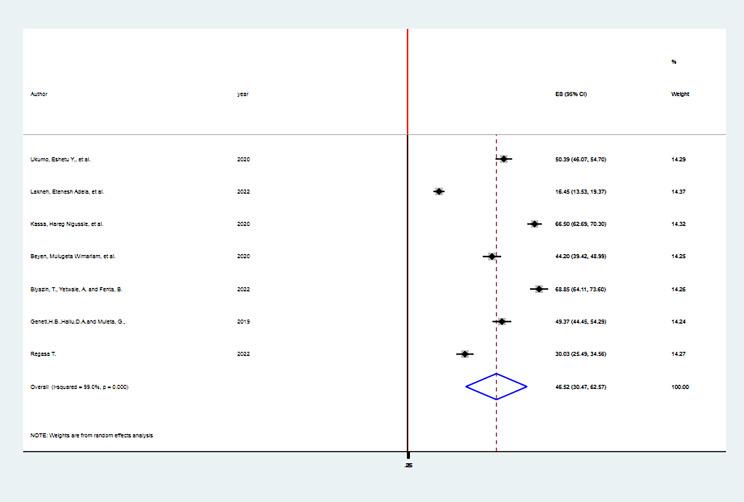
Overall, 157 articles were retrieved and finally 7 articles were included in this review. The pooled prevalence of adolescent human papillomavirus vaccine acceptance was 46.52% (95%CI; 30.47-62.57%). Subgroup analysis showed that adolescent vaccine acceptance was highest in the Oromia region and lowest in Addis Ababa. Knowledge about human papillomavirus vaccination (AOR = 3.89, 95% CI: (2.85-5.32)) and attitude (AOR = 2.65, 95% CI: (2.03- 3.44)) were significantly associated with adolescent's vaccine acceptance.
CONCLUSION
Human papillomavirus vaccine acceptance of adolescent girls in Ethiopia was low. Knowledge about the vaccine and attitude to vaccination were positively associated with their vaccine acceptance. Therefore, policymakers and program planners should target school-aged adolescents in increasing their awareness and changing their attitudes to enhance their vaccine acceptance in order to prevent and control cervical cancer.
背景
宫颈癌是女性中第四种最常见的癌症。对少女进行人乳头瘤病毒(HPV)疫苗接种是预防宫颈癌的主要策略,但在埃塞俄比亚,这一策略缺乏重视。尽管已经进行了多项研究,发现疫苗接种的接受程度存在高度差异,但作为一个国家,还没有综合的证据来解决这些问题。因此,本系统评价和荟萃分析旨在评估埃塞俄比亚少女对 HPV 疫苗的总体接受率及其相关因素。
方法
本研究采用 PRISMA 指南进行系统评价和荟萃分析。在 PubMed、Google Scholar 和 African Online Journal 数据库中全面检索文献。采用加权逆方差随机效应模型估计总体接受率。采用 Cochrane Q 检验和 I ² 统计量评估研究间的异质性。采用漏斗图和 Eggers 检验评估发表偏倚。使用 Review Manager 软件识别与疫苗接种接受度相关的因素。
结果
共检索到 157 篇文章,最终纳入 7 篇文章进行综述。青春期 HPV 疫苗总体接受率为 46.52%(95%CI;30.47-62.57%)。亚组分析显示,奥罗莫地区的青少年疫苗接种接受率最高,亚的斯亚贝巴地区的接种率最低。对 HPV 疫苗接种的了解(AOR=3.89,95%CI:(2.85-5.32))和态度(AOR=2.65,95%CI:(2.03-3.44))与青少年疫苗接种的接受率显著相关。
结论
埃塞俄比亚少女对 HPV 疫苗的接受率较低。对疫苗的了解和对接种疫苗的态度与她们的疫苗接种接受率呈正相关。因此,政策制定者和规划者应针对学龄期青少年,提高他们的认识并改变他们的态度,以提高他们对疫苗的接受度,从而预防和控制宫颈癌。


 Zotero 插件