
Smad3 通过靶向 PPARδ 介导 db/db 小鼠的糖尿病血脂异常和脂肪肝。
Smad3 Mediates Diabetic Dyslipidemia and Fatty Liver in db/db Mice by Targeting PPARδ.
机构信息
Division of Nephrology, Department of Medicine, The Fifth Affiliated Hospital of Sun Yat-sen University, Zhuhai 519000, China.
Department of Medicine and Therapeutics, Li Ka Shing Institute of Health Sciences, The Chinese University of Hong Kong, Hong Kong 999077, China.
出版信息
Int J Mol Sci. 2023 Jul 13;24(14):11396. doi: 10.3390/ijms241411396.
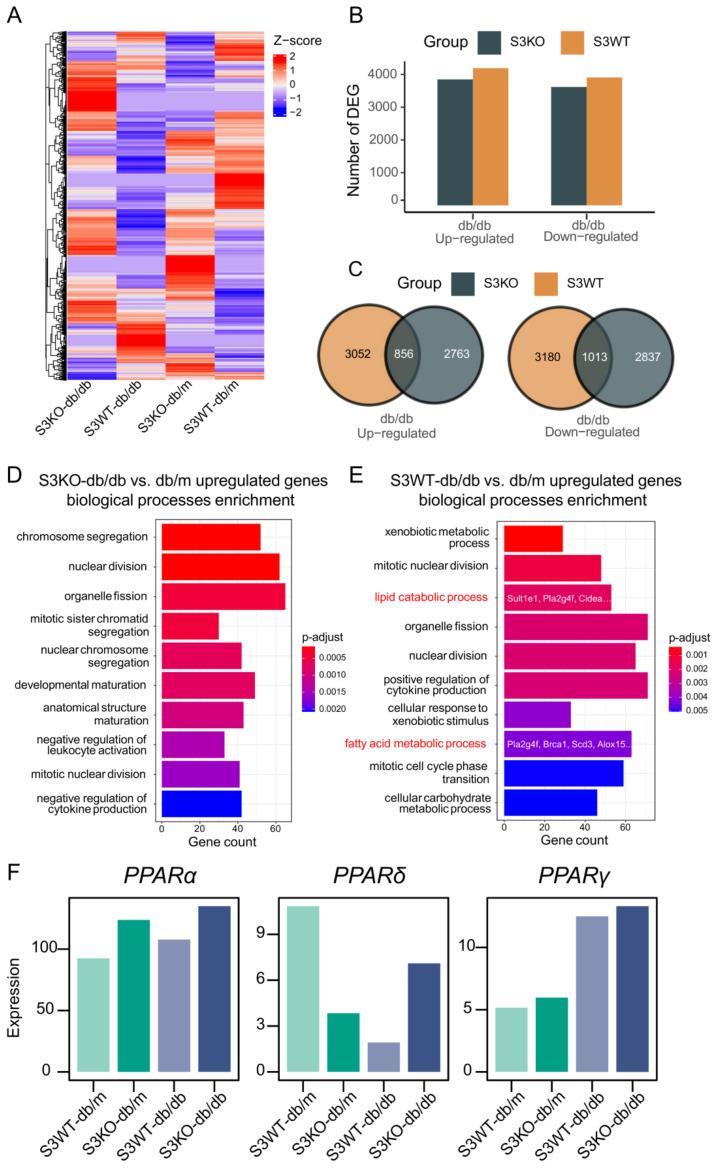
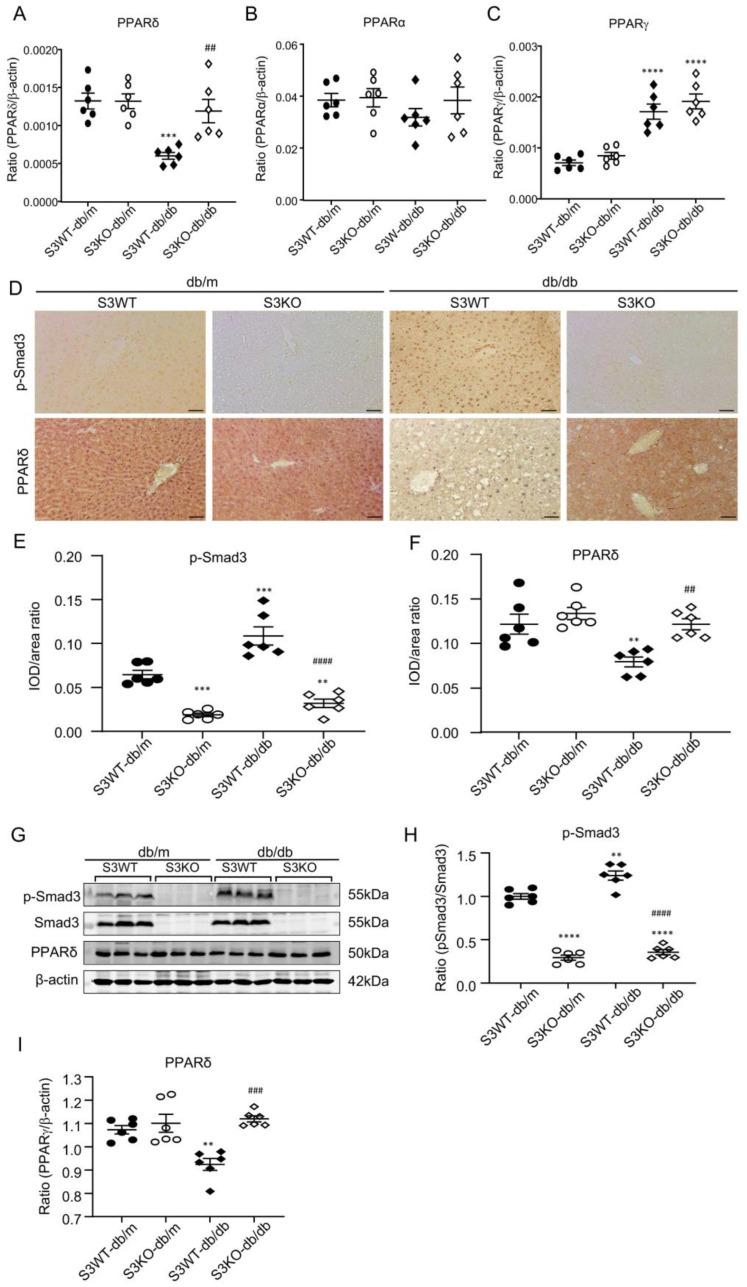
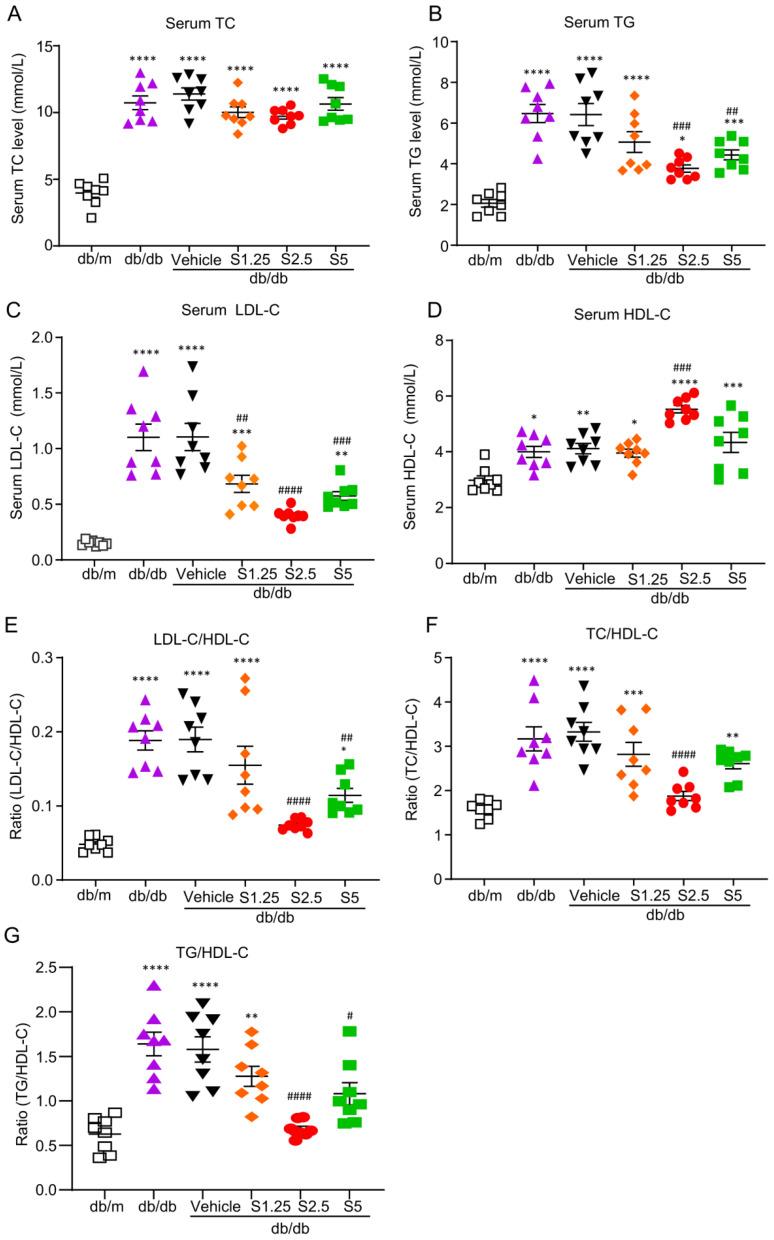
Transforming growth factor-β (TGF-β)/Smad3 signaling has been shown to play important roles in fibrotic and inflammatory diseases. However, the role of Smad3 in dyslipidemia and non-alcoholic fatty liver disease (NAFLD) in type 2 diabetes remains unclear, and whether targeting Smad3 has a therapeutic effect on these metabolic abnormalities remains unexplored. These topics were investigated in this study in Smad3 knockout (KO)- mice and by treating mice with a Smad3-specific inhibitor SIS3. Compared to Smad3 wild-type (WT)- mice, Smad3 KO- mice were protected against dyslipidemia and NAFLD. Similarly, treatment of mice with SIS3 at week 4 before the onset of type 2 diabetes until week 12 was capable of lowering blood glucose levels and improving diabetic dyslipidemia and NAFLD. In addition, using RNA-sequencing, the potential Smad3-target genes related to lipid metabolism was identified in the liver tissues of Smad3 KO/WT mice, and the regulatory mechanisms were investigated. Mechanistically, we uncovered that Smad3 targeted peroxisome proliferator-activated receptor delta (PPARδ) to induce dyslipidemia and NAFLD in mice, which was improved by genetically deleting and pharmacologically inhibiting Smad3.
转化生长因子-β(TGF-β)/Smad3 信号通路已被证明在纤维化和炎症性疾病中发挥重要作用。然而,Smad3 在 2 型糖尿病患者的血脂异常和非酒精性脂肪性肝病(NAFLD)中的作用尚不清楚,靶向 Smad3 是否对这些代谢异常具有治疗作用仍有待探索。本研究旨在探讨 Smad3 敲除(KO)- 小鼠和 Smad3 特异性抑制剂 SIS3 处理 小鼠中 Smad3 的作用。与 Smad3 野生型(WT)- 小鼠相比,Smad3 KO- 小鼠对血脂异常和 NAFLD 具有保护作用。同样,在 2 型糖尿病发病前第 4 周开始用 SIS3 治疗直至第 12 周,能够降低血糖水平并改善糖尿病血脂异常和 NAFLD。此外,通过 RNA 测序,鉴定了 Smad3 KO/WT 小鼠肝组织中与脂质代谢相关的潜在 Smad3 靶基因,并对其调控机制进行了研究。在机制上,我们发现 Smad3 通过靶向过氧化物酶体增殖物激活受体 δ(PPARδ)诱导 小鼠的血脂异常和 NAFLD,通过基因敲除和药理学抑制 Smad3 可改善这些异常。




 Zotero 插件