
胰腺星状细胞与慢性胰腺炎的靶向治疗策略。
Pancreatic Stellate Cells and the Targeted Therapeutic Strategies in Chronic Pancreatitis.
机构信息
Guangdong Metabolic Diseases Research Center of Integrated Chinese and Western Medicine, Guangzhou 510006, China.
Guangdong TCM Key Laboratory for Metabolic Diseases, Guangzhou 510006, China.
出版信息
Molecules. 2023 Jul 22;28(14):5586. doi: 10.3390/molecules28145586.
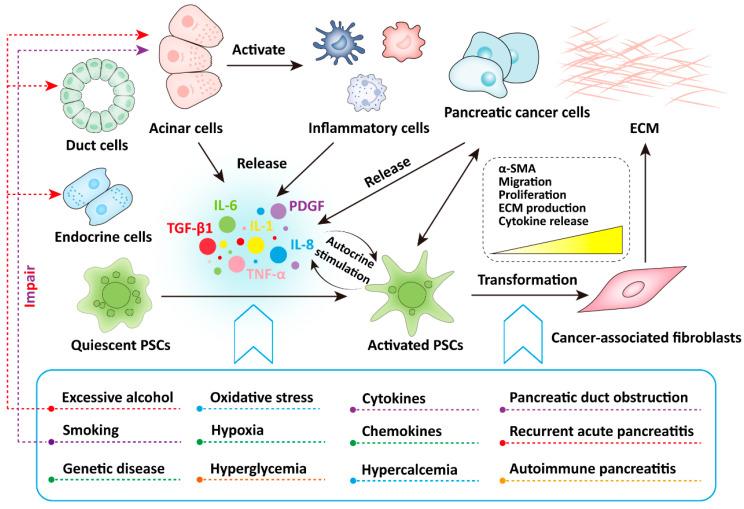
Chronic pancreatitis (CP) is a disease characterized by inflammatory recurrence that accompanies the development of pancreatic fibrosis. As the mystery of CP pathogenesis is gradually revealed, accumulating evidence suggests that the activation of pancreatic stellate cells (PSCs) and the appearance of a myofibroblast-like phenotype are the key gatekeepers in the development of CP. Targeting PSCs to prevent their activation and conversion to a myofibroblast-like phenotype, as well as increasing antioxidant capacity to counteract ongoing oxidative stress, are effective strategies for preventing or treating CP. Therefore, we reviewed the crosstalk between CP and pancreatic fibrosis, summarized the activation mechanisms of PSCs, and investigated potential CP therapeutic strategies targeting PSCs, including, but not limited to, anti-fibrosis therapy, antioxidant therapy, and gene therapy. Meanwhile, the above therapeutic strategies are selected in order to update the available phytopharmaceuticals as novel complementary or alternative approaches for the prevention and treatment of CP to clarify their potential mechanisms of action and their relevant molecular targets, aiming to provide the most comprehensive therapeutic treatment direction for CP and to bring new hope to CP patients.
慢性胰腺炎(CP)是一种以炎症复发性为特征的疾病,伴有胰腺纤维化的发展。随着 CP 发病机制的谜团逐渐被揭示,越来越多的证据表明,胰腺星状细胞(PSCs)的激活和肌成纤维细胞样表型的出现是 CP 发展的关键守门员。针对 PSCs 以防止其激活和转化为肌成纤维细胞样表型,以及增加抗氧化能力以对抗持续的氧化应激,是预防或治疗 CP 的有效策略。因此,我们综述了 CP 与胰腺纤维化的相互作用,总结了 PSCs 的激活机制,并研究了针对 PSCs 的潜在 CP 治疗策略,包括但不限于抗纤维化治疗、抗氧化治疗和基因治疗。同时,选择上述治疗策略是为了更新现有的植物药作为预防和治疗 CP 的新的补充或替代方法,以阐明其潜在的作用机制及其相关的分子靶点,旨在为 CP 提供最全面的治疗方向,并为 CP 患者带来新的希望。

 Zotero 插件