
使用镥标记的前列腺特异性膜抗原(Lu-iPSMA)和镥标记的奥曲肽(Lu-DOTATOC)改善前列腺癌和神经内分泌肿瘤患者的总生存期和生活质量:905次治疗剂量后的经验
Improving Overall Survival and Quality of Life in Patients with Prostate Cancer and Neuroendocrine Tumors Using Lu-iPSMA and Lu-DOTATOC: Experience after 905 Treatment Doses.
作者信息
Luna-Gutiérrez Myrna, Hernández-Ramírez Rodrigo, Soto-Abundiz Airam, García-Pérez Osvaldo, Ancira-Cortez Alejandra, López-Buenrostro Sergio, Gibbens-Bandala Brenda, Soldevilla-Gallardo Irma, Lara-Almazán Nancy, Rojas-Pérez Melissa, Ocampo-García Blanca, Azorín-Vega Erika, Santos-Cuevas Clara, Ferro-Flores Guillermina
机构信息
Department of Radioactive Materials, Instituto Nacional de Investigaciones Nucleares (ININ), Ocoyoacac 52750, Mexico.
Department of Nuclear Medicine, Hospital Médica Sur, Mexico City 14080, Mexico.
出版信息
Pharmaceutics. 2023 Jul 20;15(7):1988. doi: 10.3390/pharmaceutics15071988.
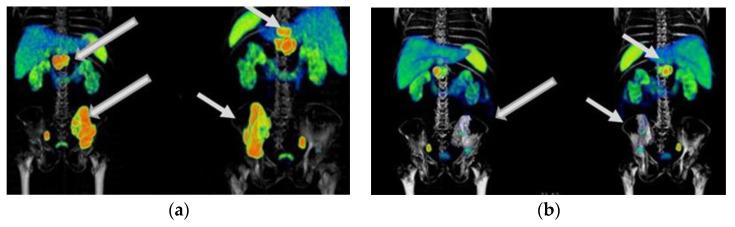
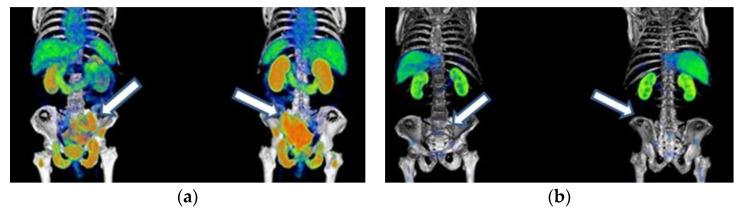
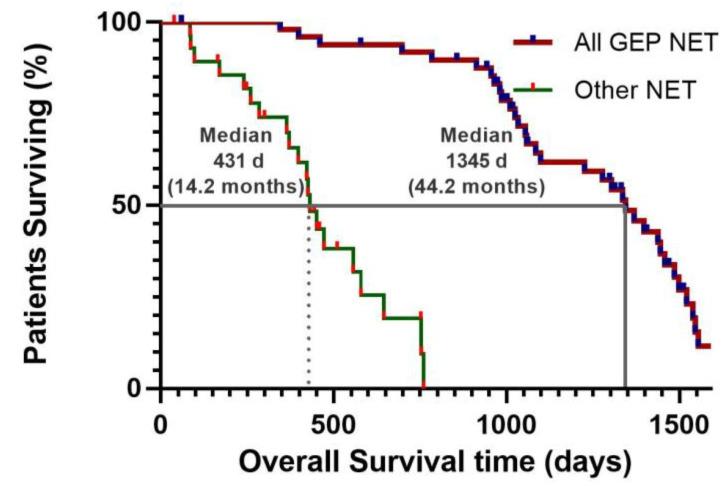
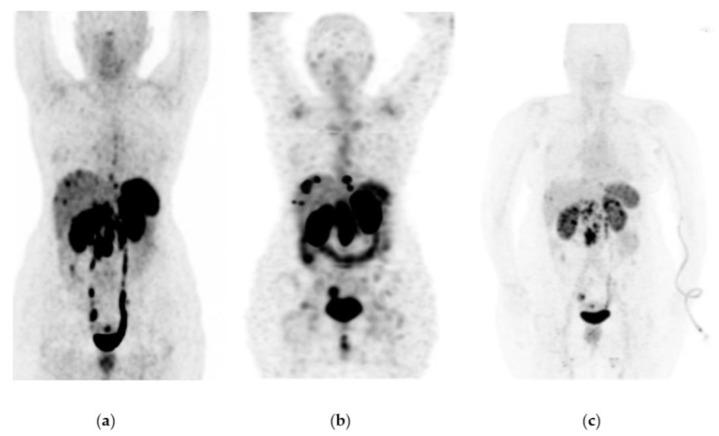
Lu-iPSMA is a novel radioligand developed at ININ-Mexico with a high affinity for the PSMA protein heavily expressed in cancer cells of approximately 95% of patients with metastatic castration-resistant prostate cancer (mCRPC). Lu-DOTATOC is a patent-free radioligand, molecularly recognized by somatostatin receptors (SSTR-2) overexpressed in cancer cells of about 80% of patients with metastatic gastroenteropancreatic neuroendocrine tumors (GEP-NET). This translational research aimed to determine the efficacy and safety of Lu-iPSMA and Lu-DOTATOC developed as GMP pharmaceutical formulations for treating progressive and advanced mCRPC and NET. One hundred and forty-five patients with mCRPC and one hundred and eighty-seven subjects with progressive NET (83% GEP-NET and 17% other NET), treated with Lu-iPSMA and Lu-DOTATOC, respectively, were evaluated. Patients received a mean dose of 7.4 GBq per administration of Lu-iPSMA (range 1-5 administrations; 394 treatment doses) or Lu-DOTATOC (range 2-8 administrations; 511 treatment doses) at intervals of 1.5-2.5 months. Efficacy was assessed by SPECT/CT or PET/CT. Results were stratified by primary tumor origin and number of doses administered. Patients with mCRPC showed overall survival (OS) of 21.7 months with decreased radiotracer tumor uptake (SUV) and PSA level in 80% and 73% of patients, respectively. In addition, a significant reduction in pain (numerical scale from 10-7 to 3-1) was observed in 88% of patients with bone metastases between one and two weeks after the second injection. In the GEP-NET population, the median progression-free survival was 34.7 months, with an OS of >44.2 months. The treatments were well tolerated. Only ten patients experienced grade ≥ 3 myelosuppression (3% of all patients). The observed safety profiles and favorable therapeutic responses demonstrated the potential of Lu-iPSMA and Lu-DOTATOC to improve overall survival and quality of life in patients with progressive and advanced mCRPC and NET.
镥-PSMA是墨西哥国立核科学研究所研发的一种新型放射性配体,对约95%的转移性去势抵抗性前列腺癌(mCRPC)患者癌细胞中高表达的PSMA蛋白具有高亲和力。镥-奥曲肽是一种无专利的放射性配体,可被约80%的转移性胃肠胰神经内分泌肿瘤(GEP-NET)患者癌细胞中过表达的生长抑素受体(SSTR-2)分子识别。这项转化研究旨在确定作为药品生产质量管理规范(GMP)制剂开发的镥-PSMA和镥-奥曲肽治疗进展期和晚期mCRPC及神经内分泌肿瘤(NET)的疗效和安全性。分别对145例mCRPC患者和187例进展期NET患者(83%为GEP-NET,17%为其他NET)进行了评估,这些患者分别接受了镥-PSMA和镥-奥曲肽治疗。患者接受镥-PSMA(范围为1至5次给药;394个治疗剂量)或镥-奥曲肽(范围为2至8次给药;511个治疗剂量),每次给药平均剂量为7.4GBq,给药间隔为1.5至2.5个月。通过单光子发射计算机断层扫描/计算机断层扫描(SPECT/CT)或正电子发射断层扫描/计算机断层扫描(PET/CT)评估疗效。结果按原发肿瘤来源和给药剂量数进行分层。mCRPC患者的总生存期(OS)为21.7个月,分别有80%和73%的患者放射性示踪剂肿瘤摄取(SUV)和前列腺特异抗原(PSA)水平降低。此外,在第二次注射后1至2周内,88%的骨转移患者疼痛显著减轻(数字评分从10 - 7降至3 - 1)。在GEP-NET人群中,无进展生存期的中位数为34.7个月,总生存期>44.2个月。这些治疗耐受性良好。只有10例患者出现≥3级骨髓抑制(占所有患者的3%)。观察到的安全性概况和良好的治疗反应表明,镥-PSMA和镥-奥曲肽有潜力改善进展期和晚期mCRPC及NET患者的总生存期和生活质量。



 Zotero 插件