
喷洒小水滴可起到杀菌作用。
Spraying Small Water Droplets Acts as a Bacteriocide.
作者信息
Dulay Maria T, Lee Jae Kyoo, Mody Alison C, Narasimhan Ramya, Monack Denise M, Zare Richard N
机构信息
Department of Chemistry, Stanford University, Stanford, CA 94305, USA.
Department of Microbiology and Immunology, Stanford University School of Medicine, Stanford, CA 94305, USA.
出版信息
QRB Discov. 2020 Aug 6;1:e3. doi: 10.1017/qrd.2020.2. eCollection 2020.
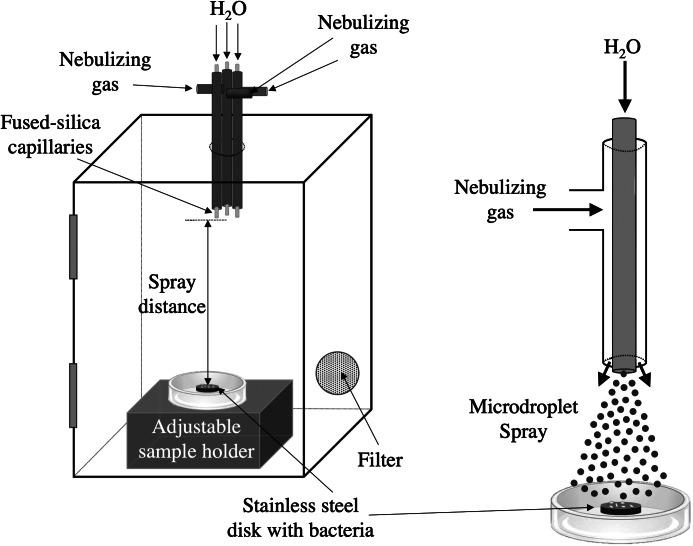
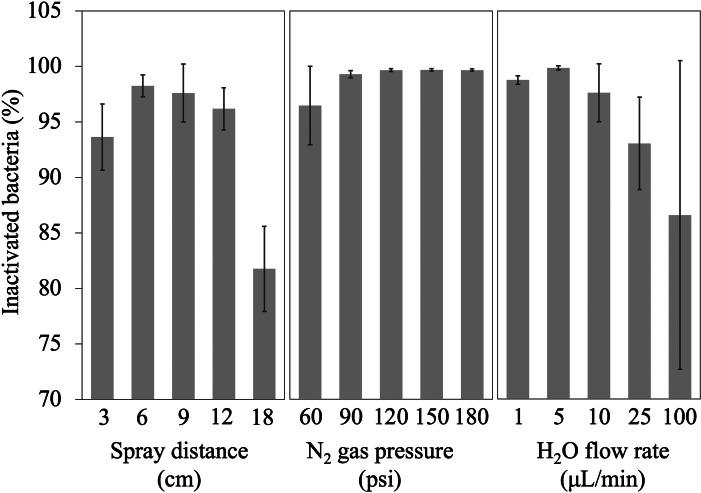
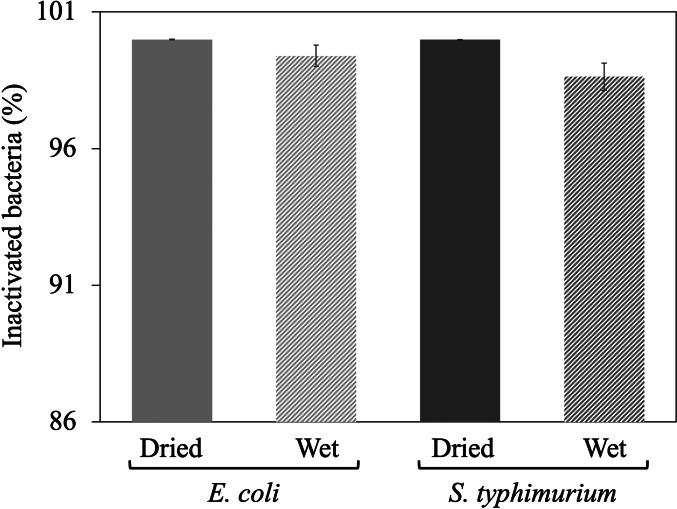
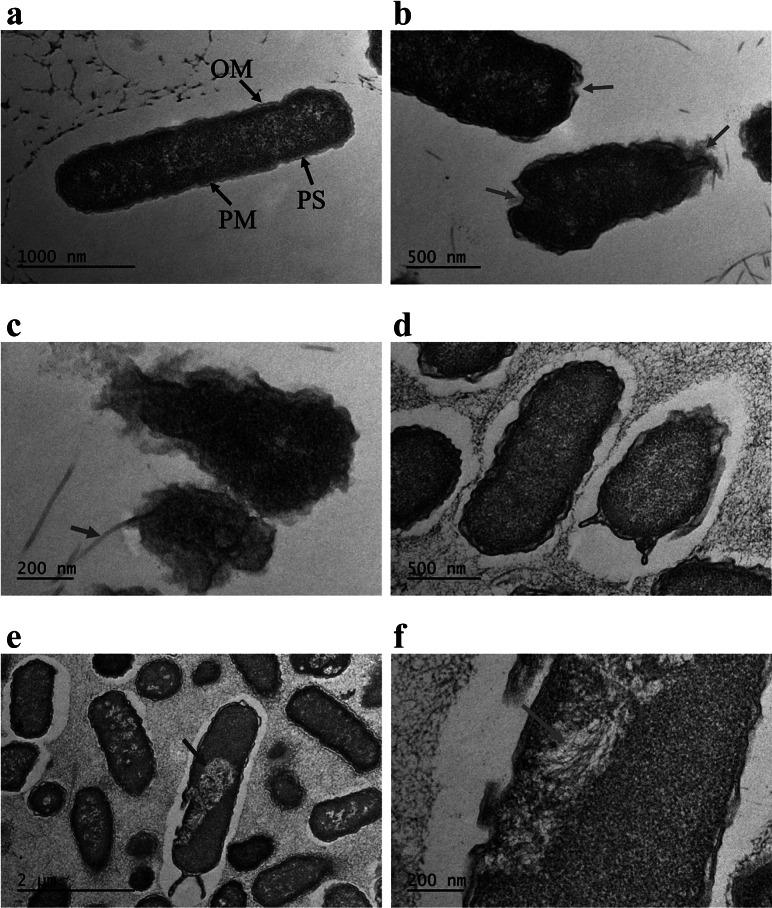
Disinfectants are important for arresting the spread of pathogens in the environment. Frequently used disinfectants are often incompatible with certain surfaces, expensive and can produce hazardous by-products. We report that micron-sized water droplets can act as an effective disinfectant, which were formed by spraying pure bulk water with coaxial nebulizing airflow. Spraying for 20 min onto and on stainless-steel discs caused inactivation of over 98% of the bacteria. Control experiments resulted in less than 10% inactivation (water stream only and gas only) and 55% inactivation with 3% hydrogen peroxide. Experiments have shown that cell death results from cell wall destruction. We suggest that the combined action of reactive oxygen species present in water droplets (but not in bulk water) along with the droplet surface charge is responsible for the observed bactericidal activity.
消毒剂对于阻止病原体在环境中的传播至关重要。常用的消毒剂往往与某些表面不相容、价格昂贵且会产生有害副产物。我们报告称,微米级水滴可作为一种有效的消毒剂,它是通过用同轴雾化气流喷洒纯的大量水形成的。在不锈钢圆盘上喷洒20分钟,可使超过98%的细菌失活。对照实验导致的细菌失活率低于10%(仅水流和仅气体),而3%过氧化氢导致的失活率为55%。实验表明,细胞死亡是由细胞壁破坏导致的。我们认为,水滴中存在的(但大量水中不存在的)活性氧物种与液滴表面电荷的共同作用是观察到的杀菌活性的原因。
 Zotero 插件