
IL21 与抗 PD-1 联合治疗的协同作用是由肿瘤微环境中免疫细胞网络的协调重编程所支撑的。
Synergism Between IL21 and Anti-PD-1 Combination Therapy is Underpinned by the Coordinated Reprogramming of the Immune Cellular Network in the Tumor Microenvironment.
机构信息
Department of Immunology, University of Pittsburgh School of Medicine, Pittsburgh, Pennsylvania.
Department of Tumor Biological Treatment, The Third Affiliated Hospital of Soochow University, Changzhou, P.R. China.
出版信息
Cancer Res Commun. 2023 Aug 4;3(8):1460-1472. doi: 10.1158/2767-9764.CRC-23-0012. eCollection 2023 Aug.
UNLABELLED
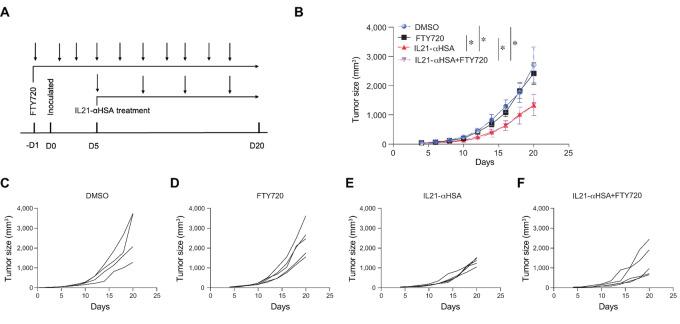
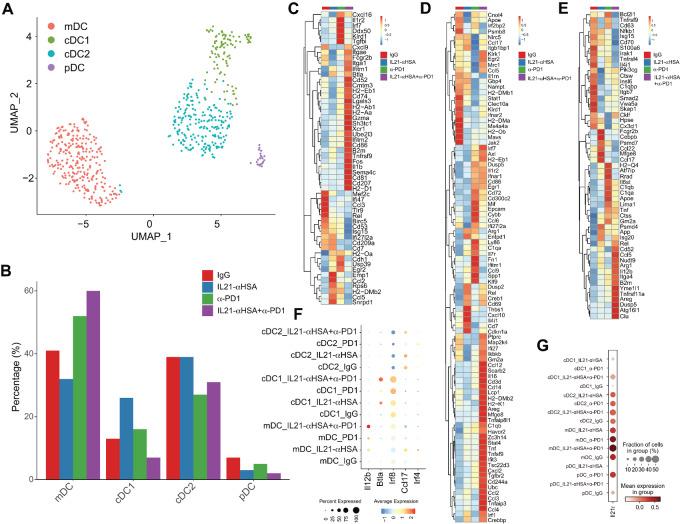
T cell-stimulating cytokines and immune checkpoint inhibitors (ICI) are an ideal combination for increasing response rates of cancer immunotherapy. However, the results of clinical trials have not been satisfying. It is important to understand the mechanism of synergy between these two therapeutic modalities. Here, through integrated analysis of multiple single-cell RNA sequencing (scRNA-seq) datasets of human tumor-infiltrating immune cells, we demonstrate that IL21 is produced by tumor-associated T follicular helper cells and hyperactivated/exhausted CXCL13CD4 T cells in the human tumor microenvironment (TME). In the mouse model, the hyperactivated/exhausted CD4 T cell-derived IL21 enhances the helper function of CD4 T cells that boost CD8 T cell-mediated immune responses during PD-1 blockade immunotherapy. In addition, we demonstrated that IL21's antitumor activity did not require T-cell trafficking. Using scRNA-seq analysis of the whole tumor-infiltrating immune cells, we demonstrated that IL21 treatment in combination with anti-PD-1 blockade synergistically drives tumor antigen-specific CD8 T cells to undergo clonal expansion and differentiate toward the hyperactive/exhausted functional state in the TME. In addition, IL21 treatment and anti-PD-1 blockade synergistically promote dendritic cell (DC) activation and maturation to mature DC as well as monocyte to type 1 macrophage (M1) differentiation in the TME. Furthermore, the combined treatment reprograms the immune cellular network by reshaping cell-cell communication in the TME. Our study establishes unique mechanisms of synergy between IL21 and PD-1-based ICI in the TME through the coordinated promotion of type 1 immune responses.
SIGNIFICANCE
This study reveals how cytokine and checkpoint inhibitor therapy can be combined to increase the efficacy of cancer immunotherapy.
未加标签
T 细胞刺激细胞因子和免疫检查点抑制剂(ICI)是提高癌症免疫治疗反应率的理想组合。然而,临床试验的结果并不令人满意。了解这两种治疗方式协同作用的机制很重要。在这里,我们通过对人类肿瘤浸润免疫细胞的多个单细胞 RNA 测序(scRNA-seq)数据集的综合分析,证明了 IL21 是由肿瘤相关的滤泡辅助 T 细胞和人类肿瘤微环境(TME)中过度激活/耗竭的 CXCL13CD4 T 细胞产生的。在小鼠模型中,过度激活/耗竭的 CD4 T 细胞衍生的 IL21 增强了 CD4 T 细胞的辅助功能,从而在 PD-1 阻断免疫治疗期间增强了 CD8 T 细胞介导的免疫反应。此外,我们证明了 IL21 的抗肿瘤活性不需要 T 细胞迁移。通过对整个肿瘤浸润免疫细胞的 scRNA-seq 分析,我们证明了 IL21 联合抗 PD-1 阻断治疗在 TME 中协同驱动肿瘤抗原特异性 CD8 T 细胞经历克隆扩增并分化为过度活跃/耗竭的功能状态。此外,IL21 治疗和抗 PD-1 阻断协同促进树突状细胞(DC)的激活和成熟为成熟的 DC 以及单核细胞向 TME 中的 M1 型巨噬细胞(M1)分化。此外,联合治疗通过重塑 TME 中的细胞间通讯重塑免疫细胞网络。我们的研究通过协调促进 1 型免疫反应,在 TME 中建立了 IL21 和基于 PD-1 的 ICI 之间协同作用的独特机制。
意义
这项研究揭示了细胞因子和检查点抑制剂治疗如何联合使用以提高癌症免疫治疗的疗效。





 Zotero 插件