
在三维模型中模拟器官功能的流体流动。
Fluid flow to mimic organ function in 3D models.
作者信息
Juste-Lanas Yago, Hervas-Raluy Silvia, García-Aznar José Manuel, González-Loyola Alejandra
机构信息
Department of Mechanical Engineering, Engineering Research Institute of Aragón (I3A), University of Zaragoza, Zaragoza, Spain.
出版信息
APL Bioeng. 2023 Aug 4;7(3):031501. doi: 10.1063/5.0146000. eCollection 2023 Sep.
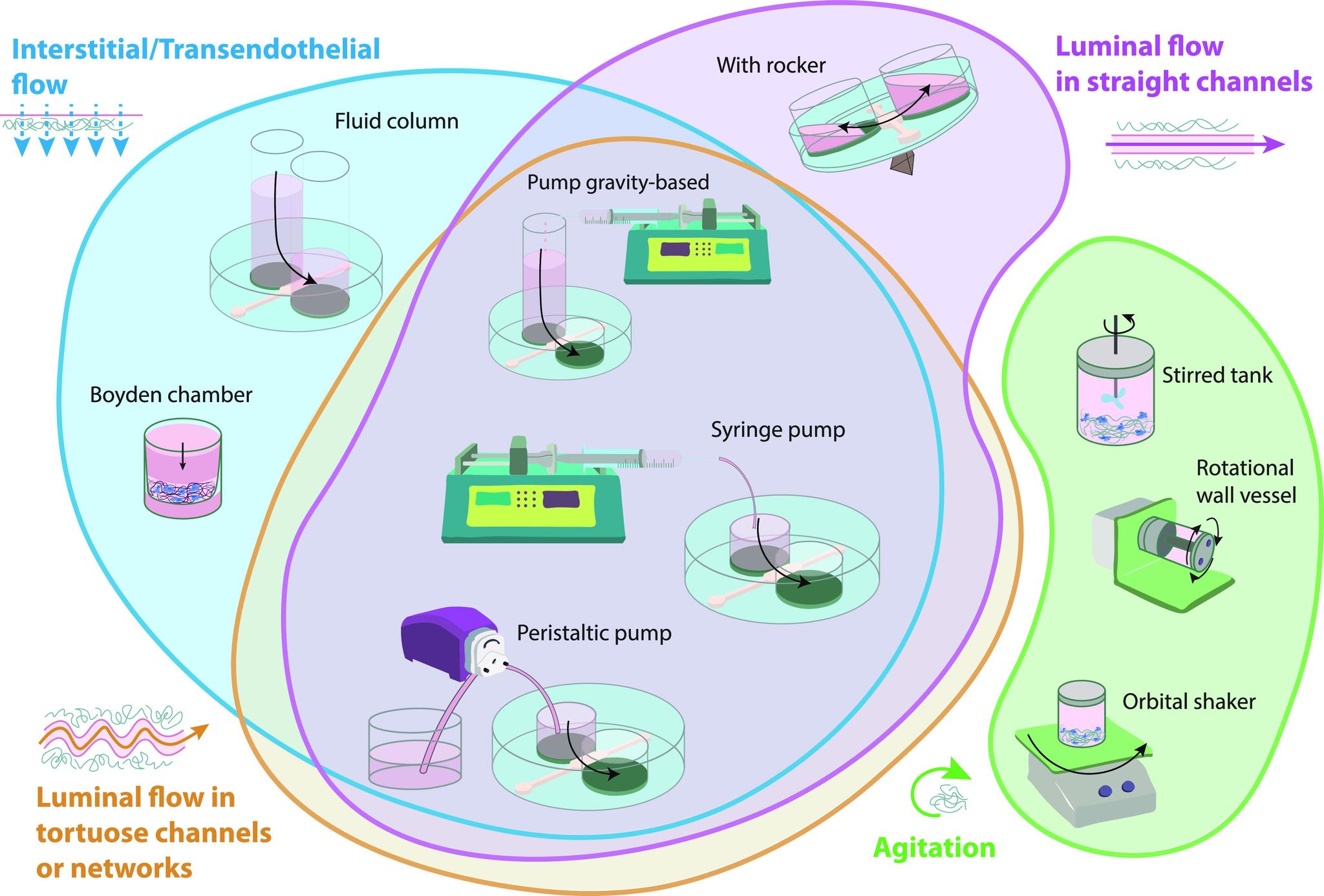
Many different strategies can be found in the literature to model organ physiology, tissue functionality, and disease ; however, most of these models lack the physiological fluid dynamics present . Here, we highlight the importance of fluid flow for tissue homeostasis, specifically in vessels, other lumen structures, and interstitium, to point out the need of perfusion in current 3D models. Importantly, the advantages and limitations of the different current experimental fluid-flow setups are discussed. Finally, we shed light on current challenges and future focus of fluid flow models applied to the newest bioengineering state-of-the-art platforms, such as organoids and organ-on-a-chip, as the most sophisticated and physiological preclinical platforms.
在文献中可以找到许多不同的策略来模拟器官生理学、组织功能和疾病;然而,这些模型大多缺乏现有的生理流体动力学。在这里,我们强调流体流动对组织稳态的重要性,特别是在血管、其他管腔结构和间质中,以指出当前3D模型中灌注的必要性。重要的是,讨论了当前不同实验流体流动设置的优缺点。最后,我们阐明了应用于最新生物工程先进平台(如类器官和芯片器官)的流体流动模型当前面临的挑战和未来的重点,这些平台是最复杂和最具生理学意义的临床前平台。




 Zotero 插件