
柏香丹胶囊抗神经炎症作用机制的干-湿实验研究。
Mechanism of baixiangdan capsules on anti-neuroinflammation: combining dry and wet experiments.
机构信息
College of Pharmacy, Shandong University of Traditional Chinese Medicine, Jinan 250000, China.
College of Foreign Languages, Shandong University of Traditional Chinese Medicine, Jinan 250000, China.
出版信息
Aging (Albany NY). 2023 Aug 8;15(15):7689-7708. doi: 10.18632/aging.204934.
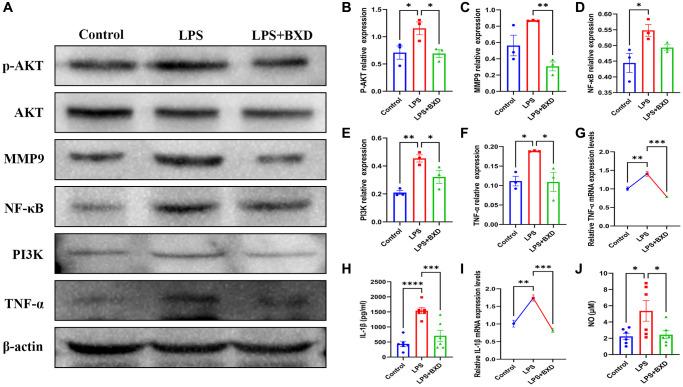
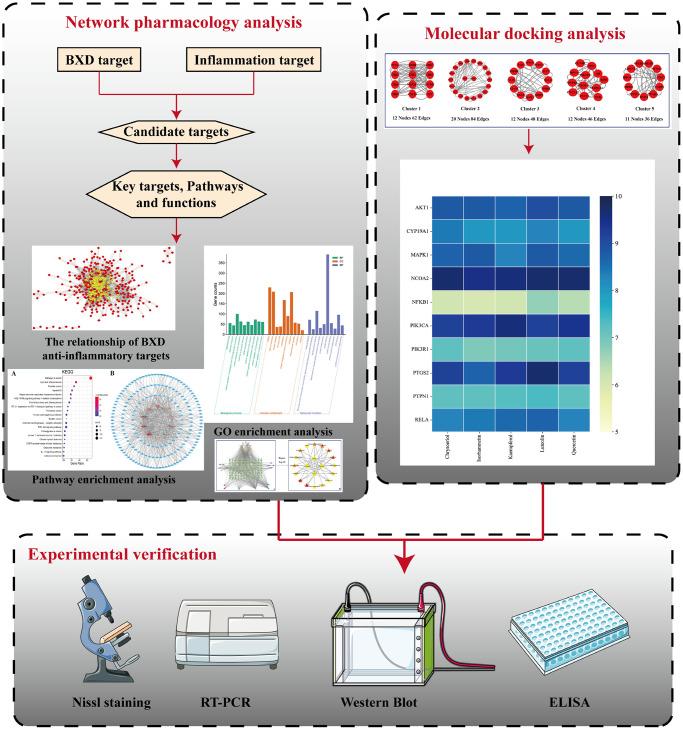
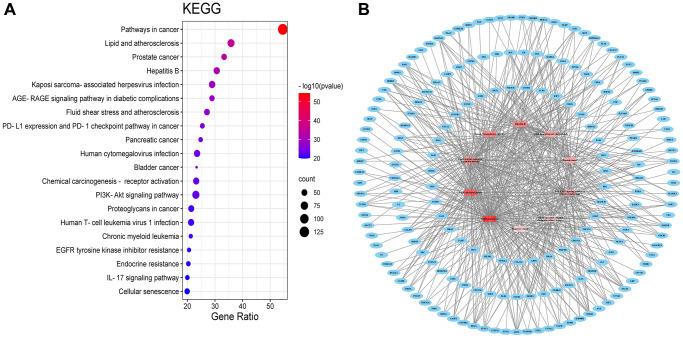
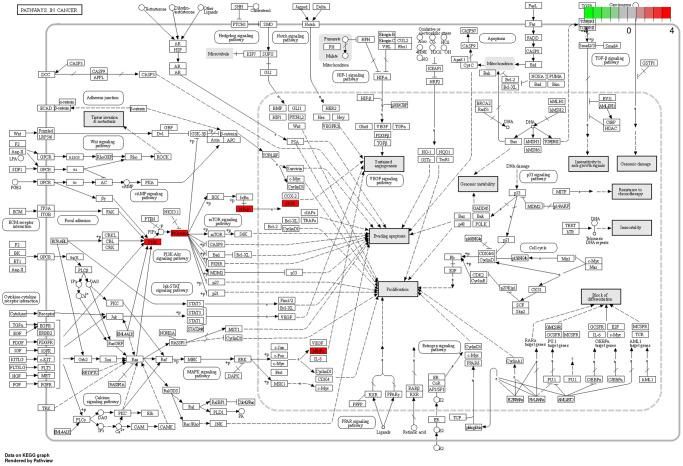
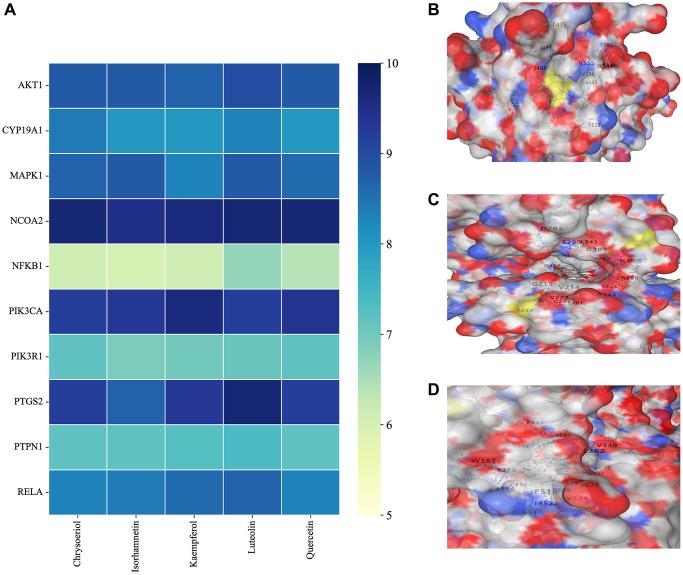
Neuroinflammation plays an important role in the pathogenesis of neurological disorders, and despite intensive research, treatment of neuroinflammation remains limited. BaiXiangDan capsule (BXD) is widely used in clinical practice. However, systematic studies on the direct role and mechanisms of BXD in neuroinflammation are still lacking. We systematically evaluated the potential pharmacological mechanisms of BXD on neuroinflammation using network pharmacological analysis combined with experimental validation. Multiple databases are used to mine potential targets for bioactive ingredients, drug targets and neuroinflammation. GO and KEGG pathway analysis was also performed. Interactions between active ingredients and pivotal targets were confirmed by molecular docking. An experimental model of neuroinflammation was used to evaluate possible therapeutic mechanisms for BXD. Network pharmacological analysis revealed that Chrysoeriol, Kaempferol and Luteolin in BXD exerted their anti-neuroinflammatory effects mainly by acting on targets such as NCOA2, PIK3CA and PTGS2. Molecular docking results showed that their average affinity was less than -5 kcal/mol, with an average affinity of -8.286 kcal/mol. Pathways in cancer was found to be a potentially important pathway, with involvement of PI3K/AKT signaling pathways. In addition, experiments showed that BXD treatment ameliorated neural damage and reduced neuronal cell death. Western blotting, RT-qPCR and ELISA analysis showed that BXD inhibited not only the expression of IL-1β, TNF-α and NO, but also NF-κB, MMP9 and PI3K/AKT signaling pathways. This study applied network pharmacology and experiments to explore the possible mechanisms of BXD against neuroinflammation, providing insight into the treatment of neuroinflammation.
神经炎症在神经紊乱发病机制中扮演着重要的角色,尽管已经进行了深入的研究,但是神经炎症的治疗仍然有限。白杨丹胶囊(BXD)在临床实践中被广泛应用。然而,系统研究 BXD 对神经炎症的直接作用和机制仍然缺乏。我们采用网络药理学分析结合实验验证的方法,系统评估了 BXD 对神经炎症的潜在药理机制。利用多个数据库挖掘生物活性成分、药物靶点和神经炎症的潜在靶点,进行 GO 和 KEGG 通路分析。通过分子对接验证活性成分和关键靶点之间的相互作用。采用神经炎症实验模型来评估 BXD 的可能治疗机制。网络药理学分析表明,BXD 中的白杨素、山奈酚和木樨草素主要通过作用于 NCOA2、PIK3CA 和 PTGS2 等靶点发挥其抗炎作用。分子对接结果表明,它们的平均亲和力小于-5kcal/mol,平均亲和力为-8.286kcal/mol。研究发现癌症通路是一个潜在的重要通路,涉及 PI3K/AKT 信号通路。此外,实验表明 BXD 治疗可改善神经损伤,减少神经元细胞死亡。Western blot、RT-qPCR 和 ELISA 分析表明,BXD 不仅抑制了 IL-1β、TNF-α 和 NO 的表达,还抑制了 NF-κB、MMP9 和 PI3K/AKT 信号通路。本研究应用网络药理学和实验方法探讨了 BXD 对抗神经炎症的可能机制,为神经炎症的治疗提供了新的思路。




 Zotero 插件