
快速g-CN声包覆活性炭,通过吸附与穿梭过程增强对有机污染物的太阳能光催化氧化。
Fast g-CN sonocoated activated carbon for enhanced solar photocatalytic oxidation of organic pollutants through Adsorb & Shuttle process.
作者信息
Mergbi Meriem, Aboagye Dominic, Contreras Sandra, Amor Hedi Ben, Medina Francisco, Djellabi Ridha
机构信息
Faculty of Sciences of Gabes, RL Processes, Energetic, Environment and Electric Systems (PEESE), University of Gabes, 6072 Gabes, Tunisia.
Department of Chemical Engineering, Universitat Rovira i Virgili, 43007 Tarragona, Spain.
出版信息
Ultrason Sonochem. 2023 Oct;99:106550. doi: 10.1016/j.ultsonch.2023.106550. Epub 2023 Aug 6.
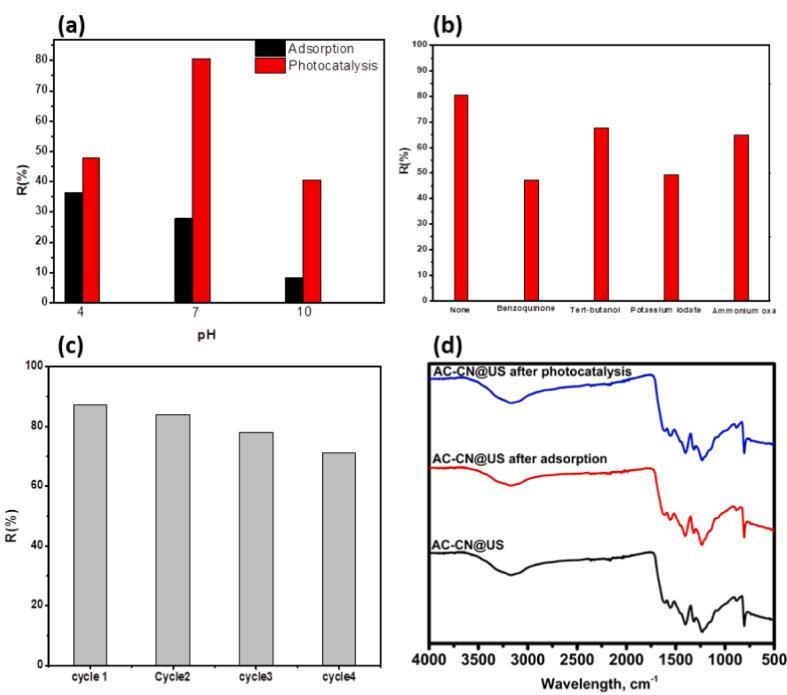
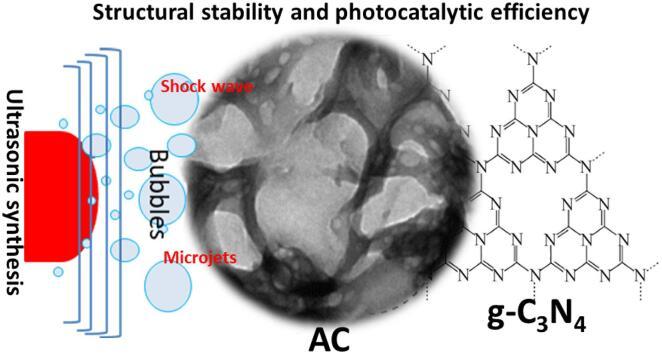
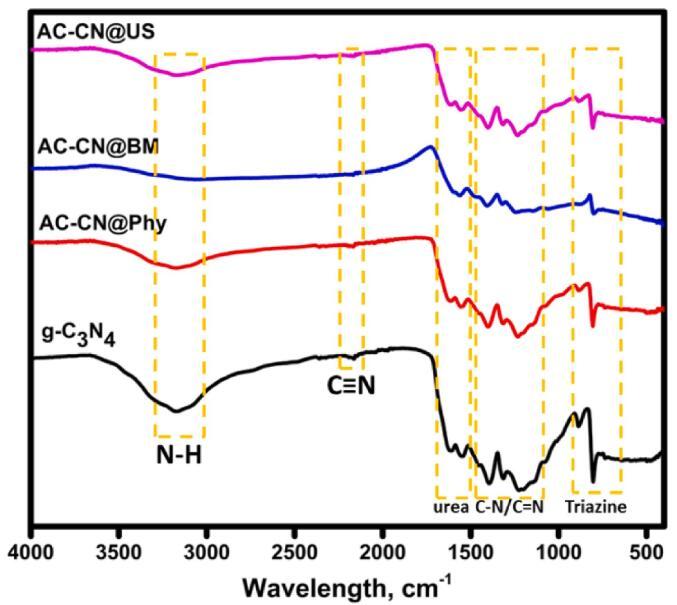
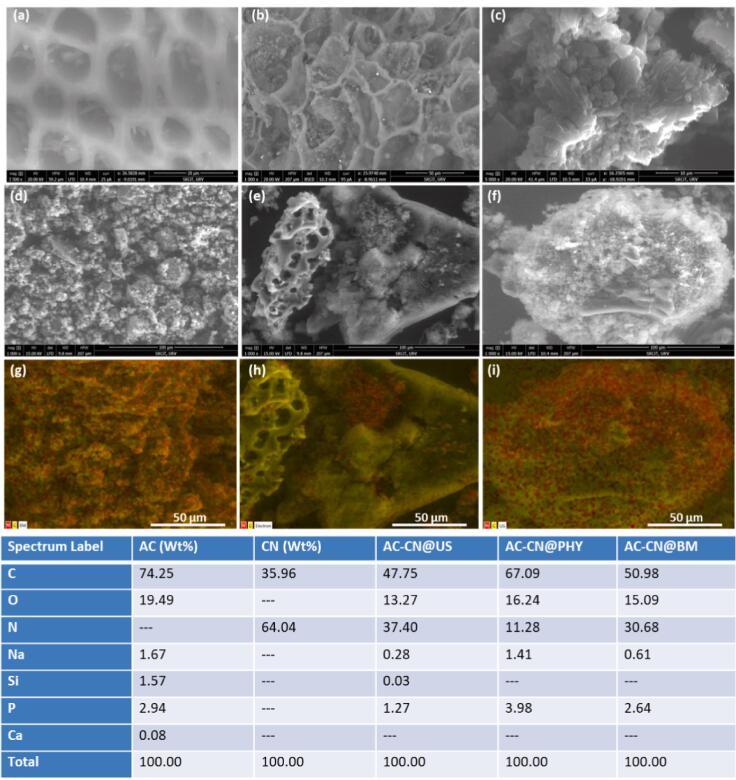
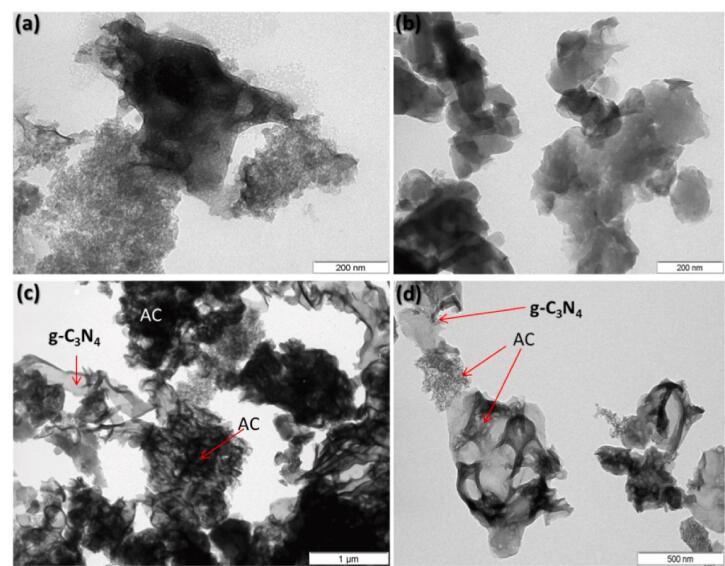
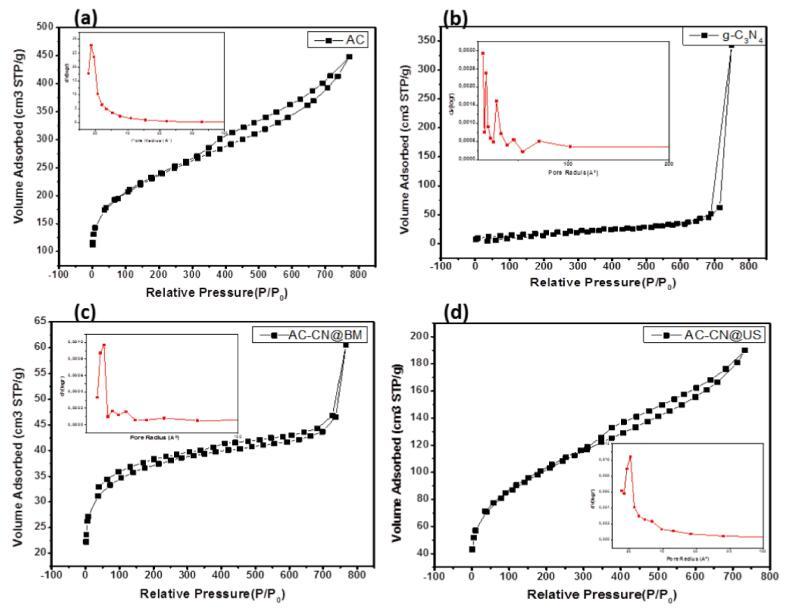
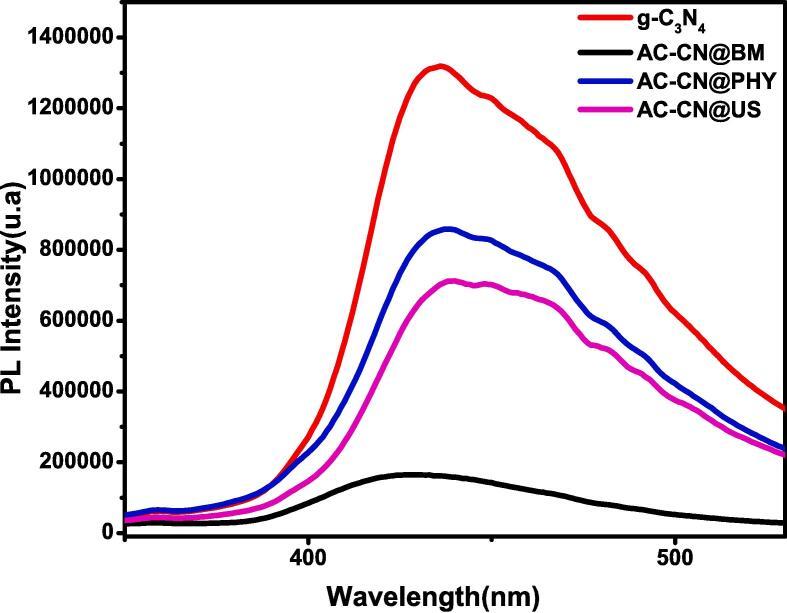
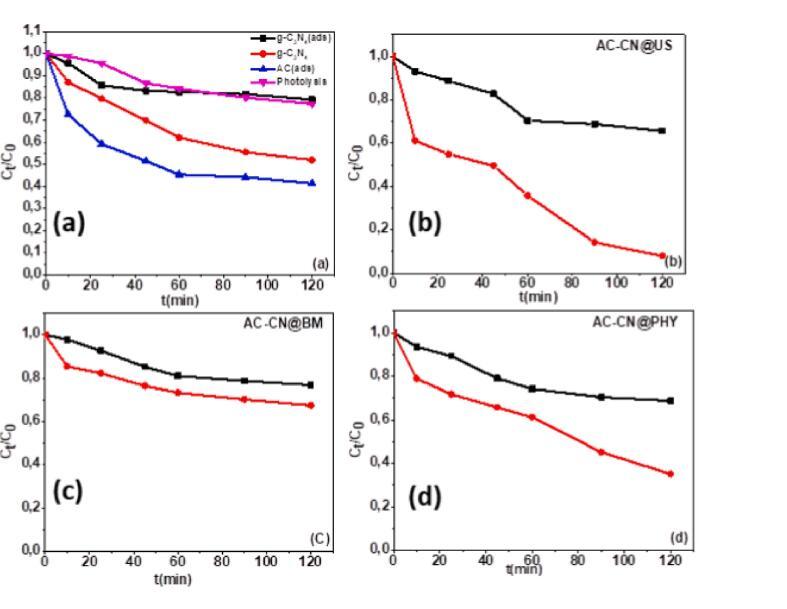
To solve low mass transfer in photocatalytic technology for water treatment, the combination of photoactive nanoparticles with highly adsorptive materials has been regarded as a successful approach. The optimization of photoactive particle coating in terms of dispersion on the surface of adsorbing support is the main key to reach a maximum synergism for pollutants removal. This study discusses the coating of as-prepared biomass based activated carbon by g-CN using three routes, namely ball milling (AC-CN@BM), physical stirring (AC-CN@Phy) and ultrasonic assisted coating (AC-CN@US). The coating mechanisms by different processes were discussed using different characterization techniques. Ball milling based coating provides good g-CN dispersion on the surface of AC, however, a partial degradation of g-CN structure and a lower surface area were confirmed by FTIR, XRD and BET analysis. Physically designed sample shows a significant agglomeration of particles on the surface of AC. However, ultrasonic coating provides excellent distribution of g-CN and high surface of the composite. In terms of photoactivity, AC-CN@BM exhibits the lowest adsorption and photocatalytic activity under solar light for the removal of ciprofloxacin. AC-CN@Phy showed medium performance, but less physical stability of g-CN particles on AC, leading to their partial release. AC-CN@US showed the highest efficiency and stability after using; suggesting the good combination between g-CN and AC, which in turn maximizes the removal of ciprofloxacin via Adsorb & shuttle process. The overall costs of composite, including the starting elements and the coating ultrasonic process are relatively low and green as compared to commonly reported routes.
为解决光催化技术在水处理中传质效率低的问题,将光活性纳米颗粒与高吸附性材料相结合被视为一种成功的方法。在吸附载体表面实现光活性颗粒涂层的最佳分散,是实现污染物去除最大协同效应的关键。本研究探讨了采用球磨法(AC-CN@BM)、物理搅拌法(AC-CN@Phy)和超声辅助涂层法(AC-CN@US)三种途径,用石墨相氮化碳(g-CN)对制备好的生物质基活性炭进行涂层。利用不同的表征技术讨论了不同工艺的涂层机理。基于球磨的涂层在活性炭表面提供了良好的g-CN分散性,然而,通过傅里叶变换红外光谱(FTIR)、X射线衍射(XRD)和比表面积分析(BET)证实,g-CN结构存在部分降解且比表面积较低。物理设计的样品在活性炭表面显示出明显的颗粒团聚。然而,超声涂层使g-CN分布优异且复合材料具有高比表面积。在光活性方面,AC-CN@BM在太阳光下对环丙沙星的去除表现出最低的吸附和光催化活性。AC-CN@Phy表现出中等性能,但g-CN颗粒在活性炭上的物理稳定性较差,导致其部分释放。AC-CN@US在使用后表现出最高的效率和稳定性;这表明g-CN与活性炭之间的良好结合,进而通过吸附与穿梭过程使环丙沙星的去除最大化。与通常报道的方法相比,该复合材料的总成本,包括起始元素和涂层超声工艺,相对较低且环保。

 Zotero 插件