
TET(Ten-eleven translocation)家族蛋白:结构、生物学功能及应用。
TET (Ten-eleven translocation) family proteins: structure, biological functions and applications.
机构信息
Department of Pathology, Ruijin Hospital and College of Basic Medical Sciences, Shanghai Jiao Tong University School of Medicine, Shanghai, 200025, China.
Key Laboratory of Cell Differentiation and Apoptosis of Chinese Ministry of Education, Shanghai Jiao Tong University School of Medicine, Shanghai, 200025, China.
出版信息
Signal Transduct Target Ther. 2023 Aug 11;8(1):297. doi: 10.1038/s41392-023-01537-x.
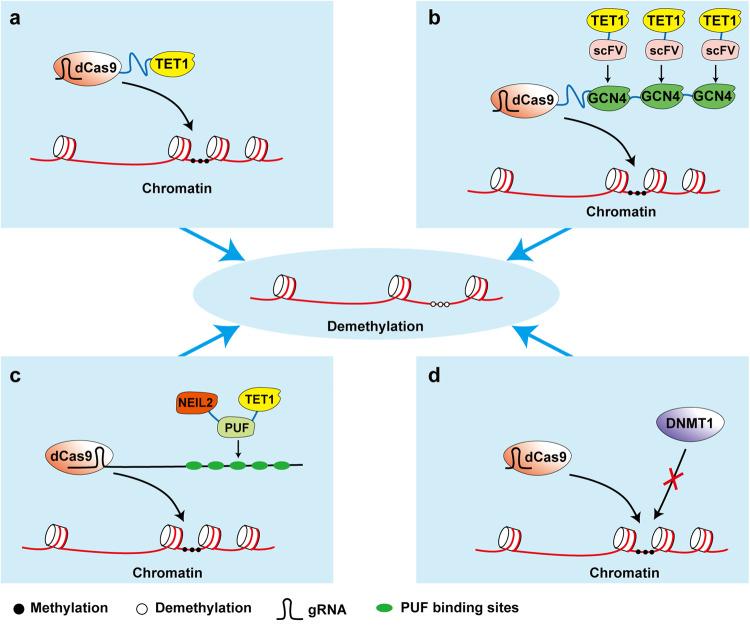
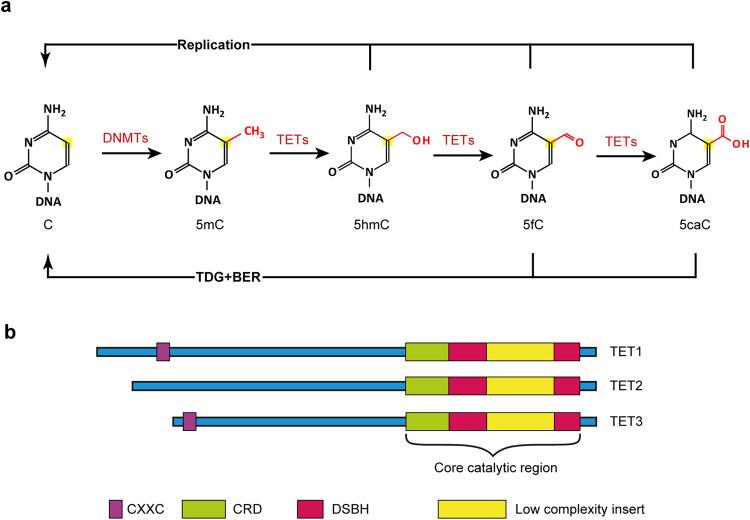
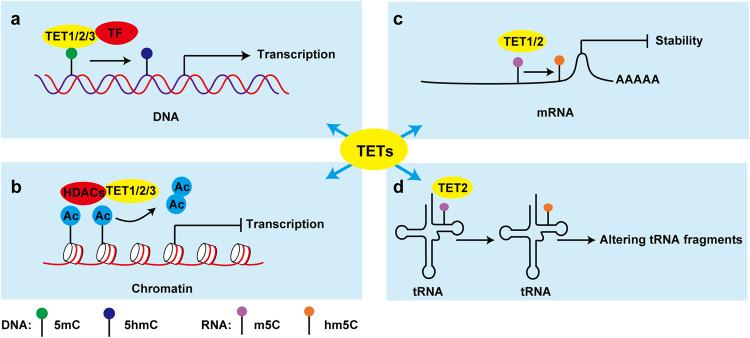
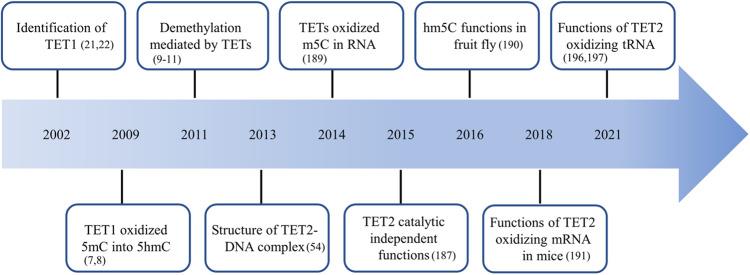
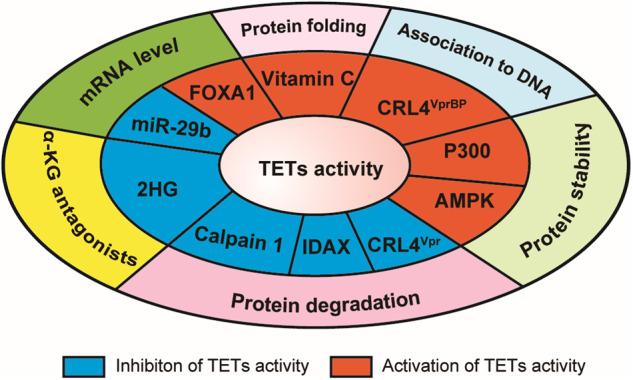
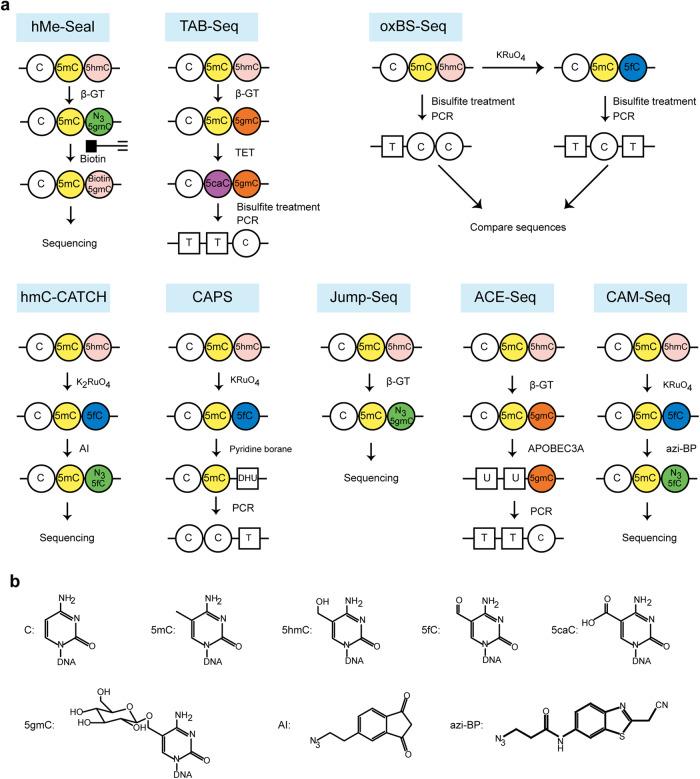
Ten-eleven translocation (TET) family proteins (TETs), specifically, TET1, TET2 and TET3, can modify DNA by oxidizing 5-methylcytosine (5mC) iteratively to yield 5-hydroxymethylcytosine (5hmC), 5-formylcytosine (5fC), and 5-carboxycytosine (5caC), and then two of these intermediates (5fC and 5caC) can be excised and return to unmethylated cytosines by thymine-DNA glycosylase (TDG)-mediated base excision repair. Because DNA methylation and demethylation play an important role in numerous biological processes, including zygote formation, embryogenesis, spatial learning and immune homeostasis, the regulation of TETs functions is complicated, and dysregulation of their functions is implicated in many diseases such as myeloid malignancies. In addition, recent studies have demonstrated that TET2 is able to catalyze the hydroxymethylation of RNA to perform post-transcriptional regulation. Notably, catalytic-independent functions of TETs in certain biological contexts have been identified, further highlighting their multifunctional roles. Interestingly, by reactivating the expression of selected target genes, accumulated evidences support the potential therapeutic use of TETs-based DNA methylation editing tools in disorders associated with epigenetic silencing. In this review, we summarize recent key findings in TETs functions, activity regulators at various levels, technological advances in the detection of 5hmC, the main TETs oxidative product, and TETs emerging applications in epigenetic editing. Furthermore, we discuss existing challenges and future directions in this field.
十 - 十一易位(TET)家族蛋白(TETs),特别是 TET1、TET2 和 TET3,可以通过氧化 5-甲基胞嘧啶(5mC)来修饰 DNA,反复生成 5-羟甲基胞嘧啶(5hmC)、5-甲酰胞嘧啶(5fC)和 5-羧基胞嘧啶(5caC),然后这两种中间产物(5fC 和 5caC)可以通过胸腺嘧啶-DNA 糖基化酶(TDG)介导的碱基切除修复被切除并返回未甲基化的胞嘧啶。因为 DNA 甲基化和去甲基化在许多生物学过程中发挥着重要作用,包括受精卵形成、胚胎发生、空间学习和免疫稳态,TETs 功能的调节非常复杂,其功能失调与许多疾病有关,如髓系恶性肿瘤。此外,最近的研究表明,TET2 能够催化 RNA 的羟甲基化以进行转录后调控。值得注意的是,在某些生物学背景下,TETs 的催化非依赖性功能已被确定,进一步强调了它们的多功能作用。有趣的是,通过重新激活选定靶基因的表达,越来越多的证据支持基于 TETs 的 DNA 甲基化编辑工具在与表观遗传沉默相关的疾病中的潜在治疗用途。在这篇综述中,我们总结了 TETs 功能的最新关键发现、各种水平的活性调节剂、5hmC(主要 TETs 氧化产物)检测的技术进步,以及 TETs 在表观遗传编辑中的新兴应用。此外,我们还讨论了该领域目前存在的挑战和未来的发展方向。
 Zotero 插件