
西班牙东部野猪()中潜在人畜共患病原体的分子检测与流行病学研究。
Molecular Detection and Epidemiology of Potentially Zoonotic spp. and in Wild Boar () from Eastern Spain.
作者信息
Martí-Marco Alba, Moratal Samantha, Torres-Blas Irene, Cardells Jesús, Lizana Victor, Dea-Ayuela María Auxiliadora
机构信息
Servicio de Análisis, Investigación y Gestión de Animales Silvestres (SAIGAS), Facultad de Veterinaria, Universidad Cardenal Herrera-CEU, CEU Universities, C/Tirant lo Blanc 7, Alfara del Patriarca, 46115 Valencia, Spain.
Wildlife Ecology & Health Group (WE&H), Veterinary Faculty, Universitat Autònoma de Barcelona (UAB), Travessera dels Turons, Bellaterra, 08193 Barcelona, Spain.
出版信息
Animals (Basel). 2023 Aug 3;13(15):2501. doi: 10.3390/ani13152501.
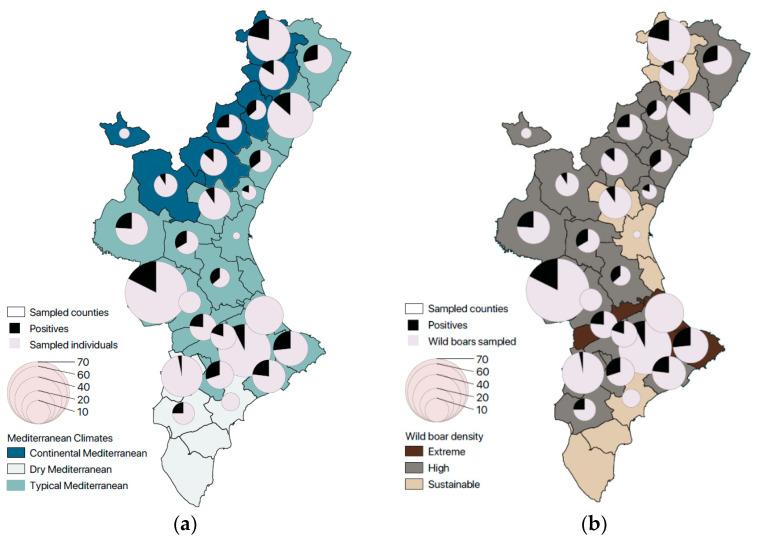
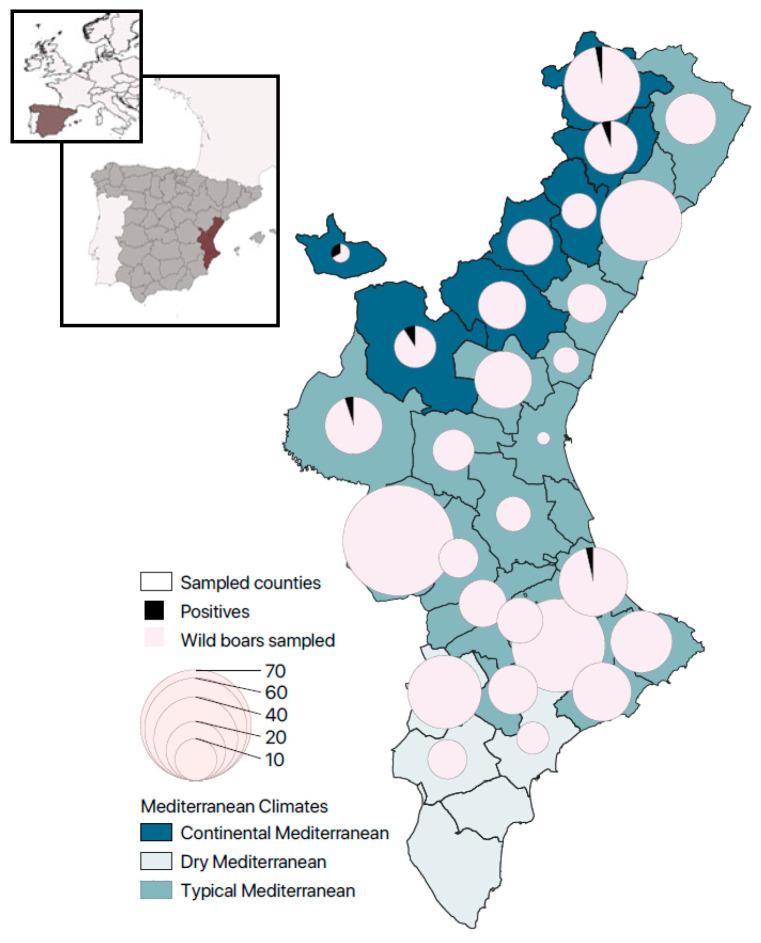
The protozoans and spp. are common causes of gastrointestinal disease in humans and animals. While both are commonly documented in domestic animals, few studies have analysed their presence in wildlife. To assess the prevalence of both parasites in wild boar () in the Valencian Community (eastern Spain), 498 wild boar faecal samples were collected from 2018 to 2022. spp. was detected by performing a nested PCR targeting a 578 bp sequence of the small subunit ribosomal RNA gene (SSU rRNA), followed by sequencing and phylogenetic analysis. For , a qPCR amplifying a fragment of 62 bp from the SSU rRNA was employed. Positive samples were genotyped for glutamate dehydrogenase and β-giardin genes. Different epidemiological factors were considered potential modulating variables in the transmission of both parasites. prevalence was 1.20%, while spp. prevalence reached 21.7%. Coinfection was observed in 0.2%. Genotyping of isolates only detected genotype E. Two species of spp. were identified: and The results of this study demonstrate that the exposure to spp. in wild boars is high, particularly among young individuals belonging to the Typical Mediterranean climate. Moreover, the probability of infection is dependent on both the season and the density of wild boars. On the other side, exposure to G. duodenalis seems scarce and is influenced, in turn, by the climate. Both species detected in the present study have been reported in humans. Due to wild boar increasing in number and their colonisation of urban and peri-urban areas, this could represent an inherent health risk for the human population.
原生动物和某些物种是人类和动物胃肠道疾病的常见病因。虽然这两者在家畜中都有普遍记录,但很少有研究分析它们在野生动物中的存在情况。为了评估西班牙东部巴伦西亚自治区野猪体内这两种寄生虫的流行情况,2018年至2022年期间收集了498份野猪粪便样本。通过针对小亚基核糖体RNA基因(SSU rRNA)的578 bp序列进行巢式PCR检测某些物种,随后进行测序和系统发育分析。对于另一种寄生虫,采用了扩增SSU rRNA 62 bp片段的qPCR方法。对阳性样本进行谷氨酸脱氢酶和β-贾第虫基因的基因分型。不同的流行病学因素被认为是这两种寄生虫传播中的潜在调节变量。某种寄生虫的流行率为1.20%,而另一种物种的流行率达到21.7%。共感染率为0.2%。对该寄生虫分离株的基因分型仅检测到基因型E。鉴定出两种该物种:[具体物种1]和[具体物种2]。本研究结果表明,野猪接触该物种的比例很高,特别是在属于典型地中海气候的年轻个体中。此外,感染概率取决于季节和野猪密度。另一方面,接触十二指肠贾第虫的情况似乎很少,而且反过来受气候影响。本研究中检测到的这两种物种都在人类中被报道过。由于野猪数量增加及其在城市和城郊地区的定居,这可能对人类构成内在的健康风险。


 Zotero 插件