
轮班工作光照条件对组织特异性经典生物钟基因节律的影响:来自小鼠模型研究的见解。
The impact of shift-work light conditions on tissue-specific circadian rhythms of canonical clock genes: insights from a mouse model study.
机构信息
Department of Otolaryngology-Head and Neck Surgery, University of Cincinnati, Cincinnati, Ohio, USA.
Division of Pediatric Otolaryngology-Head and Neck Surgery, Cincinnati Children's Hospital Medical Center, Cincinnati, Ohio, USA.
出版信息
F1000Res. 2023 Aug 17;12:762. doi: 10.12688/f1000research.136998.2. eCollection 2023.
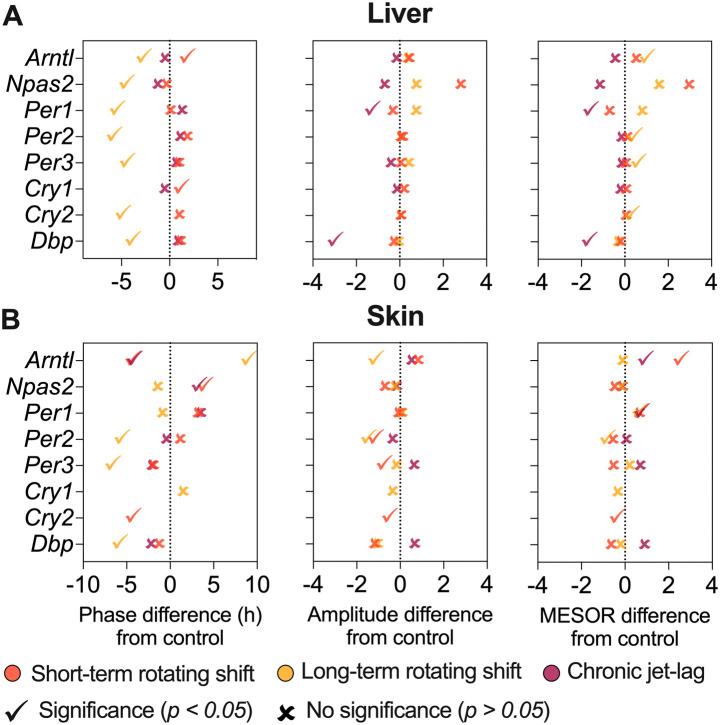
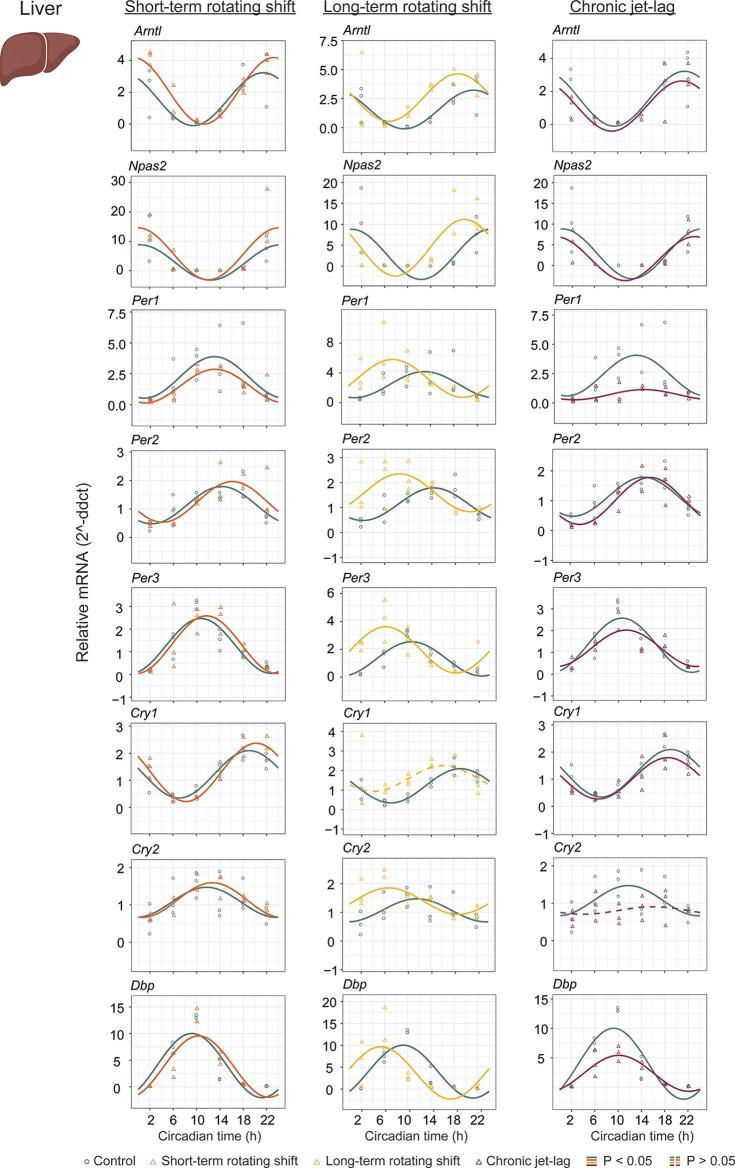
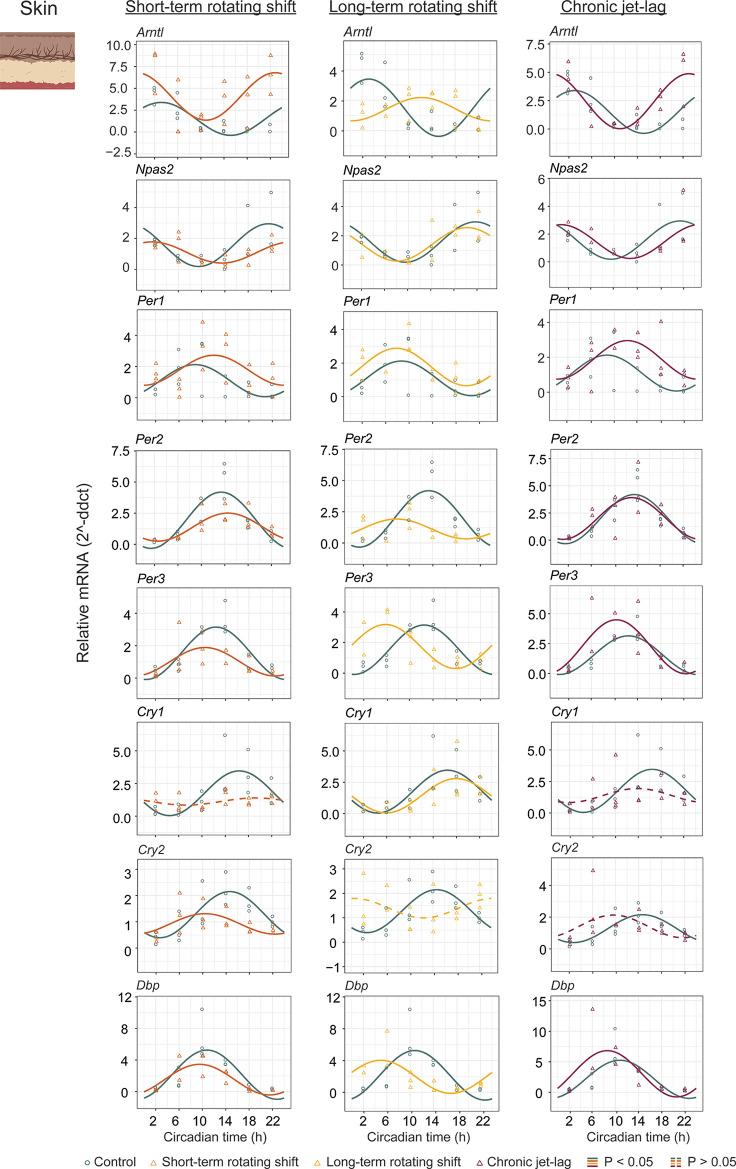
The natural day-night cycle synchronizes our circadian rhythms, but modern work practices like night shifts disrupt this pattern, leading to increased exposure to nighttime light. This exposure is linked to various health issues. While some studies have explored the effects of night shifts on human circadian rhythms, there is limited research on the consequences of long-term exposure to shift-work light conditions. Rodents can provide valuable insights into these effects. This study aimed to examine how short- or long-term exposure to rotating shifts and chronic jetlag affects the core circadian oscillators in the liver and skin of mammals. C57BL/6J male mice were subjected to simulated shift-work light conditions, including short-term or long-term rotating shifts and chronic jet-lag conditions. Liver and skin samples were collected every four hours over a 24-hour period on the second day of constant darkness. RNA was extracted and qRT-PCR analysis was conducted to measure the circadian gene expression in liver and skin tissues. Circadian rhythm analysis using CircaCompare compared the control group to mice exposed to shift-work light conditions. The liver's circadian clock is significantly altered in mice under long-term rotating shift conditions, with a lesser but still noticeable impact in mice experiencing chronic jetlag. However, short-term rotating shift conditions do not significantly affect the liver's circadian clock. Conversely, all three simulated shift conditions affect the skin's circadian clock, indicating that the skin clock is more sensitive to shift-work light conditions than the liver clock. Compared to the liver, the skin's circadian clock is greatly affected by long-term rotating shift conditions. The study findings indicate more pronounced disturbances in the canonical clock genes of the skin compared to the liver under simulated shift-work light conditions. These results suggest that the skin clock is more vulnerable to the effects of shift-work.
昼夜自然节律同步我们的生物钟,但现代工作实践,如夜班,打乱了这种模式,导致夜间光照的暴露增加。这种暴露与各种健康问题有关。虽然一些研究已经探讨了夜班对人类生物钟的影响,但对于长期暴露于轮班工作光照条件的后果的研究有限。啮齿动物可以为这些影响提供有价值的见解。本研究旨在研究短期或长期暴露于轮班工作光照条件和慢性时差反应如何影响哺乳动物肝脏和皮肤中的核心生物钟振荡器。C57BL/6J 雄性小鼠接受模拟轮班工作光照条件,包括短期或长期轮班和慢性时差反应条件。在连续黑暗的第二天,每四小时采集一次肝脏和皮肤样本,持续 24 小时。提取 RNA 并进行 qRT-PCR 分析,以测量肝脏和皮肤组织中的生物钟基因表达。使用 CircaCompare 进行的生物钟节律分析将对照组与暴露于轮班工作光照条件的小鼠进行比较。
长期轮班条件下,小鼠肝脏的生物钟明显改变,而慢性时差反应的影响较小,但仍很明显。然而,短期轮班条件不会显著影响肝脏的生物钟。相反,所有三种模拟轮班条件都会影响皮肤的生物钟,表明皮肤时钟对轮班工作光照条件比肝脏时钟更敏感。与肝脏相比,皮肤的生物钟受长期轮班条件的影响更大。
研究结果表明,与肝脏相比,在模拟轮班工作光照条件下,皮肤的经典生物钟基因受到更明显的干扰。这些结果表明皮肤时钟对轮班工作的影响更敏感。

 Zotero 插件