
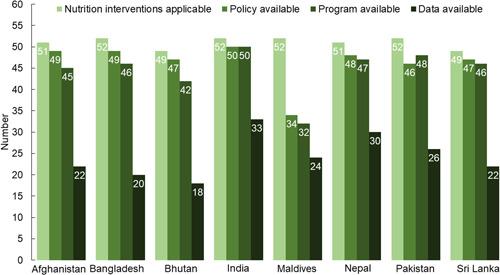
南亚国家政策、规划和基于调查的覆盖数据可用于跟踪营养干预措施。
Availability of national policies, programmes, and survey-based coverage data to track nutrition interventions in South Asia.
机构信息
Poverty, Health, and Nutrition Division, International Food Policy Research Institute, New Delhi, Delhi, India.
World Food Program, Rome, Italy.
出版信息
Matern Child Nutr. 2024 Jan;20(1):e13555. doi: 10.1111/mcn.13555. Epub 2023 Aug 17.
Progress to improve nutrition among women, infants and children in South Asia has fallen behind the pace needed to meet established global targets. Renewed political commitment and monitoring of nutrition interventions are required to improve coverage and quality of care. Our study aimed to assess the availability of national nutrition policies, programmes, and coverage data of nutrition interventions for women, children, and adolescents in eight countries in South Asia. We reviewed relevant policy and programme documents, examined questionnaires used in the most recent rounds of 20 nationally representative surveys, and generated an evidence gap map on the availability of policies, programmes, and survey data to track progress on coverage of globally recommended nutrition interventions. Current policies and programmes in South Asian countries addressed almost all the recommended nutrition interventions targeted at women, children, and adolescents. There was a strong policy focus in all countries, except Maldives, on health system platforms such as antenatal and postnatal care and child growth and development. Survey data on nutrition intervention coverage was most available in India and Nepal, while Bangladesh and Bhutan had the least. Though countries in South Asia have committed to national nutrition policies and strategies, national surveys had substantial data gaps, precluding progress tracking of nutrition intervention coverage. Greater attention and effort are needed for multisectoral collaboration to promote and strengthen nutrition data systems.
南亚改善妇女、婴儿和儿童营养的进展落后于实现既定全球目标所需的速度。需要重新作出政治承诺并监测营养干预措施,以提高覆盖面和护理质量。我们的研究旨在评估南亚 8 个国家的妇女、儿童和青少年营养政策、方案和营养干预措施覆盖数据的情况。我们审查了相关政策和方案文件,检查了最近几轮全国代表性调查中使用的调查问卷,并绘制了一份政策、方案和调查数据空白图,以跟踪全球建议的营养干预措施覆盖情况的进展。南亚各国的现行政策和方案几乎涵盖了所有针对妇女、儿童和青少年的建议营养干预措施。除马尔代夫外,所有国家都非常重视卫生系统平台,如产前和产后护理以及儿童生长发育。印度和尼泊尔的营养干预措施覆盖情况调查数据最为丰富,而孟加拉国和不丹的数据则最少。尽管南亚各国都承诺制定国家营养政策和战略,但国家调查仍存在大量数据空白,无法跟踪营养干预措施覆盖情况的进展。需要更加关注和努力,促进多部门合作,加强营养数据系统。
 Zotero 插件