
我们如何发现可开发的基于抗体的生物疗法?
How can we discover developable antibody-based biotherapeutics?
作者信息
Bauer Joschka, Rajagopal Nandhini, Gupta Priyanka, Gupta Pankaj, Nixon Andrew E, Kumar Sandeep
机构信息
Early Stage Pharmaceutical Development Biologicals, Boehringer Ingelheim Pharma GmbH & Co. KG, Biberach/Riss, Germany.
In Silico Team, Boehringer Ingelheim, Hannover, Germany.
出版信息
Front Mol Biosci. 2023 Aug 7;10:1221626. doi: 10.3389/fmolb.2023.1221626. eCollection 2023.
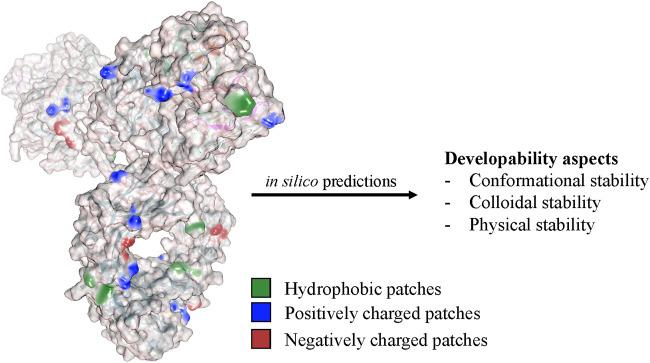
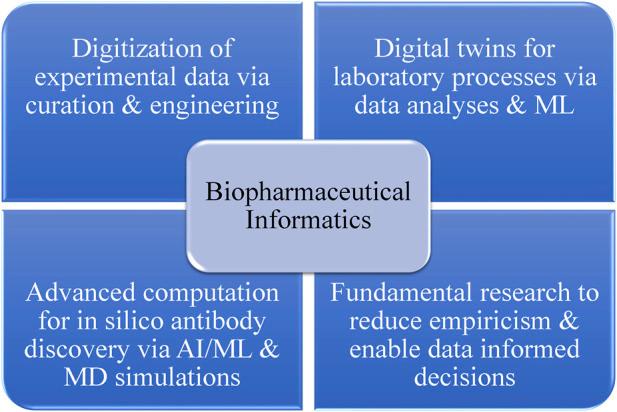
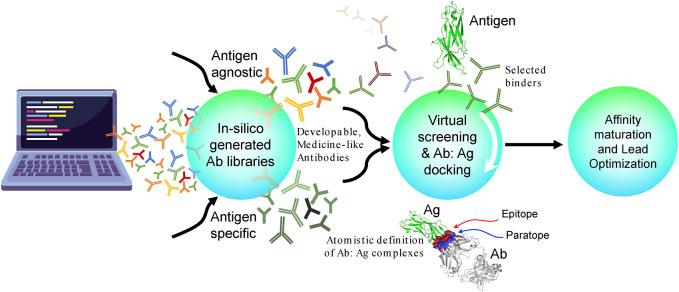
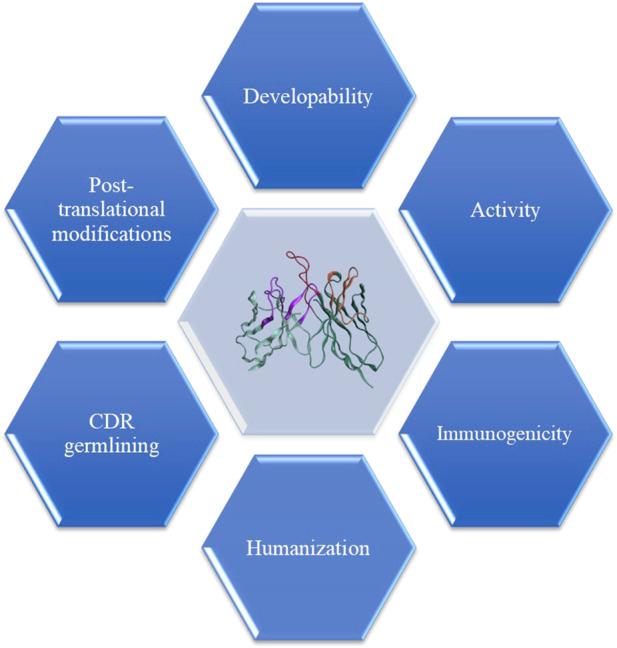
Antibody-based biotherapeutics have emerged as a successful class of pharmaceuticals despite significant challenges and risks to their discovery and development. This review discusses the most frequently encountered hurdles in the research and development (R&D) of antibody-based biotherapeutics and proposes a conceptual framework called biopharmaceutical informatics. Our vision advocates for the syncretic use of computation and experimentation at every stage of biologic drug discovery, considering developability (manufacturability, safety, efficacy, and pharmacology) of potential drug candidates from the earliest stages of the drug discovery phase. The computational advances in recent years allow for more precise formulation of disease concepts, rapid identification, and validation of targets suitable for therapeutic intervention and discovery of potential biotherapeutics that can agonize or antagonize them. Furthermore, computational methods for and epitope-specific antibody design are increasingly being developed, opening novel computationally driven opportunities for biologic drug discovery. Here, we review the opportunities and limitations of emerging computational approaches for optimizing antigens to generate robust immune responses, generation of antibody sequences, discovery of potential antibody binders through virtual screening, assessment of hits, identification of lead drug candidates and their affinity maturation, and optimization for developability. The adoption of biopharmaceutical informatics across all aspects of drug discovery and development cycles should help bring affordable and effective biotherapeutics to patients more quickly.
尽管基于抗体的生物治疗药物的发现和开发面临重大挑战和风险,但它们已成为一类成功的药物。本综述讨论了基于抗体的生物治疗药物研发(R&D)中最常遇到的障碍,并提出了一个名为生物制药信息学的概念框架。我们的愿景主张在生物药物发现的每个阶段都将计算和实验融合使用,从药物发现阶段的最早阶段就考虑潜在药物候选物的可开发性(可制造性、安全性、有效性和药理学)。近年来的计算进展使得能够更精确地阐述疾病概念、快速识别和验证适合治疗干预的靶点以及发现能够激动或拮抗这些靶点的潜在生物治疗药物。此外,针对抗原表位特异性抗体设计的计算方法也在不断发展,为生物药物发现带来了新的由计算驱动的机会。在此,我们综述了新兴计算方法在优化抗原以产生强大免疫反应、生成抗体序列、通过虚拟筛选发现潜在抗体结合物、评估命中物、鉴定先导药物候选物及其亲和力成熟以及可开发性优化等方面的机会和局限性。在药物发现和开发周期的各个方面采用生物制药信息学应有助于更快地为患者带来负担得起且有效的生物治疗药物。

 Zotero 插件