
了解 2020 年 1 月至 2022 年 4 月期间英格兰对 COVID-19 大流行的反应对胃肠道感染监测趋势的影响。
Understanding the impact of the COVID-19 pandemic response on GI infection surveillance trends in England, January 2020-April 2022.
机构信息
North East Field Services, Health Protection Operations, UK Health Security Agency, Newcastle upon Tyne, UK.
National Institute for Health Research Health Protection Research Unit (NIHR HPRU) in Gastrointestinal Infections, University of Liverpool, Liverpool, UK.
出版信息
Epidemiol Infect. 2023 Aug 25;151:e147. doi: 10.1017/S095026882300136X.
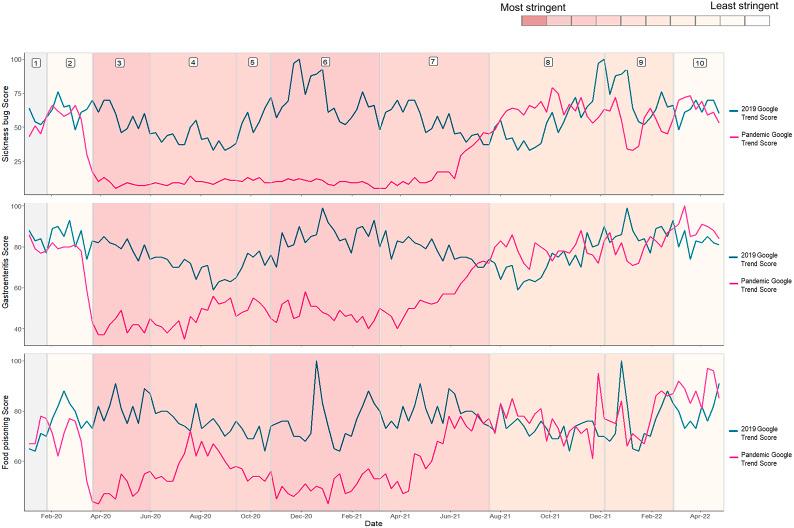
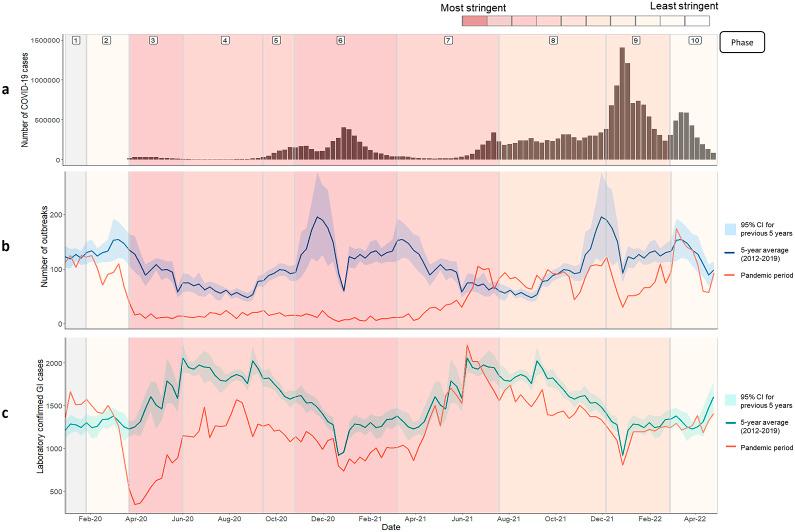
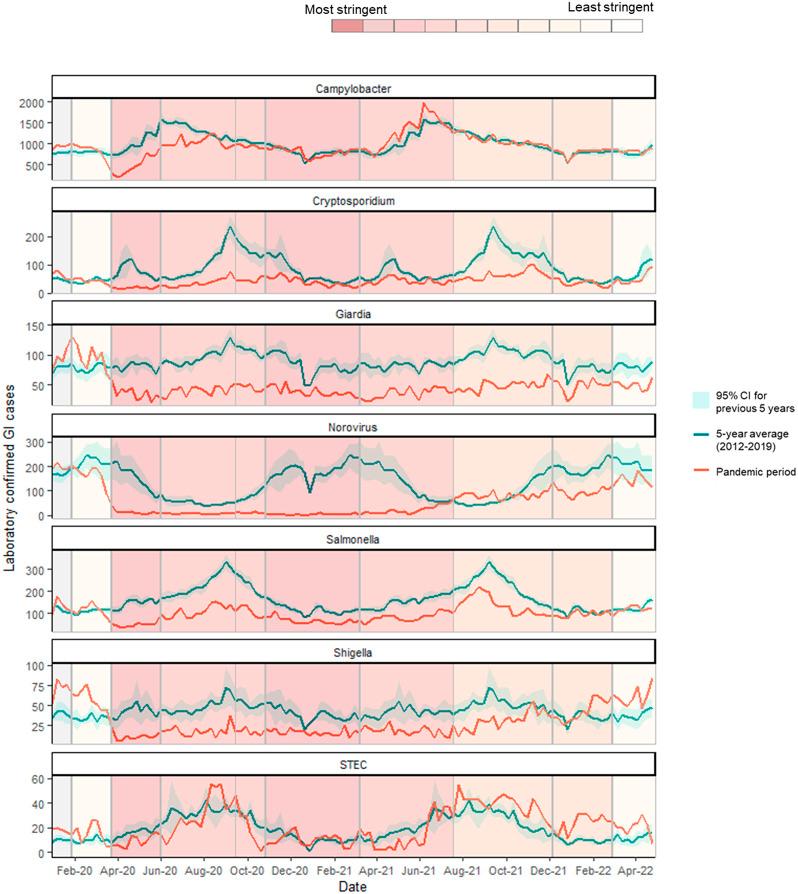
Stepwise non-pharmaceutical interventions and health system changes implemented as part of the COVID-19 response have had implications on the incidence, diagnosis, and reporting of other communicable diseases. Here, we established the impact of the COVID-19 outbreak response on gastrointestinal (GI) infection trends using routinely collected surveillance data from six national English laboratory, outbreak, and syndromic surveillance systems using key dates of governmental policy to assign phases for comparison between pandemic and historic data. Following decreases across all indicators during the first lockdown (March-May 2020), bacterial and parasitic pathogens associated with foodborne or environmental transmission routes recovered rapidly between June and September 2020, while those associated with travel and/or person-to-person transmission remained lower than expected for 2021. High out-of-season norovirus activity was observed with the easing of lockdown measures between June and October 2021, with this trend reflected in laboratory and outbreak systems and syndromic surveillance indicators. Above expected increases in emergency department (ED) attendances may have reflected changes in health-seeking behaviour and provision. Differential reductions across specific GI pathogens are indicative of the underlying routes of transmission. These results provide further insight into the drivers for transmission, which can help inform control measures for GI infections.
作为 COVID-19 应对措施的一部分,逐步实施的非药物干预措施和卫生系统变革对传染病的发病率、诊断和报告都产生了影响。在这里,我们使用来自六个全国性的英国实验室、疫情爆发和症状监测系统的常规监测数据,利用政府政策的关键日期来分配大流行数据和历史数据之间的比较阶段,从而确定 COVID-19 疫情应对措施对胃肠道(GI)感染趋势的影响。在 2020 年 3 月至 5 月的第一次封锁期间,所有指标都呈下降趋势,随后与食源或环境传播途径相关的细菌和寄生虫病原体在 2020 年 6 月至 9 月之间迅速恢复,而与旅行和/或人际传播相关的病原体仍低于 2021 年的预期水平。随着 2021 年 6 月至 10 月封锁措施的放松,季节性较强的诺如病毒活动量也有所增加,实验室和疫情爆发系统以及症状监测指标都反映出了这一趋势。急诊科(ED)就诊人数的增加可能反映了寻求医疗服务行为和供给的变化。特定胃肠道病原体的差异减少表明了潜在的传播途径。这些结果进一步深入了解了传播的驱动因素,这有助于为胃肠道感染的控制措施提供信息。

 Zotero 插件