
谷胱甘肽和谷氧还蛋白——细胞氧化还原稳态与信号传导中的关键因子
Glutathione and Glutaredoxin-Key Players in Cellular Redox Homeostasis and Signaling.
作者信息
Chai Yuh-Cherng, Mieyal John J
机构信息
Department of Chemistry, John Carroll University, University Heights, OH 44118, USA.
Department of Pharmacology, Case Western Reserve University, Cleveland, OH 44106, USA.
出版信息
Antioxidants (Basel). 2023 Aug 3;12(8):1553. doi: 10.3390/antiox12081553.
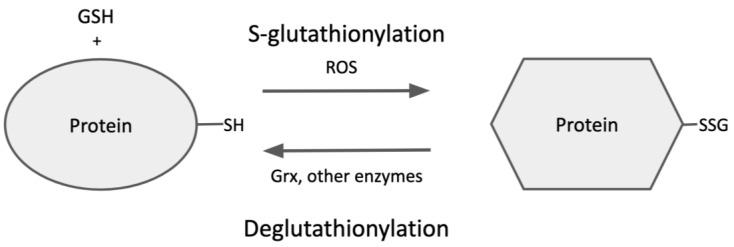
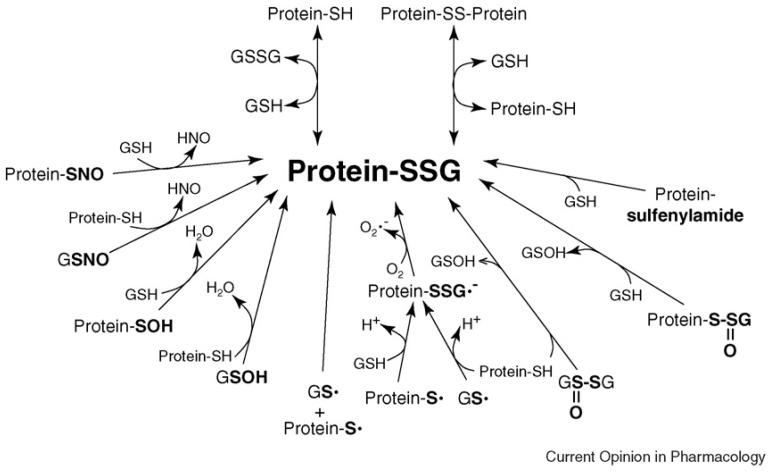
This Special Issue of on Glutathione (GSH) and Glutaredoxin (Grx) was designed to collect review articles and original research studies focused on advancing the current understanding of the roles of the GSH/Grx system in cellular homeostasis and disease processes. The tripeptide glutathione (GSH) is the most abundant non-enzymatic antioxidant/nucleophilic molecule in cells. In addition to various metabolic reactions involving GSH and its oxidized counterpart GSSG, oxidative post-translational modification (PTM) of proteins has been a focal point of keen interest in the redox field over the last few decades. In particular, the S-glutathionylation of proteins (protein-SSG formation), i.e., mixed disulfides between GSH and protein thiols, has been studied extensively. This reversible PTM can act as a regulatory switch to interconvert inactive and active forms of proteins, thereby mediating cell signaling and redox homeostasis. The unique architecture of the GSH molecule enhances its relative abundance in cells and contributes to the glutathionyl specificity of the primary catalytic activity of the glutaredoxin enzymes, which play central roles in redox homeostasis and signaling, and in iron metabolism in eukaryotes and prokaryotes under physiological and pathophysiological conditions. The class-1 glutaredoxins are characterized as cytosolic GSH-dependent oxidoreductases that catalyze reversible protein S-glutathionylation specifically, thereby contributing to the regulation of redox signal transduction and/or the protection of protein thiols from irreversible oxidation. This Special Issue includes nine other articles: three original studies and six review papers. Together, these ten articles support the central theme that GSH/Grx is a unique system for regulating thiol-redox hemostasis and redox-signal transduction, and the dysregulation of the GSH/Grx system is implicated in the onset and progression of various diseases involving oxidative stress. Within this context, it is important to appreciate the complementary functions of the GSH/Grx and thioredoxin systems not only in thiol-disulfide regulation but also in reversible S-nitrosylation. Several potential clinical applications have emerged from a thorough understanding of the GSH/Grx redox regulatory system at the molecular level, and in various cell types in vitro and in vivo, including, among others, the concept that elevating Grx content/activity could serve as an anti-fibrotic intervention; and discovering small molecules that mimic the inhibitory effects of S-glutathionylation on dimer association could identify novel anti-viral agents that impact the key protease activities of the HIV and SARS-CoV-2 viruses. Thus, this Special Issue on Glutathione and Glutaredoxin has focused attention and advanced understanding of an important aspect of redox biology, as well as spawning questions worthy of future study.
本期关于谷胱甘肽(GSH)和谷氧还蛋白(Grx)的特刊旨在收集综述文章和原创研究,重点是深化当前对GSH/Grx系统在细胞稳态和疾病过程中作用的理解。三肽谷胱甘肽(GSH)是细胞中最丰富的非酶抗氧化剂/亲核分子。除了涉及GSH及其氧化形式GSSG的各种代谢反应外,蛋白质的氧化翻译后修饰(PTM)在过去几十年中一直是氧化还原领域备受关注的焦点。特别是,蛋白质的S-谷胱甘肽化(蛋白质-SSG形成),即GSH与蛋白质硫醇之间的混合二硫键,已得到广泛研究。这种可逆的PTM可作为一种调节开关,使蛋白质的无活性和活性形式相互转换,从而介导细胞信号传导和氧化还原稳态。GSH分子独特的结构增强了其在细胞中的相对丰度,并有助于谷氧还蛋白酶主要催化活性的谷胱甘肽特异性,谷氧还蛋白酶在生理和病理生理条件下的真核生物和原核生物的氧化还原稳态、信号传导及铁代谢中发挥核心作用。1类谷氧还蛋白的特征是胞质GSH依赖性氧化还原酶,它特异性催化可逆的蛋白质S-谷胱甘肽化,从而有助于调节氧化还原信号转导和/或保护蛋白质硫醇免受不可逆氧化。本期特刊还包括其他九篇文章:三篇原创研究和六篇综述论文。这十篇文章共同支持了一个核心主题,即GSH/Grx是调节硫醇-氧化还原稳态和氧化还原信号转导的独特系统,GSH/Grx系统的失调与涉及氧化应激的各种疾病的发生和发展有关。在此背景下,认识到GSH/Grx和硫氧还蛋白系统不仅在硫醇-二硫键调节方面,而且在可逆的S-亚硝基化方面的互补功能非常重要。对GSH/Grx氧化还原调节系统在分子水平以及体外和体内各种细胞类型中的深入理解已经产生了一些潜在的临床应用,包括提高Grx含量/活性可作为抗纤维化干预措施的概念;以及发现模拟S-谷胱甘肽化对二聚体缔合抑制作用的小分子可能会鉴定出影响HIV和SARS-CoV-2病毒关键蛋白酶活性的新型抗病毒药物。因此,本期关于谷胱甘肽和谷氧还蛋白的特刊聚焦并深化了对氧化还原生物学一个重要方面的理解,同时也引发了值得未来研究的问题。

 Zotero 插件