
新冠疫情流行时期马来西亚的新冠病毒基因组监测
Genomic Surveillance of SARS-CoV-2 in Malaysia during the Era of Endemic COVID-19.
作者信息
Lee Tze Yan, Lim Wai Feng, Ang Geik Yong, Yu Choo Yee
机构信息
School of Liberal Arts, Science and Technology (PUScLST), Perdana University, Kuala Lumpur 50490, Malaysia.
Sunway Medical Centre, Bandar Sunway, Subang Jaya 47500, Malaysia.
出版信息
Life (Basel). 2023 Jul 28;13(8):1644. doi: 10.3390/life13081644.
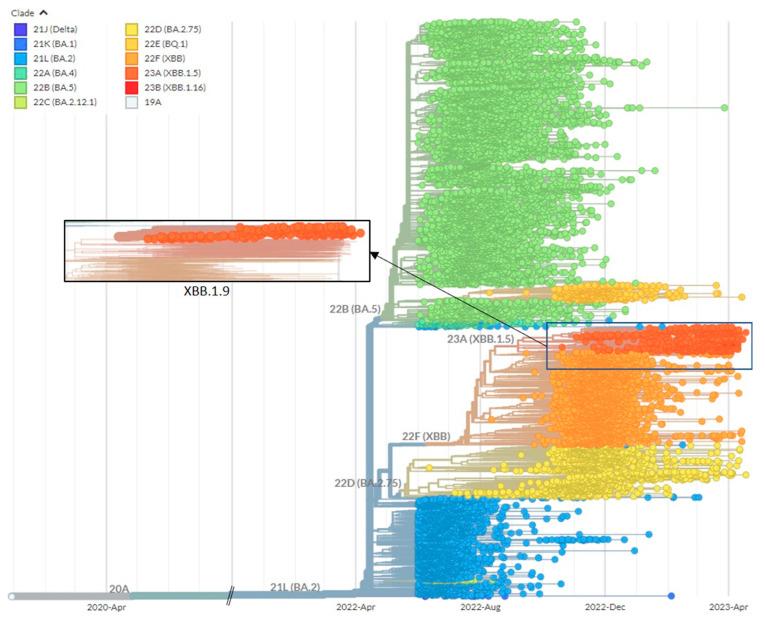
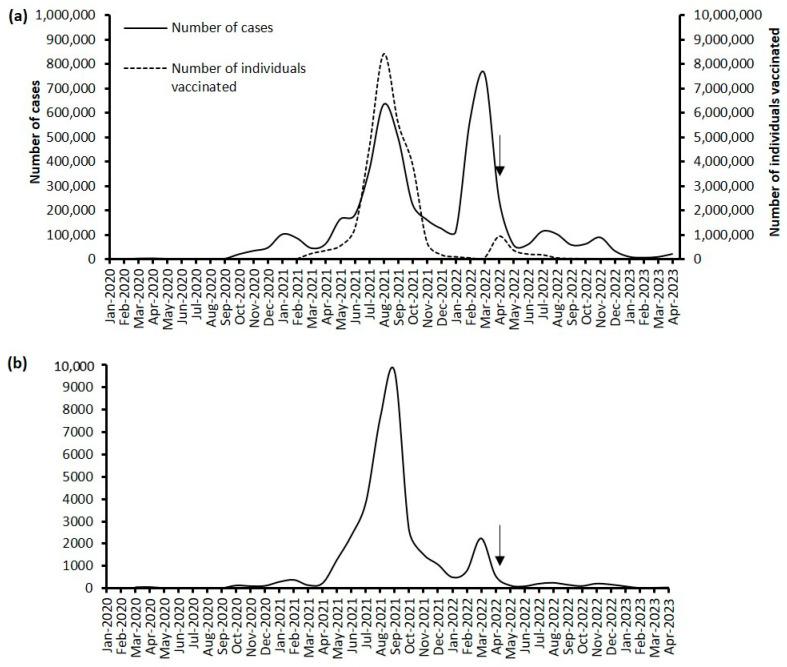
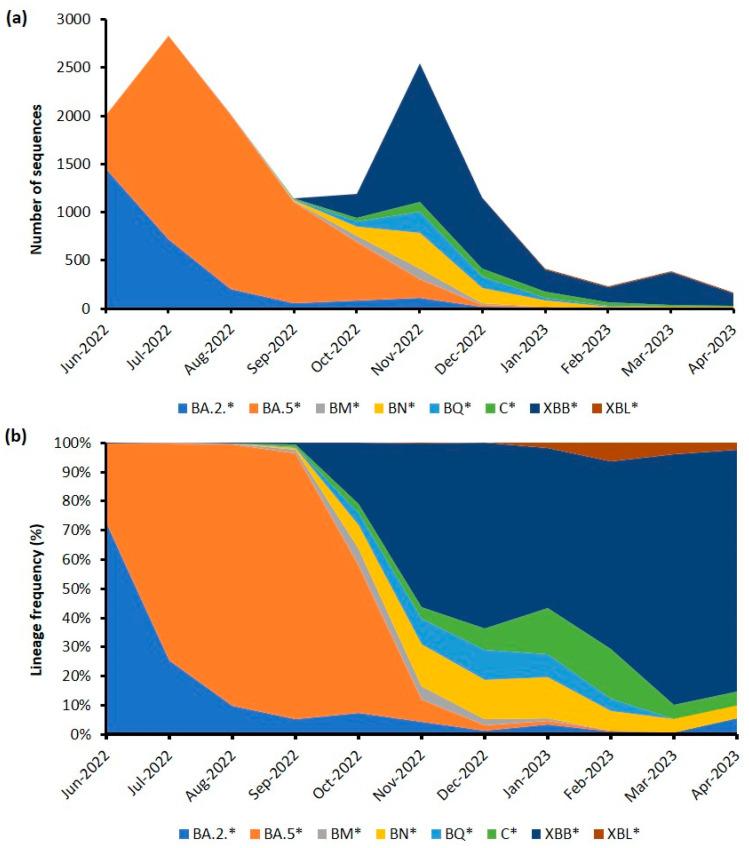
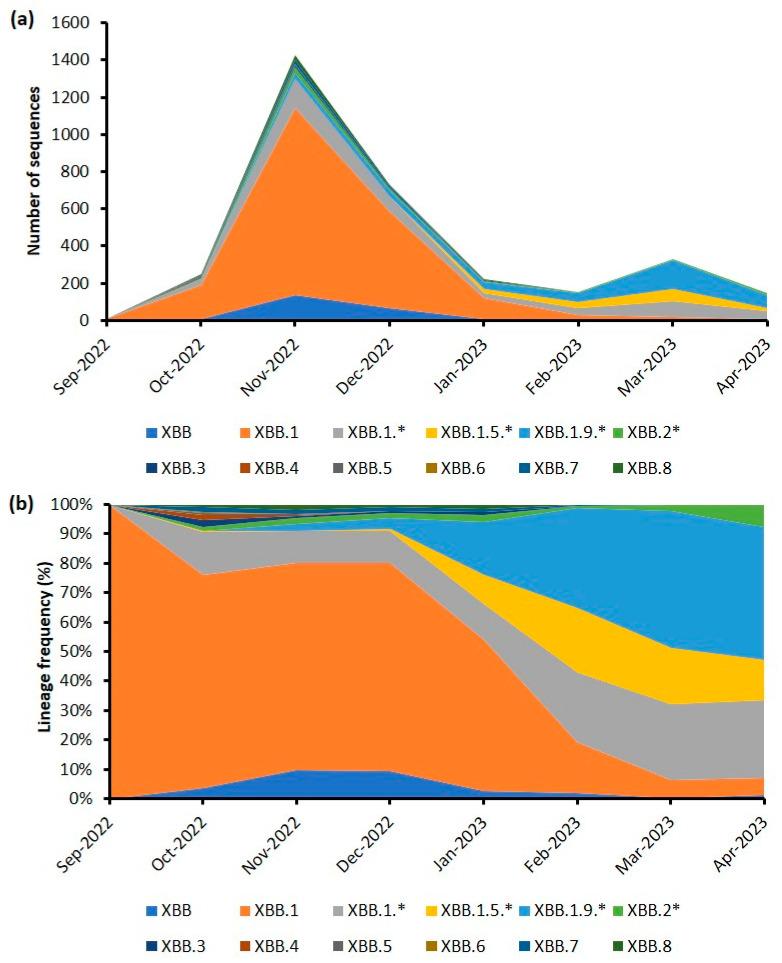
On 5 May 2023, WHO declared the end of coronavirus disease 2019 (COVID-19) as a public health emergency of international concern. However, the risk of new severe acute respiratory syndrome coronavirus 2 (SARS-CoV-2) variants causing rapid and high surges in cases and deaths remained. In Malaysia, five COVID-19 waves during the pandemic phase were well characterized, but similar studies focusing on the endemic phase were lacking. Hence, we retrieved 14,965 SARS-CoV-2 genomic sequences from the GISAID EpiCoV database for clade, lineage, and phylogenetic analysis in order to provide an insight into the population dynamics of SARS-CoV-2 that circulated in Malaysia from June 2022 to April 2023. The dominance of the Omicron variants was observed, and two new waves of infections driven by BA.5.2 and XBB.1, respectively, were detected. Data as of April 2023 also pointed to a possible eighth wave driven by XBB.1.9. Although new variants associated with higher transmissibility were behind the multiple surges, these subsequent waves had lower intensities as compared to the fourth and fifth waves. The on-going circulation and evolution of SARS-CoV-2 mean that COVID-19 still poses a serious threat, necessitating active genomic surveillance for early warning of potential new variants of concern.
2023年5月5日,世界卫生组织宣布2019冠状病毒病(COVID-19)不再构成国际关注的突发公共卫生事件。然而,新型严重急性呼吸综合征冠状病毒2(SARS-CoV-2)变体导致病例和死亡人数迅速大幅激增的风险依然存在。在马来西亚,大流行阶段的五波COVID-19疫情得到了充分描述,但缺乏针对流行阶段的类似研究。因此,我们从全球共享流感数据倡议组织(GISAID)的EpiCoV数据库中检索了14965条SARS-CoV-2基因组序列,进行进化枝、谱系和系统发育分析,以便深入了解2022年6月至2023年4月在马来西亚传播的SARS-CoV-2的种群动态。研究观察到奥密克戎变体占主导地位,并分别检测到由BA.5.2和XBB.1驱动的两波新感染潮。截至2023年4月的数据还表明可能存在由XBB.1.9驱动的第八波疫情。尽管与更高传播性相关的新变体是多次激增的原因,但与第四波和第五波相比,后续这些波次的强度较低。SARS-CoV-2的持续传播和进化意味着COVID-19仍然构成严重威胁,因此有必要进行积极的基因组监测,以便对潜在的新关注变体进行早期预警。
 Zotero 插件