
食品中赭曲霉毒素A的风险评估。
Risk assessment of ochratoxin A in food.
作者信息
Schrenk Dieter, Bodin Laurent, Chipman James Kevin, Del Mazo Jesús, Grasl-Kraupp Bettina, Hogstrand Christer, Hoogenboom Laurentius Ron, Leblanc Jean-Charles, Nebbia Carlo Stefano, Nielsen Elsa, Ntzani Evangelia, Petersen Annette, Sand Salomon, Schwerdtle Tanja, Vleminckx Christiane, Wallace Heather, Alexander Jan, Dall'Asta Chiara, Mally Angela, Metzler Manfred, Binaglia Marco, Horváth Zsuzsanna, Steinkellner Hans, Bignami Margherita
出版信息
EFSA J. 2020 May 13;18(5):e06113. doi: 10.2903/j.efsa.2020.6113. eCollection 2020 May.
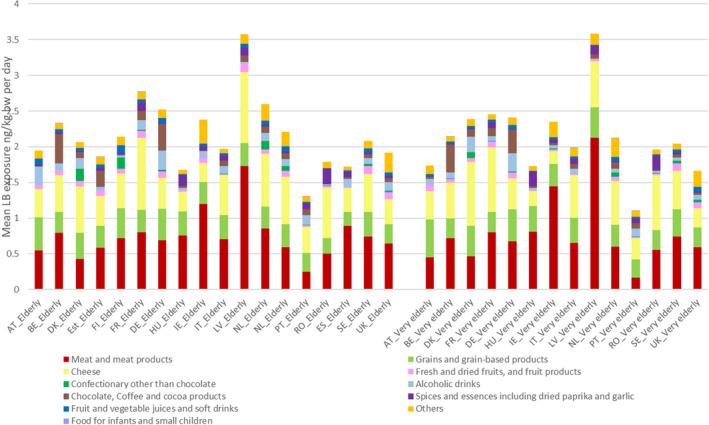
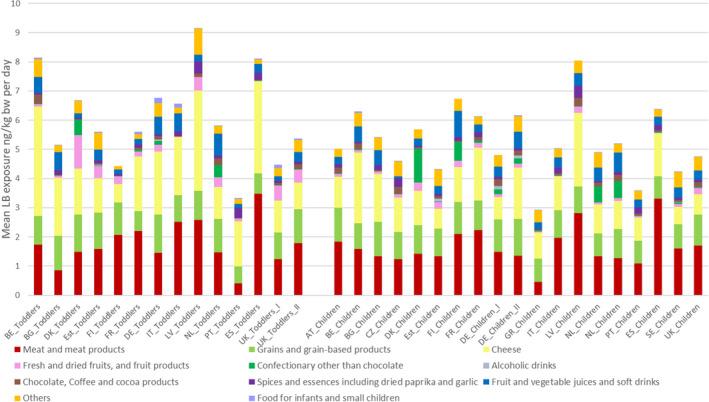
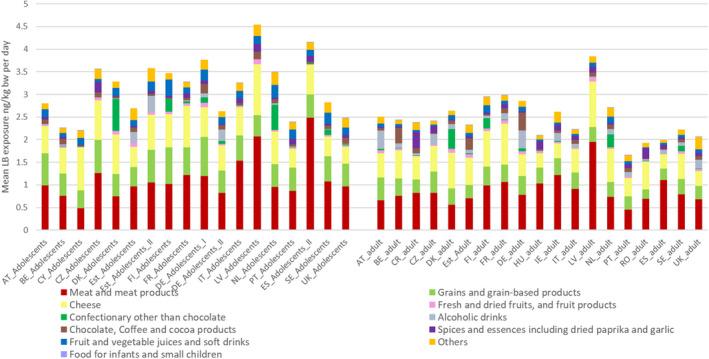
The European Commission asked EFSA to update their 2006 opinion on ochratoxin A (OTA) in food. OTA is produced by fungi of the genus and and found as a contaminant in various foods. OTA causes kidney toxicity in different animal species and kidney tumours in rodents. OTA is genotoxic both and ; however, the mechanisms of genotoxicity are unclear. Direct and indirect genotoxic and non-genotoxic modes of action might each contribute to tumour formation. Since recent studies have raised uncertainty regarding the mode of action for kidney carcinogenicity, it is inappropriate to establish a health-based guidance value (HBGV) and a margin of exposure (MOE) approach was applied. For the characterisation of non-neoplastic effects, a BMDL of 4.73 μg/kg body weight (bw) per day was calculated from kidney lesions observed in pigs. For characterisation of neoplastic effects, a BMDL of 14.5 μg/kg bw per day was calculated from kidney tumours seen in rats. The estimation of chronic dietary exposure resulted in mean and 95th percentile levels ranging from 0.6 to 17.8 and from 2.4 to 51.7 ng/kg bw per day, respectively. Median OTA exposures in breastfed infants ranged from 1.7 to 2.6 ng/kg bw per day, 95th percentile exposures from 5.6 to 8.5 ng/kg bw per day in average/high breast milk consuming infants, respectively. Comparison of exposures with the BMDL based on the non-neoplastic endpoint resulted in MOEs of more than 200 in most consumer groups, indicating a low health concern with the exception of MOEs for high consumers in the younger age groups, indicating a possible health concern. When compared with the BMDL based on the neoplastic endpoint, MOEs were lower than 10,000 for almost all exposure scenarios, including breastfed infants. This would indicate a possible health concern if genotoxicity is direct. Uncertainty in this assessment is high and risk may be overestimated.
欧盟委员会要求欧洲食品安全局更新其2006年关于食品中赭曲霉毒素A(OTA)的意见。OTA由曲霉属和青霉属真菌产生,在各种食品中作为污染物被发现。OTA会在不同动物物种中导致肾脏毒性,并在啮齿动物中引发肾脏肿瘤。OTA在体外和体内均具有基因毒性;然而,基因毒性的机制尚不清楚。直接和间接的基因毒性及非基因毒性作用模式可能都对肿瘤形成有贡献。由于最近的研究对肾脏致癌作用模式提出了不确定性,因此建立基于健康的指导值(HBGV)并不合适,于是采用了暴露边际(MOE)方法。对于非肿瘤效应的特征描述,根据在猪身上观察到的肾脏病变计算得出每日每千克体重(bw)的基准剂量下限(BMDL)为4.73μg/kg bw。对于肿瘤效应的特征描述,根据在大鼠身上观察到的肾脏肿瘤计算得出每日每千克体重的BMDL为14.5μg/kg bw。慢性膳食暴露估计结果显示,平均水平和第95百分位数水平分别为每天0.6至17.8 ng/kg bw和2.4至51.7 ng/kg bw。母乳喂养婴儿的OTA暴露中位数分别为每天1.7至2.6 ng/kg bw,对于平均/高母乳摄入量的婴儿,第95百分位数暴露量为每天5.6至8.5 ng/kg bw。将暴露量与基于非肿瘤终点的BMDL进行比较,大多数消费群体的MOE超过200,这表明除了较年轻年龄组的高消费者群体的MOE外,健康关注程度较低,这表明可能存在健康问题。与基于肿瘤终点的BMDL相比,几乎所有暴露场景(包括母乳喂养婴儿)的MOE都低于10,000。如果基因毒性是直接的,这将表明可能存在健康问题。该评估中的不确定性很高,风险可能被高估。

 Zotero 插件