
儿童实体瘤液体活检临床应用病例系列:迈向改进诊断和疾病监测
Case series on clinical applications of liquid biopsy in pediatric solid tumors: towards improved diagnostics and disease monitoring.
作者信息
Gelineau Nina U, van Barneveld Astrid, Samim Atia, Van Zogchel Lieke, Lak Nathalie, Tas Michelle L, Matser Yvette, Mavinkurve-Groothuis Annelies M C, van Grotel Martine, Zsiros Jószef, van Eijkelenburg Natasha K A, Knops Rutger R G, van Ewijk Roelof, Langenberg Karin P S, Krijger Ronald De, Hiemcke-Jiwa Laura S, Van Paemel Ruben, Cornelli Lotte, De Preter Katleen, De Wilde Bram, Van Der Schoot Ellen, Tytgat Godelieve
机构信息
Princess Máxima Center for Pediatric Oncology Research, Utrecht, Netherlands.
Department of Experimental Immunohematology, Sanquin Research, Amsterdam, Netherlands.
出版信息
Front Oncol. 2023 Aug 17;13:1209150. doi: 10.3389/fonc.2023.1209150. eCollection 2023.
BACKGROUND AND AIMS
Solid tumors account for about 30% of all pediatric cancers. The diagnosis is typically based on histological and molecular analysis of a primary tumor biopsy. Liquid biopsies carry several advantages over conventional tissue biopsy. However, their use for genomic analysis and response monitoring of pediatric solid tumors is still in experimental stages and mostly performed retrospectively without direct impact on patient management. In this case series we discuss six clinical cases of children with a solid tumor for whom a liquid biopsy assay was performed and demonstrate the potential of liquid biopsy for future clinical decision making.
METHODS
We performed quantitative real-time PCR (RT-qPCR), droplet digital PCR (ddPCR) or reduced representation bisulphite sequencing of cell-free DNA (cfRRBS) on liquid biopsies collected from six pediatric patients with a solid tumor treated between 2017 and 2023 at the Princess Máxima Center for Pediatric Oncology in the Netherlands. Results were used to aid in clinical decision making by contribution to establish a diagnosis, by prognostication and response to therapy monitoring.
RESULTS
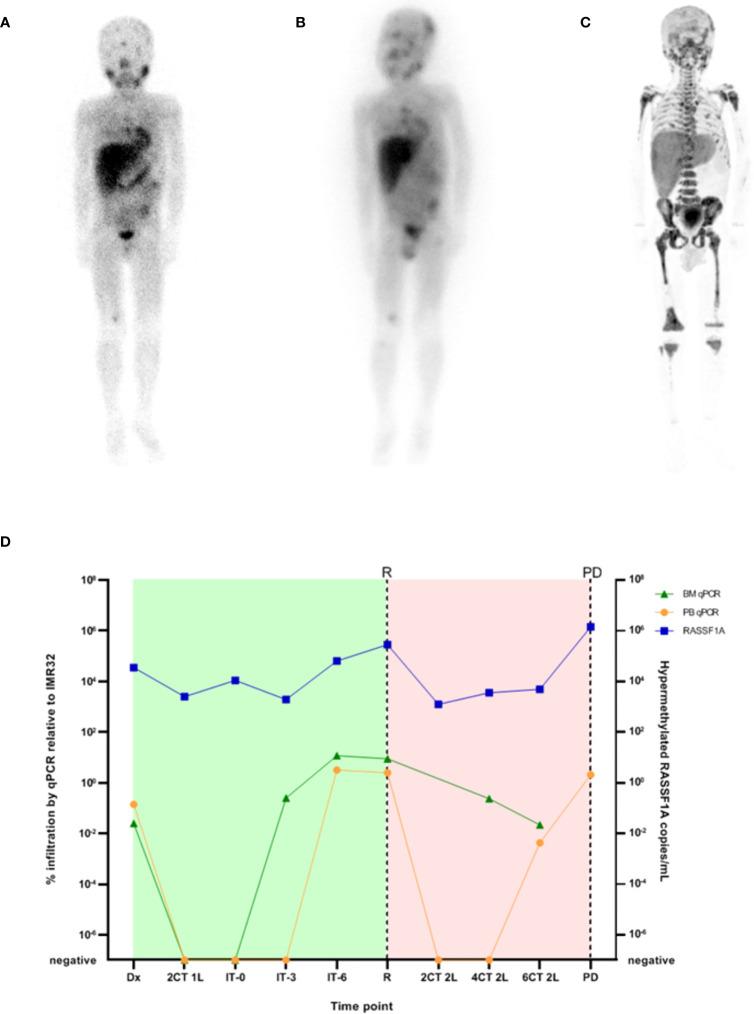
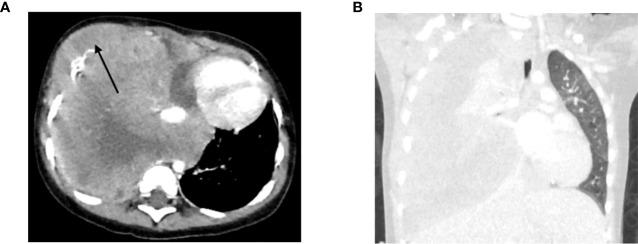
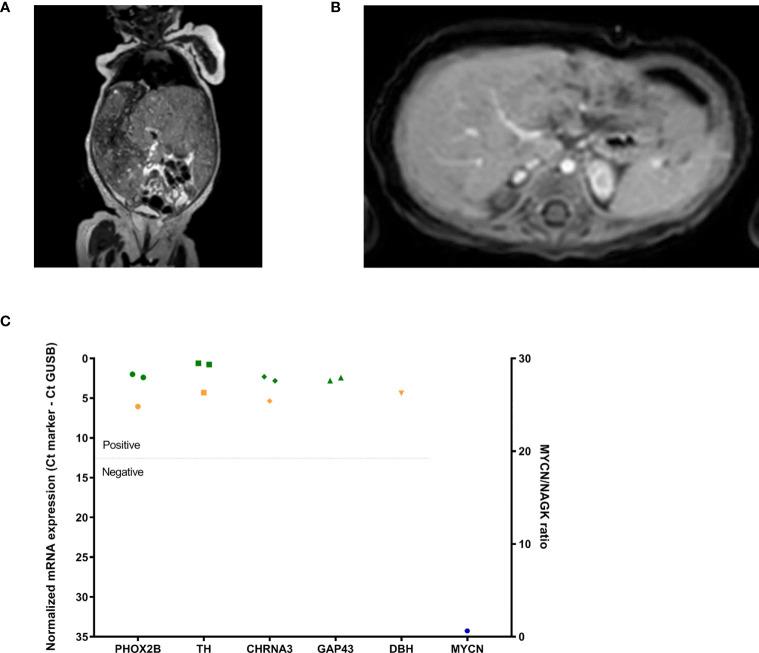
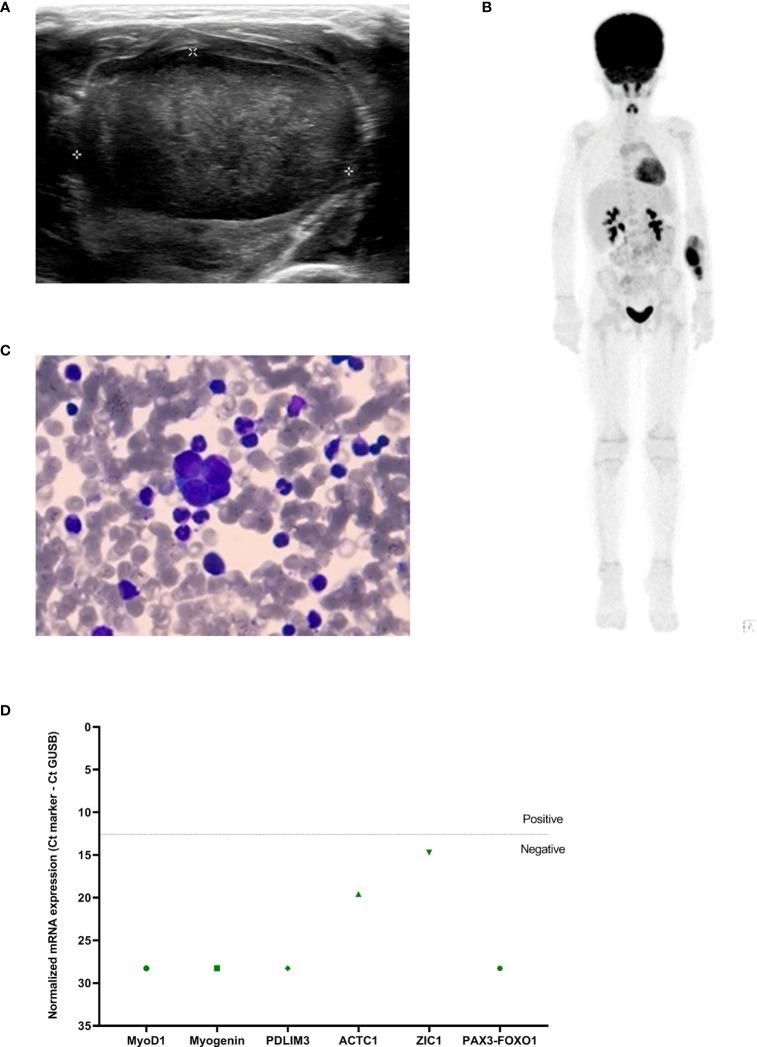
In three patients cfRRBS helped to establish the diagnosis of a rhabdomyosarcoma, an Ewing sarcoma and a neuroblastoma (case 1-3). In two patients, liquid biopsies were used for prognostication, by MYCN ddPCR in a patient with neuroblastoma and by RT-qPCR testing rhabdomyosarcoma-specific mRNA in bone marrow of a patient with a rhabdomyosarcoma (case 4 and 5). In case 6, mRNA testing demonstrated disease progression and assisted clinical decision making.
CONCLUSION
This case series illustrates the value of liquid biopsy. We further demonstrate and recommend the use of liquid biopsies to be used in conjunction with conventional methods for the determination of metastatic status, prognostication and monitoring of treatment response in patients with pediatric solid tumors.
背景与目的
实体瘤约占儿童癌症总数的30%。诊断通常基于原发性肿瘤活检的组织学和分子分析。液体活检相较于传统组织活检具有若干优势。然而,其在儿童实体瘤基因组分析和疗效监测中的应用仍处于实验阶段,且大多为回顾性研究,对患者管理无直接影响。在本病例系列中,我们讨论了6例接受液体活检检测的儿童实体瘤临床病例,并展示了液体活检在未来临床决策中的潜力。
方法
我们对2017年至2023年期间在荷兰马克西玛公主儿童肿瘤中心接受治疗的6例儿童实体瘤患者的液体活检样本进行了定量实时PCR(RT-qPCR)、微滴数字PCR(ddPCR)或游离DNA简化代表性亚硫酸氢盐测序(cfRRBS)。结果用于协助临床决策,包括辅助诊断、预后评估及治疗反应监测。
结果
在3例患者中,cfRRBS有助于确诊横纹肌肉瘤、尤因肉瘤和神经母细胞瘤(病例1 - 3)。在2例患者中,液体活检用于预后评估,1例神经母细胞瘤患者通过MYCN ddPCR进行评估,另1例横纹肌肉瘤患者通过RT-qPCR检测骨髓中横纹肌肉瘤特异性mRNA进行评估(病例4和5)。在病例6中,mRNA检测显示疾病进展并辅助临床决策。
结论
本病例系列说明了液体活检的价值。我们进一步证明并推荐将液体活检与传统方法结合使用,以确定儿童实体瘤患者的转移状态、进行预后评估及监测治疗反应。


 Zotero 插件