
荧光标记唾液微小细胞外囊泡作为帕金森病早期诊断的纳米工具。
Fluorescence-tagged salivary small extracellular vesicles as a nanotool in early diagnosis of Parkinson's disease.
机构信息
Department of Biophysics, All India Institute of Medical Sciences, New Delhi, 110029, India.
Department of Pathology & Laboratory Medicine, All India Institute of Medical Sciences Bibinagar, Hyderabad, 508126, India.
出版信息
BMC Med. 2023 Sep 4;21(1):335. doi: 10.1186/s12916-023-03031-1.
BACKGROUND
Parkinson's disease is generally asymptomatic at earlier stages. At an early stage, there is an extensive progression in the neuropathological hallmarks, although, at this stage, diagnosis is not possible with currently available diagnostic methods. Therefore, the pressing need is for susceptibility risk biomarkers that can aid in better diagnosis and therapeutics as well can objectively serve to measure the endpoint of disease progression. The role of small extracellular vesicles (sEV) in the progression of neurodegenerative diseases could be potent in playing a revolutionary role in biomarker discovery.
METHODS
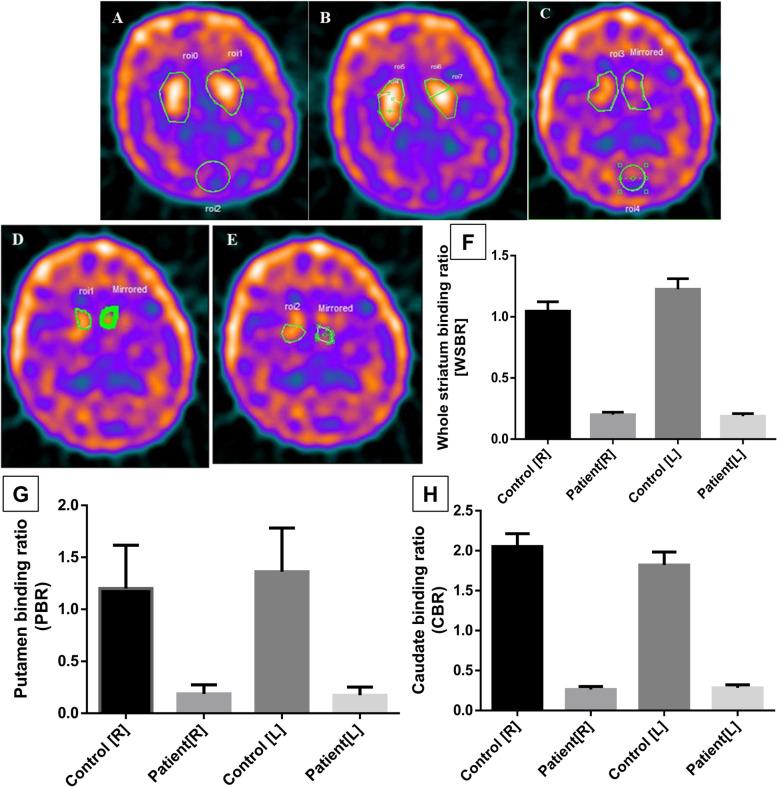
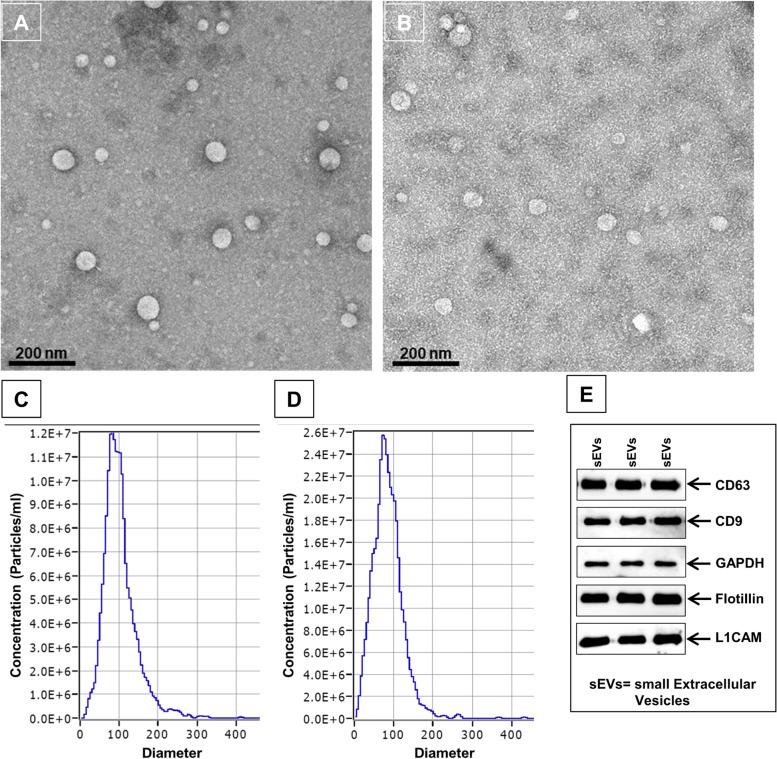
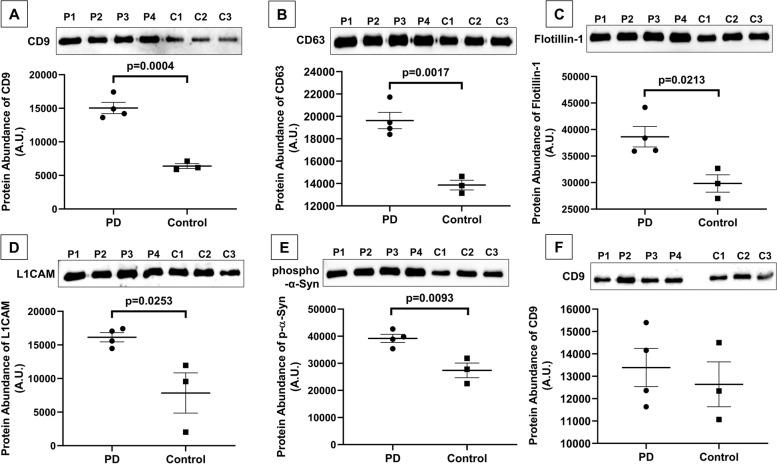
In our study, the salivary sEV were efficiently isolated by chemical precipitation combined with ultrafiltration from subjects (PD = 70, healthy controls = 26, and prodromal PD = 08), followed by antibody-based validation with CD63, CD9, GAPDH, Flotillin-1, and L1CAM. Morphological characterization of the isolated sEV through transmission electron microscopy. The quantification of sEV was achieved by fluorescence (lipid-binding dye-labeled) nanoparticle tracking analysis and antibody-based (CD63 Alexa fluor 488 tagged sEV) nanoparticle tracking analysis. The total alpha-synuclein (α-syn) in salivary sEVs cargo was quantified by ELISA. The disease severity staging confirmation for n = 18 clinically diagnosed Parkinson's disease patients was done by Tc-TRODAT-single-photon emission computed tomography.
RESULTS
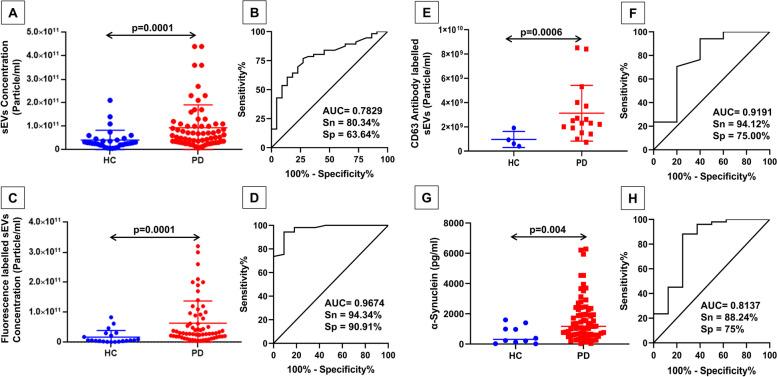
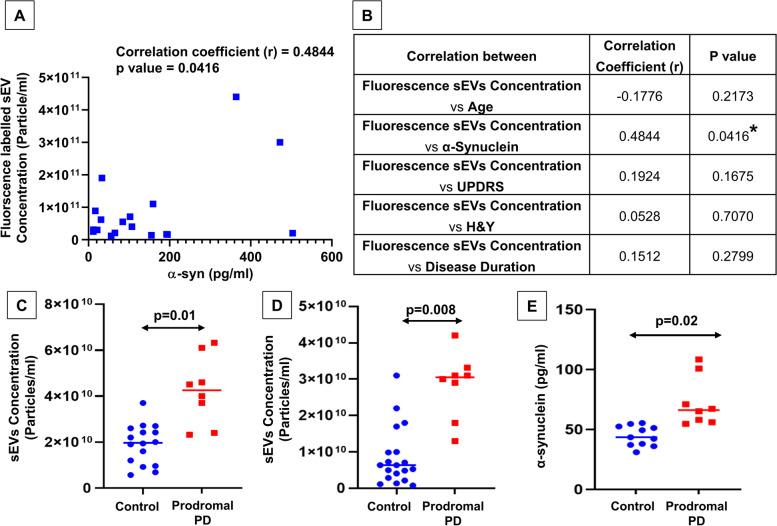
We observed a significant increase in total sEVs concentration in PD patients than in the healthy control (HC), where fluorescence lipid-binding dye-tagged sEV were observed to be higher in PD (p = 0.0001) than in the HC using NTA with a sensitivity of 94.34%. In the prodromal PD cases, the fluorescence lipid-binding dye-tagged sEV concentration was found to be higher (p = 0.008) than in HC. This result was validated through anti-CD63 tagged sEV (p = 0.0006) with similar sensitivity of 94.12%. We further validated our findings with the ELISA based on α-syn concentration in sEV, where it was observed to be higher in PD (p = 0.004) with a sensitivity of 88.24%. The caudate binding ratios in Tc-TRODAT-SPECT represent a positive correlation with sEV concentration (r = 0.8117 with p = 0.0112).
CONCLUSIONS
In this study, for the first time, we have found that the fluorescence-tagged sEV has the potential to screen the progression of disease with clinically acceptable sensitivity and can be a potent early detection method for PD.
背景
帕金森病在早期通常没有明显症状。在早期,神经病理学标志物已经广泛进展,尽管在这个阶段,目前可用的诊断方法还无法进行诊断。因此,迫切需要能够辅助更好诊断和治疗的易感性风险生物标志物,并且可以客观地用于衡量疾病进展的终点。小细胞外囊泡 (sEV) 在神经退行性疾病进展中的作用可能在生物标志物发现中发挥革命性作用。
方法
在我们的研究中,通过化学沉淀联合超滤从受试者(PD=70、健康对照=26、前驱期 PD=08)中有效分离唾液 sEV,随后用 CD63、CD9、GAPDH、Flotillin-1 和 L1CAM 进行抗体验证。通过透射电子显微镜对分离的 sEV 进行形态特征描述。通过荧光(脂质结合染料标记)纳米颗粒跟踪分析和基于抗体(CD63 Alexa fluor 488 标记 sEV)的纳米颗粒跟踪分析来定量 sEV。通过 ELISA 定量唾液 sEV 中的总α-突触核蛋白 (α-syn)。通过 Tc-TRODAT-单光子发射计算机断层扫描对 n=18 名临床诊断为帕金森病的患者进行疾病严重程度分期确认。
结果
我们观察到帕金森病患者的总 sEV 浓度明显高于健康对照组(HC),使用 NTA 观察到荧光脂质结合染料标记的 sEV 在 PD 中(p=0.0001)高于 HC,具有 94.34%的灵敏度。在前驱期 PD 病例中,发现荧光脂质结合染料标记的 sEV 浓度高于 HC(p=0.008)。通过抗 CD63 标记的 sEV(p=0.0006)验证了这一结果,具有类似的 94.12%的灵敏度。我们进一步通过 sEV 中α-syn 浓度的 ELISA 验证了我们的发现,结果表明 PD 中 sEV 浓度更高(p=0.004),灵敏度为 88.24%。Tc-TRODAT-SPECT 中的尾状核结合比值与 sEV 浓度呈正相关(r=0.8117,p=0.0112)。
结论
在这项研究中,我们首次发现荧光标记的 sEV 具有筛查疾病进展的潜力,具有临床可接受的灵敏度,并且可能是 PD 的一种有效的早期检测方法。
 Zotero 插件