
《2023年炎症性肠病对加拿大的影响:炎症性肠病流行病学》
The 2023 Impact of Inflammatory Bowel Disease in Canada: Epidemiology of IBD.
作者信息
Coward Stephanie, Benchimol Eric I, Kuenzig M Ellen, Windsor Joseph W, Bernstein Charles N, Bitton Alain, Jones Jennifer L, Lee Kate, Murthy Sanjay K, Targownik Laura E, Peña-Sánchez Juan-Nicolás, Rohatinsky Noelle, Ghandeharian Sara, Im James H B, Davis Tal, Weinstein Jake, Goddard Quinn, Bennett Jennifer, Caplan Léa, Bergevin Maxime, Yang Xin Yu, Mason Kate, Sanderson Rhonda, Brass Colten, Kaplan Gilaad G
机构信息
Departments of Medicine and Community Health Sciences, University of Calgary, Calgary, Alberta, Canada.
SickKids Inflammatory Bowel Disease Centre, Division of Gastroenterology, Hepatology and Nutrition, The Hospital for Sick Children, Toronto, Ontario, Canada.
出版信息
J Can Assoc Gastroenterol. 2023 Sep 5;6(Suppl 2):S9-S15. doi: 10.1093/jcag/gwad004. eCollection 2023 Sep.
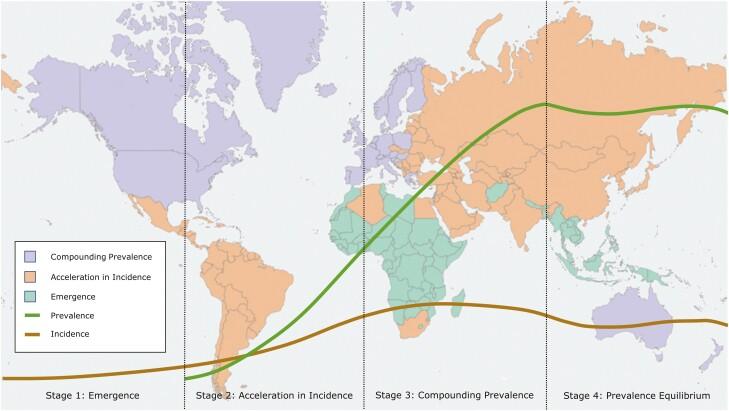
Inflammatory bowel disease (IBD), consisting of Crohn's disease and ulcerative colitis, is recognized across the world, though Canada has among the highest burdens of IBD in the world. The Canadian Gastro-Intestinal Epidemiology Consortium (CanGIEC) led a six-province study that demonstrated the compounding prevalence of IBD in Canada from 400 per 100,000 in 2002 to 636 per 100,000 in 2014. The prevalence in 2023 is estimated at 825 per 100,000, meaning that over 320,000 people in Canada are living with IBD. Prevalence is forecasted to rise by 2.44% per year such that 1.1% of the population, 470,000 Canadians, will live with IBD by 2035. The overall incidence of IBD in 2023 is 30 per 100,000 person-years, indicating that over 11,000 Canadians will be newly diagnosed with IBD in 2023. Incidence is forecasted to rise by 0.58% per year up to 32.1 per 100,000 by 2035. The rising incidence of IBD is propelled by pediatric-onset IBD, which is rising by 1.23% per year from 15.6 per 100,000 in 2023 to 18.0 per 100,000 in 2035. In contrast, incidence rates among adults and seniors are relatively stable. Understanding the determinates of IBD has expanded through prospective cohort studies such as the Crohn's and Colitis Canada Genetic, Environmental, Microbial (CCC-GEM) project. Consensus recommendations towards diet, lifestyle, behavioural and environmental modifications have been proposed by international organizations with the goal of optimizing disease control and ultimately preventing the development of IBD. Despite these efforts, Canadian healthcare systems will need to prepare for the rising number of people living with IBD.
炎症性肠病(IBD)包括克罗恩病和溃疡性结肠炎,在全球范围内都有发现,尽管加拿大是世界上IBD负担最高的国家之一。加拿大胃肠病流行病学联盟(CanGIEC)牵头开展了一项涉及六个省份的研究,该研究表明加拿大IBD的复合患病率从2002年的每10万人400例上升到2014年的每10万人636例。2023年的患病率估计为每10万人825例,这意味着加拿大有超过32万人患有IBD。预计患病率将以每年2.44%的速度上升,到2035年,1.1%的人口,即47万加拿大人,将患有IBD。2023年IBD的总体发病率为每10万人年30例,这表明2023年将有超过1.1万加拿大人被新诊断出患有IBD。预计发病率将以每年0.58%的速度上升,到2035年将达到每10万人32.1例。IBD发病率的上升是由儿童期发病的IBD推动的,其发病率从2023年的每10万人15.6例以每年1.23%的速度上升到2035年的每10万人18.0例。相比之下,成年人和老年人的发病率相对稳定。通过前瞻性队列研究,如加拿大克罗恩病和结肠炎遗传、环境、微生物(CCC-GEM)项目,对IBD决定因素的认识有所扩展。国际组织已就饮食、生活方式、行为和环境调整提出了共识性建议,目标是优化疾病控制并最终预防IBD的发生。尽管做出了这些努力,加拿大的医疗保健系统仍需要为IBD患者数量的增加做好准备。
 Zotero 插件