
基于游离DNA的液体活检作为头颈癌潜在生物标志物的研究
Liquid biopsies based on cell-free DNA as a potential biomarker in head and neck cancer.
作者信息
Rapado-González Óscar, Rodríguez-Ces Ana María, López-López Rafael, Suárez-Cunqueiro María Mercedes
机构信息
Department of Surgery and Medical-Surgical Specialties, Medicine and Dentistry School, Universidade de Santiago de Compostela (USC), 15782 Santiago de Compostela, Spain.
Galician Precision Oncology Research Group (ONCOGAL), Medicine and Dentistry School, Universidade de Santiago de Compostela (USC), Santiago de Compostela, Spain.
出版信息
Jpn Dent Sci Rev. 2023 Dec;59:289-302. doi: 10.1016/j.jdsr.2023.08.004. Epub 2023 Aug 29.
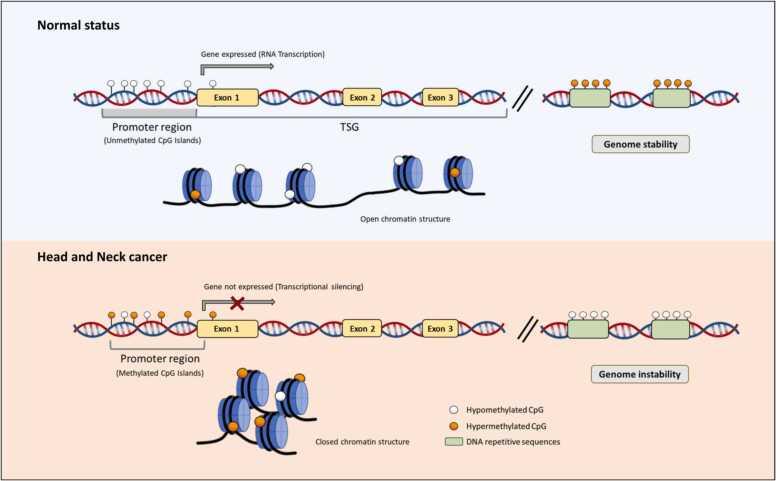
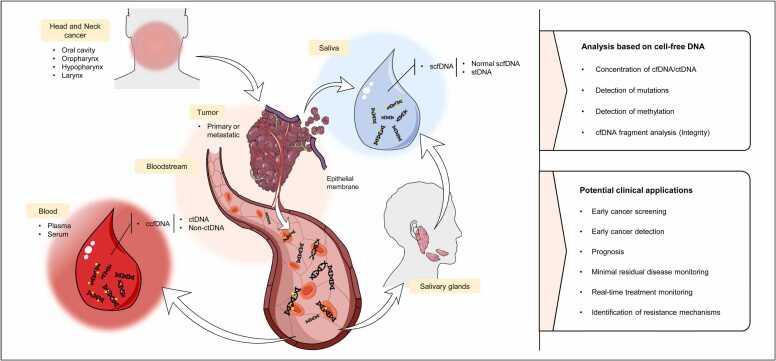
In the era of 'precision medicine', liquid biopsies based on cell-free DNA (cfDNA) have emerged as a promising tool in the oncology field. cfDNA from cancer patients is a mixture of tumoral (ctDNA) and non-tumoral DNA originated from healthy, cancer and tumor microenvironmental cells. Apoptosis, necrosis, and active secretion from extracellular vesicles represent the main mechanisms of cfDNA release into the physiological body fluids. Focused on HNC, two main types of cfDNA can be identified: the circulating cfDNA (ccfDNA) and the salivary cfDNA (scfDNA). Numerous studies have reported on the potential of cfDNA analysis as potential diagnostic, prognostic, and monitoring biomarker for HNC. Thus, ctDNA has emerged as an attractive strategy to detect cancer specific genetic and epigenetic alterations including DNA somatic mutations and DNA methylation patterns. This review aims to provide an overview of the up-to-date studies evaluating the value of the analysis of total cfDNA, cfDNA fragment length, and ctDNA analysis at DNA mutation and methylation level in HNC patients.
在“精准医学”时代,基于游离DNA(cfDNA)的液体活检已成为肿瘤学领域一种很有前景的工具。癌症患者的cfDNA是肿瘤(ctDNA)和源自健康、癌症及肿瘤微环境细胞的非肿瘤DNA的混合物。细胞凋亡、坏死以及细胞外囊泡的主动分泌是cfDNA释放到生理体液中的主要机制。聚焦于头颈部癌(HNC),可识别出两种主要类型的cfDNA:循环cfDNA(ccfDNA)和唾液cfDNA(scfDNA)。众多研究报道了cfDNA分析作为HNC潜在诊断、预后及监测生物标志物的潜力。因此,ctDNA已成为一种有吸引力的策略,用于检测癌症特异性基因和表观遗传改变,包括DNA体细胞突变和DNA甲基化模式。本综述旨在概述最新研究,这些研究评估了在HNC患者中分析总cfDNA、cfDNA片段长度以及在DNA突变和甲基化水平进行ctDNA分析的价值。

 Zotero 插件