
通过生活方式改变调节阿尔茨海默病中的 microRNAs。
Modulation of microRNAs through Lifestyle Changes in Alzheimer's Disease.
机构信息
Department of Functional Biology, Physiology, University of Oviedo, 33006 Asturias, Spain.
Health Research Institute of the Principality of Asturias (ISPA), 33011 Asturias, Spain.
出版信息
Nutrients. 2023 Aug 23;15(17):3688. doi: 10.3390/nu15173688.
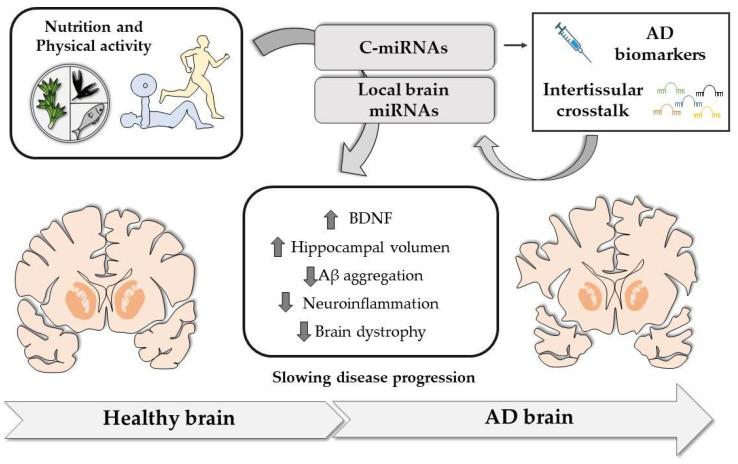
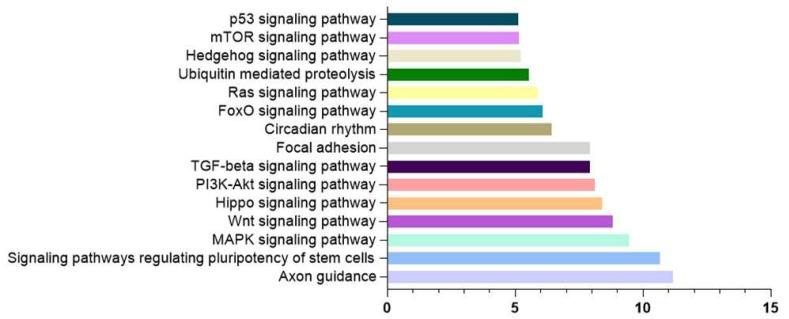
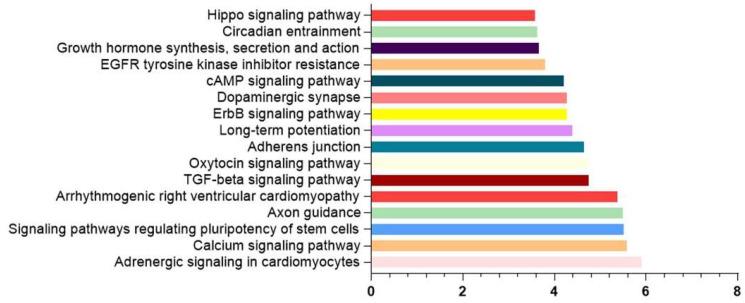
Lifestyle factors, including diet and physical activity (PA), are known beneficial strategies to prevent and delay Alzheimer's disease (AD) development. Recently, microRNAs have emerged as potential biomarkers in multiple diseases, including AD. The aim of this review was to analyze the available information on the modulatory effect of lifestyle on microRNA expression in AD. Few studies have addressed this question, leaving important gaps and limitations: (1) in human studies, only circulating microRNAs were analyzed; (2) in mice studies, microRNA expression was only analyzed in brain tissue; (3) a limited number of microRNAs was analyzed; (4) no human nutritional intervention studies were conducted; and (5) PA interventions in humans and mice were poorly detailed and only included aerobic training. Despite this, some conclusions could be drawn. Circulating levels of let-7g-5p, miR-107, and miR-144-3p were associated with overall diet quality in mild cognitive impairment patients. In silico analysis showed that these microRNAs are implicated in synapse formation, microglia activation, amyloid beta accumulation, and pro-inflammatory pathways, the latter also being targeted by miR-129-5p and miR-192-5p, whose circulating levels are modified by PA in AD patients. PA also modifies miR-132, miR-15b-5p, miR-148b-3p, and miR-130a-5p expression in mice brains, which targets are related to the regulation of neuronal activity, ageing, and pro-inflammatory pathways. This supports the need to further explore lifestyle-related miRNA changes in AD, both as biomarkers and therapeutic targets.
生活方式因素,包括饮食和体育锻炼(PA),是预防和延缓阿尔茨海默病(AD)发展的已知有益策略。最近,microRNAs 已成为包括 AD 在内的多种疾病的潜在生物标志物。本综述的目的是分析现有的关于生活方式对 AD 中 microRNA 表达的调节作用的信息。很少有研究涉及这个问题,留下了重要的差距和局限性:(1)在人体研究中,仅分析了循环 microRNAs;(2)在小鼠研究中,仅分析了脑组织中的 microRNA 表达;(3)分析的 microRNA 数量有限;(4)未进行人类营养干预研究;(5)人体和小鼠的 PA 干预细节较差,仅包括有氧运动。尽管如此,还是可以得出一些结论。轻度认知障碍患者的整体饮食质量与循环中的 let-7g-5p、miR-107 和 miR-144-3p 水平相关。计算机分析表明,这些 microRNAs 与突触形成、小胶质细胞激活、β淀粉样蛋白积累和促炎途径有关,后者也是 miR-129-5p 和 miR-192-5p 的靶点,其循环水平可被 AD 患者的 PA 改变。PA 还改变了 AD 患者大脑中 miR-132、miR-15b-5p、miR-148b-3p 和 miR-130a-5p 的表达,其靶标与神经元活动、衰老和促炎途径的调节有关。这支持了进一步探索 AD 中与生活方式相关的 microRNA 变化的必要性,既作为生物标志物,也作为治疗靶点。


 Zotero 插件