
家庭内接触 SARS-CoV-2 后血清阴性家庭成员的细胞免疫。
Cellular immunity to SARS-CoV-2 following intrafamilial exposure in seronegative family members.
机构信息
Nuffield Department of Medicine, University of Oxford, Oxford, United Kingdom.
Department of Paediatrics, University of Oxford, Oxford, United Kingdom.
出版信息
Front Immunol. 2023 Aug 29;14:1248658. doi: 10.3389/fimmu.2023.1248658. eCollection 2023.
INTRODUCTION
Family studies of antiviral immunity provide an opportunity to assess virus-specific immunity in infected and highly exposed individuals, as well as to examine the dynamics of viral infection within families. Transmission of SARS-CoV-2 between family members represented a major route for viral spread during the early stages of the pandemic, due to the nature of SARS-CoV-2 transmission through close contacts.
METHODS
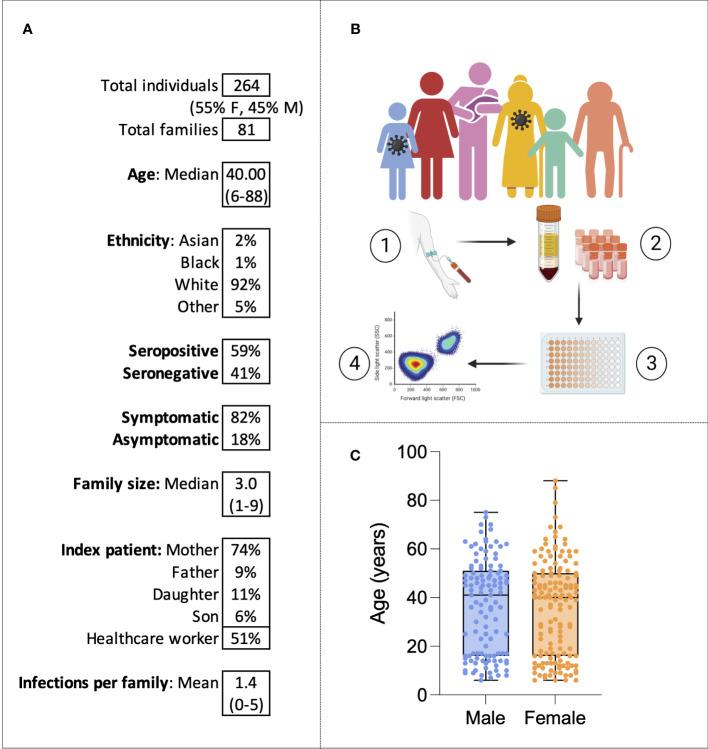
Here, humoral and cellular immunity is explored in 264 SARS-CoV-2 infected, exposed or unexposed individuals from 81 families in the United Kingdom sampled in the winter of 2020 before widespread vaccination and infection.
RESULTS
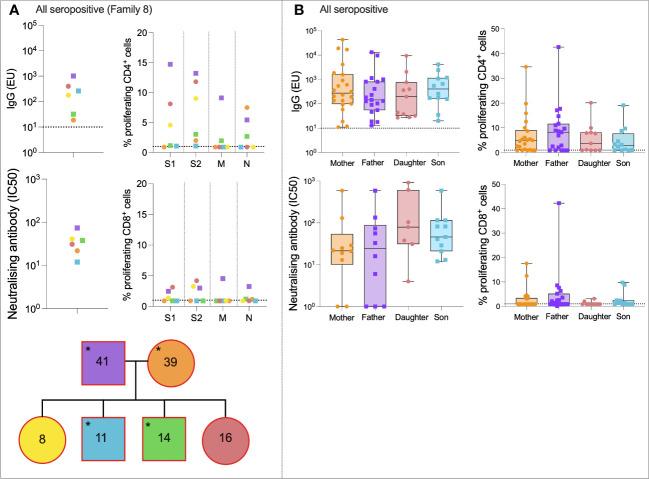
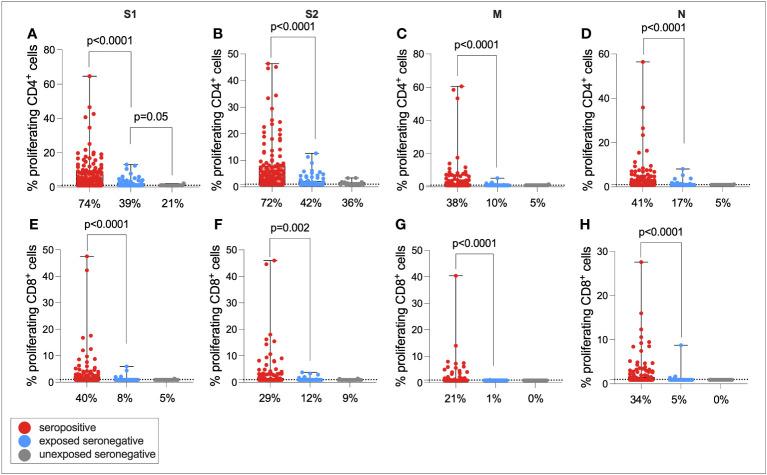
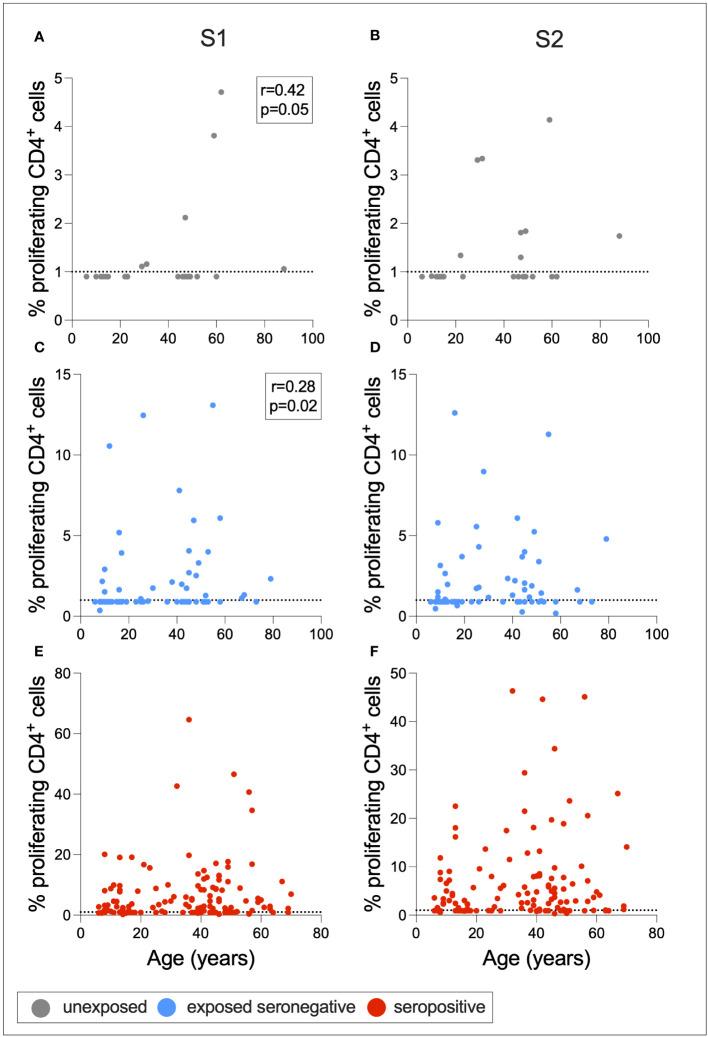
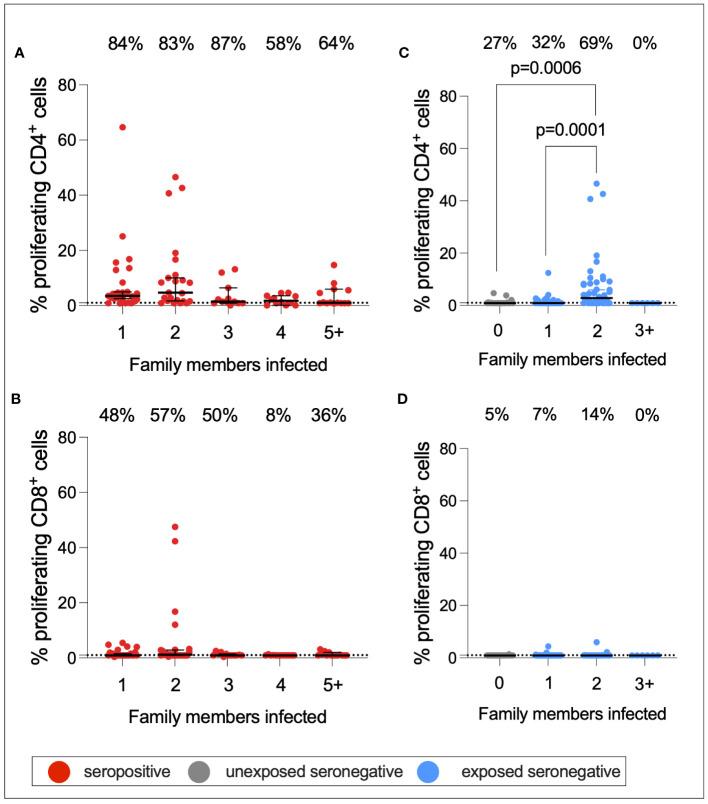
We describe robust cellular and humoral immunity into COVID-19 convalescence, albeit with marked heterogeneity between families and between individuals. T-cell response magnitude is associated with male sex and older age by multiple linear regression. SARS-CoV-2-specific T-cell responses in seronegative individuals are widespread, particularly in adults and in individuals exposed to SARS-CoV-2 through an infected family member. The magnitude of this response is associated with the number of seropositive family members, with a greater number of seropositive individuals within a family leading to stronger T-cell immunity in seronegative individuals.
DISCUSSION
These results support a model whereby exposure to SARS-CoV-2 promotes T-cell immunity in the absence of an antibody response. The source of these seronegative T-cell responses to SARS-CoV-2 has been suggested as cross-reactive immunity to endemic coronaviruses that is expanded upon SARS-CoV-2 exposure. However, in this study, no association between HCoV-specific immunity and seronegative T-cell immunity to SARS-CoV-2 is identified, suggesting that de novo T-cell immunity may be generated in seronegative SARS-CoV-2 exposed individuals.
简介
抗病毒免疫的家族研究为评估感染和高度暴露个体的病毒特异性免疫以及研究家庭内病毒感染的动态提供了机会。由于 SARS-CoV-2 通过密切接触传播,家庭成员之间传播 SARS-CoV-2 是大流行早期病毒传播的主要途径。
方法
本研究在 2020 年冬季广泛接种疫苗和感染之前,从英国 81 个家庭的 264 名 SARS-CoV-2 感染、暴露或未暴露个体中探索了体液和细胞免疫。
结果
尽管家庭之间和个体之间存在明显的异质性,但我们描述了 COVID-19 恢复期的强大细胞和体液免疫。通过多元线性回归,T 细胞反应的大小与男性和年龄较大有关。在血清阴性个体中,SARS-CoV-2 特异性 T 细胞反应广泛存在,尤其是在成年人和通过感染家庭成员接触 SARS-CoV-2 的个体中。这种反应的大小与血清阳性家庭成员的数量有关,家庭中血清阳性个体越多,血清阴性个体中的 T 细胞免疫就越强。
讨论
这些结果支持了一种模型,即接触 SARS-CoV-2 可促进 T 细胞免疫,而无需抗体反应。这些针对 SARS-CoV-2 的血清阴性 T 细胞反应的来源被认为是对地方性冠状病毒的交叉反应性免疫,这种免疫在接触 SARS-CoV-2 时得到扩展。然而,在这项研究中,未发现 HCoV 特异性免疫与 SARS-CoV-2 的血清阴性 T 细胞免疫之间存在关联,这表明在血清阴性 SARS-CoV-2 暴露个体中可能产生了新的 T 细胞免疫。




 Zotero 插件