
自然杀伤细胞与 BNT162b2 mRNA 疫苗的反应原性和持久性。
Natural killer cells and BNT162b2 mRNA vaccine reactogenicity and durability.
机构信息
Department of Microbiology and Immunology, Uniformed Services University, Bethesda, MD, United States.
Henry M. Jackson Foundation for the Advancement of Military Medicine, Inc., Bethesda, MD, United States.
出版信息
Front Immunol. 2023 Aug 25;14:1225025. doi: 10.3389/fimmu.2023.1225025. eCollection 2023.
INTRODUCTION
Natural killer (NK) cells can both amplify and regulate immune responses to vaccination. Studies in humans and animals have observed NK cell activation within days after mRNA vaccination. In this study, we sought to determine if baseline NK cell frequencies, phenotype, or function correlate with antibody responses or inflammatory side effects induced by the Pfizer-BioNTech COVID-19 vaccine (BNT162b2).
METHODS
We analyzed serum and peripheral blood mononuclear cells (PBMCs) from 188 participants in the Prospective Assessment of SARS-CoV-2 Seroconversion study, an observational study evaluating immune responses in healthcare workers. Baseline serum samples and PBMCs were collected from all participants prior to any SARS-CoV-2 infection or vaccination. Spike-specific IgG antibodies were quantified at one and six months post-vaccination by microsphere-based multiplex immunoassay. NK cell frequencies and phenotypes were assessed on pre-vaccination PBMCs from all participants by multi-color flow cytometry, and on a subset of participants at time points after the 1 and 2 doses of BNT162b2. Inflammatory side effects were assessed by structured symptom questionnaires, and baseline NK cell functionality was quantified by an killing assay on participants that reported high or low post-vaccination symptom scores.
RESULTS
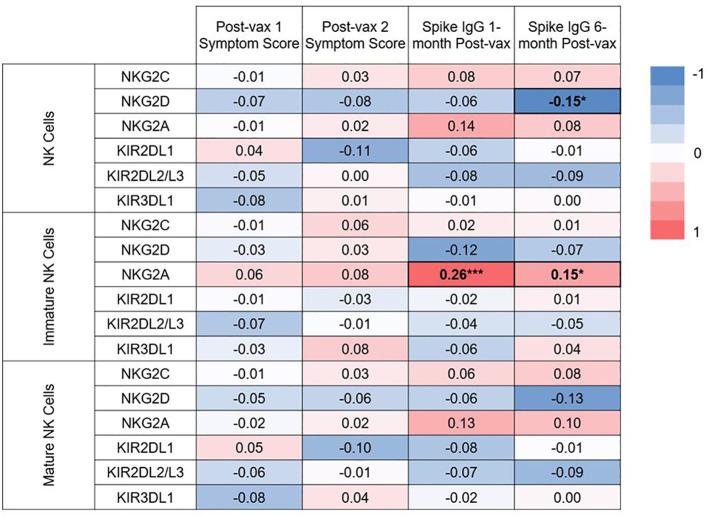
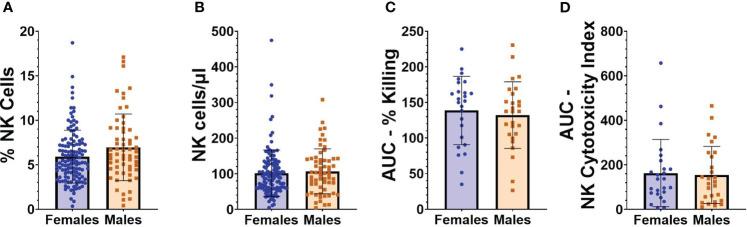
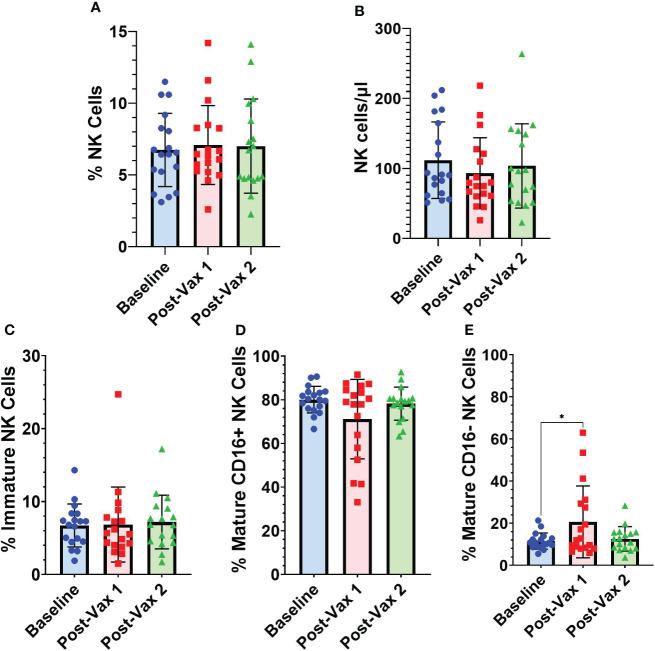
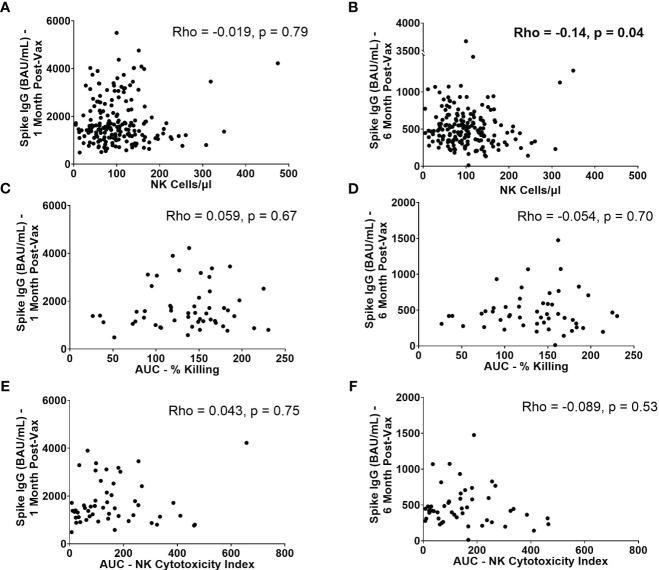
Key observations include: 1) circulating NK cells exhibit evidence of activation in the week following vaccination, 2) individuals with high symptom scores after 1 vaccination had higher pre-vaccination NK cytotoxicity indices, 3) high pre-vaccination NK cell numbers were associated with lower spike-specific IgG levels six months after two BNT162b2 doses, and 4) expression of the inhibitory marker NKG2A on immature NK cells was associated with higher antibody responses 1 and 6 months post-vaccination.
DISCUSSION
These results suggest that NK cell activation by BNT162b2 vaccination may contribute to vaccine-induced inflammatory symptoms and reduce durability of vaccine-induced antibody responses.
简介
自然杀伤 (NK) 细胞既能放大又能调节疫苗接种引起的免疫反应。在人类和动物中的研究观察到,mRNA 疫苗接种后几天内 NK 细胞被激活。在这项研究中,我们试图确定基线 NK 细胞频率、表型或功能是否与辉瑞-生物技术公司的 COVID-19 疫苗 (BNT162b2) 引起的抗体反应或炎症副作用相关。
方法
我们分析了 Prospective Assessment of SARS-CoV-2 Seroconversion 研究的 188 名参与者的血清和外周血单核细胞 (PBMC),这是一项评估医护人员免疫反应的观察性研究。所有参与者在任何 SARS-CoV-2 感染或接种疫苗之前均采集基线血清样本和 PBMC。通过基于微球的多重免疫分析在接种疫苗后 1 个月和 6 个月时定量测定 Spike 特异性 IgG 抗体。通过多色流式细胞术评估所有参与者接种疫苗前 PBMC 的 NK 细胞频率和表型,并在接种 BNT162b2 1 剂和 2 剂后的时间点对部分参与者进行评估。通过结构化症状问卷评估炎症副作用,并通过对报告接种疫苗后症状评分高或低的参与者进行杀伤试验来量化基线 NK 细胞功能。
结果
主要观察结果包括:1)循环 NK 细胞在接种疫苗后一周内表现出激活的迹象,2)1 次接种后症状评分高的个体在接种前具有更高的 NK 细胞细胞毒性指数,3)高基线 NK 细胞数量与接种 2 剂 BNT162b2 后 6 个月的 Spike 特异性 IgG 水平较低相关,4)不成熟 NK 细胞上抑制性标记物 NKG2A 的表达与接种疫苗后 1 个月和 6 个月的抗体反应较高相关。
讨论
这些结果表明,BNT162b2 疫苗接种对 NK 细胞的激活可能导致疫苗引起的炎症症状,并降低疫苗引起的抗体反应的持久性。



 Zotero 插件