
在 5xFAD 阿尔茨海默病模型小鼠中敲除同型半胱氨酸硫内酯解毒酶博来霉素水解酶导致记忆和神经功能缺陷,并加重阿尔茨海默病相关的行为和生化特征。
Deletion of the Homocysteine Thiolactone Detoxifying Enzyme Bleomycin Hydrolase, in Mice, Causes Memory and Neurological Deficits and Worsens Alzheimer's Disease-Related Behavioral and Biochemical Traits in the 5xFAD Model of Alzheimer's Disease.
机构信息
Department of Biochemistry and Biotechnology, Poznań University of Life Sciences, Poznań, Poland.
Department of Microbiology, Biochemistry and Molecular Genetics, Rutgers University, New Jersey Medical School, International Center for Public Health, Newark, NJ, USA.
出版信息
J Alzheimers Dis. 2023;95(4):1735-1755. doi: 10.3233/JAD-230578.
BACKGROUND
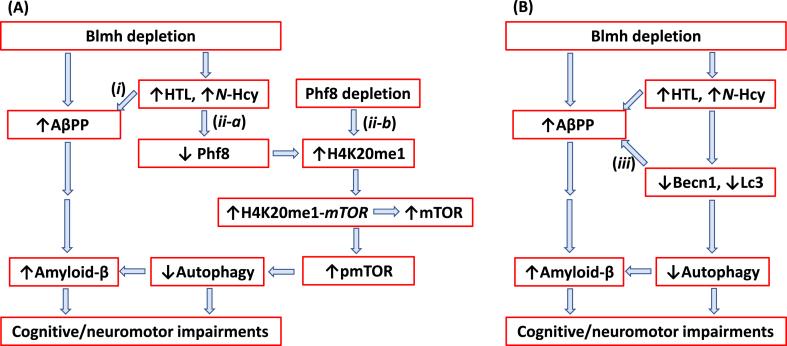
Bleomycin hydrolase (BLMH), a homocysteine (Hcy)-thiolactone detoxifying enzyme, is attenuated in Alzheimer's disease (AD) brains. Blmh loss causes astrogliosis in mice while the loss of histone demethylase Phf8, which controls mTOR signaling, causes neuropathy in mice and humans.
OBJECTIVE
To examine how Blmh gene deletion affects the Phf8/H4K20me1/mTOR/autophagy pathway, amyloid-β (Aβ) accumulation, and cognitive/neuromotor performance in mice.
METHODS
We generated a new mouse model of AD, the Blmh-/-5xFAD mouse. Behavioral assessments were conducted by cognitive/neuromotor testing. Blmh and Phf8 genes were silenced in mouse neuroblastoma N2a-APPswe cells by RNA interference. mTOR- and autophagy-related proteins, and AβPP were quantified by western blotting and the corresponding mRNAs by RT-qPCR. Aβ was quantified by western blotting (brains) and by confocal microscopy (cells).
RESULTS
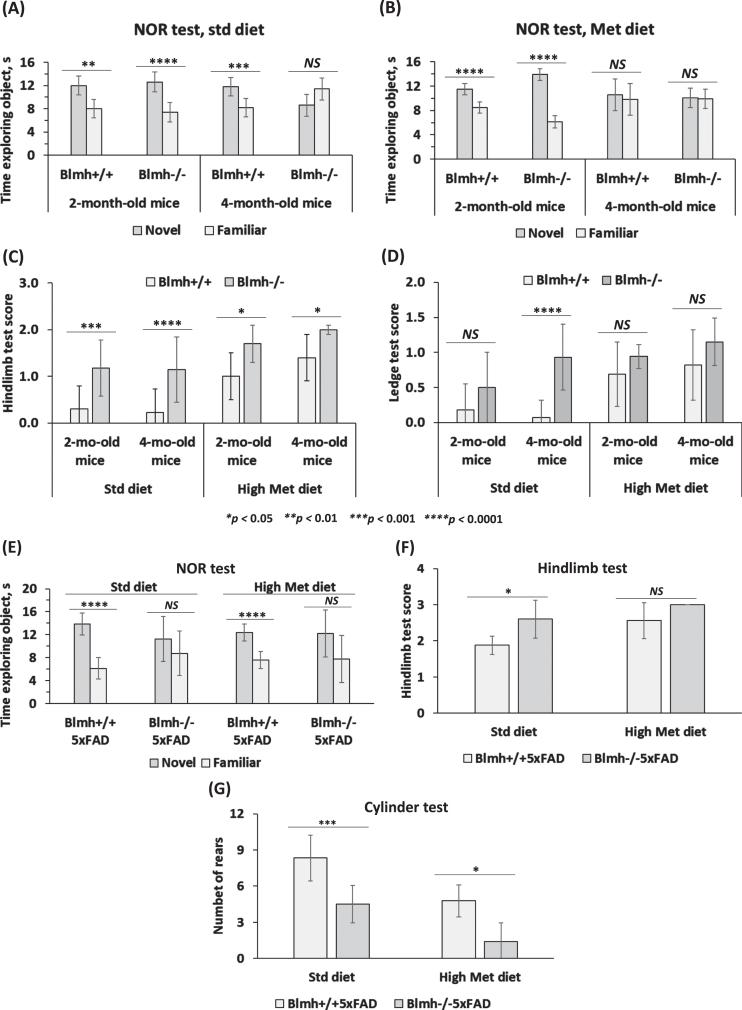
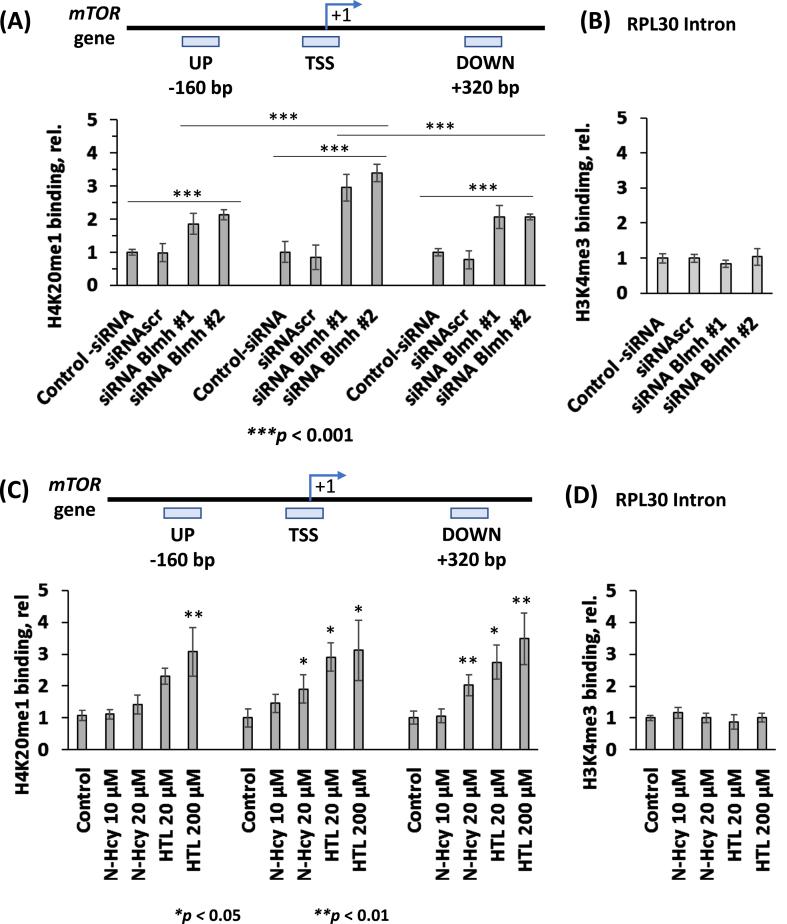
Behavioral testing showed cognitive/neuromotor deficits in Blmh-/- and Blmh-/-5xFAD mice. Phf8 was transcriptionally downregulated in Blmh-/- and Blmh-/-5xFAD brains. H4K20me1, mTOR, phospho-mTOR, and AβPP were upregulated while autophagy markers Becn1, Atg5, and Atg7 were downregulated in Blmh-/- and Blmh-/-5xFAD brains. Aβ was elevated in Blmh-/-5xFAD brains. These biochemical changes were recapitulated in Blmh-silenced N2a-APPswe cells, which also showed increased H4K20me1-mTOR promoter binding and impaired autophagy flux (Lc3-I, Lc3-II, p62). Phf8-silencing or treatments with Hcy-thiolactone or N-Hcy-protein, metabolites elevated in Blmh-/- mice, induced biochemical changes in N2a-APPswe cells like those induced by the Blmh-silencing. However, Phf8-silencing elevated Aβ without affecting AβPP.
CONCLUSIONS
Our findings show that Blmh interacts with AβPP and the Phf8/H4K20me1/mTOR/autophagy pathway, and that disruption of those interactions causes Aβ accumulation and cognitive/neuromotor deficits.
背景
在阿尔茨海默病(AD)大脑中,丝氨酸水解酶(BLMH)作为一种高半胱氨酸(Hcy)-硫内酯解毒酶而减弱。Blmh 的缺失会导致小鼠星形胶质细胞增生,而组蛋白去甲基酶 Phf8 的缺失会导致小鼠和人类的神经病变,而 Phf8 可以控制 mTOR 信号通路。
目的
研究 Blmh 基因缺失如何影响 Phf8/H4K20me1/mTOR/自噬通路、淀粉样β(Aβ)积累以及小鼠的认知/神经运动表现。
方法
我们生成了一种新的 AD 小鼠模型,即 Blmh-/-5xFAD 小鼠。通过认知/神经运动测试进行行为评估。通过 RNA 干扰使小鼠神经母细胞瘤 N2a-APPswe 细胞中的 Blmh 和 Phf8 基因沉默。通过 Western blot 和相应的 RT-qPCR 定量测定 mTOR 和自噬相关蛋白以及 AβPP。通过 Western blot(大脑)和共聚焦显微镜(细胞)定量 Aβ。
结果
行为测试显示 Blmh-/-和 Blmh-/-5xFAD 小鼠存在认知/神经运动缺陷。在 Blmh-/-和 Blmh-/-5xFAD 大脑中,Phf8 的转录受到抑制。H4K20me1、mTOR、磷酸化 mTOR 和 AβPP 在 Blmh-/-和 Blmh-/-5xFAD 大脑中上调,而自噬标志物 Becn1、Atg5 和 Atg7 在 Blmh-/-和 Blmh-/-5xFAD 大脑中下调。Bmh-/-5xFAD 大脑中的 Aβ 升高。在 Blmh 沉默的 N2a-APPswe 细胞中也观察到这些生化变化,这些细胞还显示 H4K20me1-mTOR 启动子结合增加和自噬通量受损(Lc3-I、Lc3-II、p62)。Phf8 沉默或用 Hcy-硫内酯或 N-Hcy-蛋白处理,这些代谢物在 Blmh-/-小鼠中升高,会在 N2a-APPswe 细胞中引起与 Blmh 沉默相似的生化变化。然而,Phf8 沉默会增加 Aβ,而不会影响 AβPP。
结论
我们的研究结果表明,Bmh 与 AβPP 以及 Phf8/H4K20me1/mTOR/自噬通路相互作用,这些相互作用的破坏会导致 Aβ 积累和认知/神经运动缺陷。




 Zotero 插件