
对小鼠星形胶质细胞进行的无标记定量蛋白质组学分析,有助于深入了解弓形虫不同发育阶段的宿主反应机制。
Label-free quantitative proteomic analyses of mouse astrocytes provides insight into the host response mechanism at different developmental stages of Toxoplasma gondii.
作者信息
Xie Huanhuan, Sun Hang, Dong Hongjie, Dai Lisha, Xu Haozhi, Zhang Lixin, Wang Qi, Zhang Junmei, Zhao Guihua, Xu Chao, Yin Kun
机构信息
Shandong Institute of Parasitic Diseases, Shandong First Medical University & Shandong Academy of Medical Sciences, Jining, Shandong, China.
Xingan League Center for Disease Control and Prevention, Ulanhot, Inner Mongolia, China.
出版信息
PLoS Negl Trop Dis. 2023 Sep 18;17(9):e0011102. doi: 10.1371/journal.pntd.0011102. eCollection 2023 Sep.
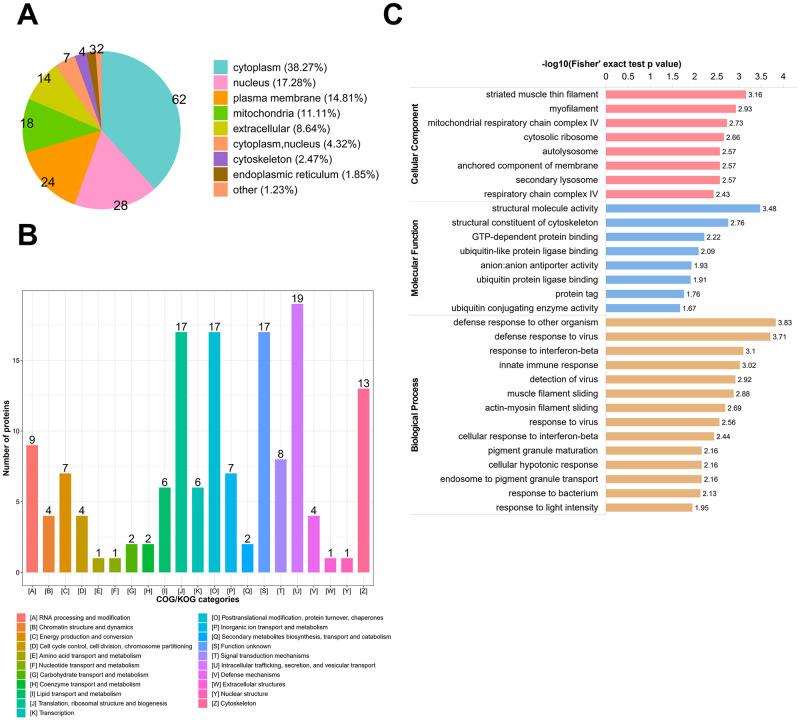
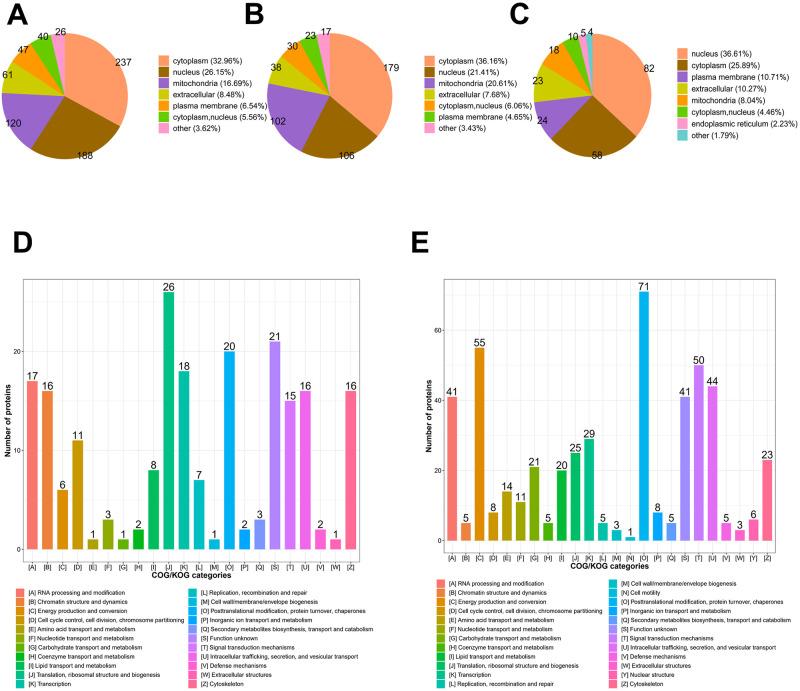
Toxoplasma gondii (T. gondii) is an opportunistic parasite that can infect the central nervous system (CNS), causing severe toxoplasmosis and behavioral cognitive impairment. Mortality is high in immunocompromised individuals with toxoplasmosis, most commonly due to reactivation of infection in the CNS. There are still no effective vaccines and drugs for the prevention and treatment of toxoplasmosis. There are five developmental stages for T. gondii to complete life cycle, of which the tachyzoite and bradyzoite stages are the key to the acute and chronic infection. In this study, to better understanding of how T. gondii interacts with the host CNS at different stages of infection, we constructed acute and chronic infection models of T. gondii in astrocytes, and used label-free proteomics to detect the proteome changes before and after infection, respectively. A total of 4676 proteins were identified, among which 163 differentially expressed proteins (fold change ≥ 1.5 or ≤ 0.67 and p-value ≤ 0.05) including 109 up-regulated proteins and 54 down-regulated proteins in C8-TA vs C8 group, and 719 differentially expressed proteins including 495 up-regulated proteins and 224 down-regulated proteins in C8-BR vs C8-TA group. After T. gondii tachyzoites infected astrocytes, differentially expressed proteins were enriched in immune-related biological processes to promote the formation of bradyzoites and maintain the balance of T. gondii, CNS and brain. After T. gondii bradyzoites infected astrocytes, the differentially expressed proteins up-regulated the host's glucose metabolism, and some up-regulated proteins were strongly associated with neurodegenerative diseases. These findings not only provide new insights into the psychiatric pathogenesis of T. gondii, but also provide potential targets for the treatment of acute and chronic Toxoplasmosis.
弓形虫是一种机会性寄生虫,可感染中枢神经系统(CNS),导致严重的弓形虫病和行为认知障碍。免疫功能低下的弓形虫病患者死亡率很高,最常见的原因是中枢神经系统感染的重新激活。目前仍没有有效的疫苗和药物来预防和治疗弓形虫病。弓形虫完成生命周期有五个发育阶段,其中速殖子和缓殖子阶段是急性和慢性感染的关键。在本研究中,为了更好地了解弓形虫在感染的不同阶段如何与宿主中枢神经系统相互作用,我们构建了弓形虫在星形胶质细胞中的急性和慢性感染模型,并分别使用无标记蛋白质组学检测感染前后的蛋白质组变化。共鉴定出4676种蛋白质,其中在C8-TA组与C8组中有163种差异表达蛋白质(倍数变化≥1.5或≤0.67且p值≤0.05),包括109种上调蛋白质和54种下调蛋白质;在C8-BR组与C8-TA组中有719种差异表达蛋白质,包括495种上调蛋白质和224种下调蛋白质。弓形虫速殖子感染星形胶质细胞后,差异表达蛋白质富集于免疫相关生物学过程,以促进缓殖子的形成并维持弓形虫、中枢神经系统和大脑的平衡。弓形虫缓殖子感染星形胶质细胞后,差异表达蛋白质上调宿主的葡萄糖代谢,一些上调蛋白质与神经退行性疾病密切相关。这些发现不仅为弓形虫的精神病理学发病机制提供了新的见解,也为急性和慢性弓形虫病的治疗提供了潜在靶点。





 Zotero 插件