
组成型 SKN-1 激活的分子和生理后果的比较分析。
Comparative analysis of the molecular and physiological consequences of constitutive SKN-1 activation.
机构信息
Leonard Davis School of Gerontology, University of Southern California, Los Angeles, CA, 90089, USA.
Dornsife College of Letters, Arts, and Sciences, Department of Molecular and Computational Biology, University of Southern California, Los Angeles, CA, 90089, USA.
出版信息
Geroscience. 2023 Dec;45(6):3359-3370. doi: 10.1007/s11357-023-00937-9. Epub 2023 Sep 26.
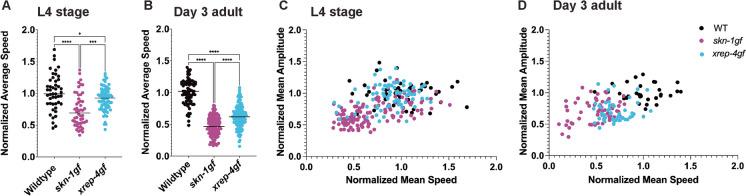
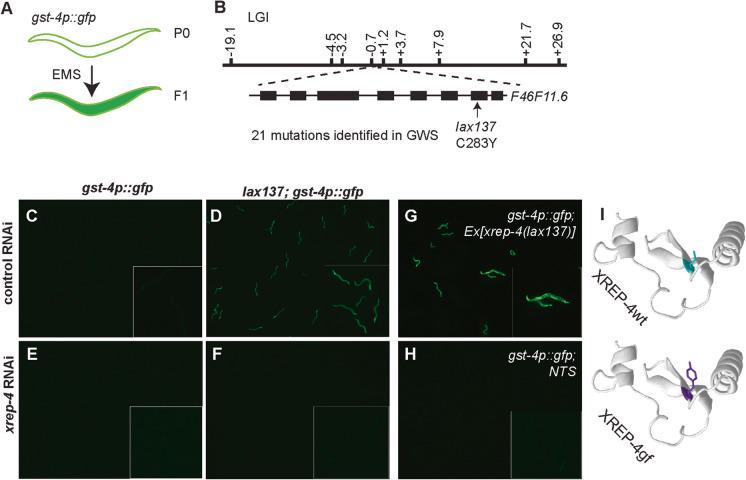
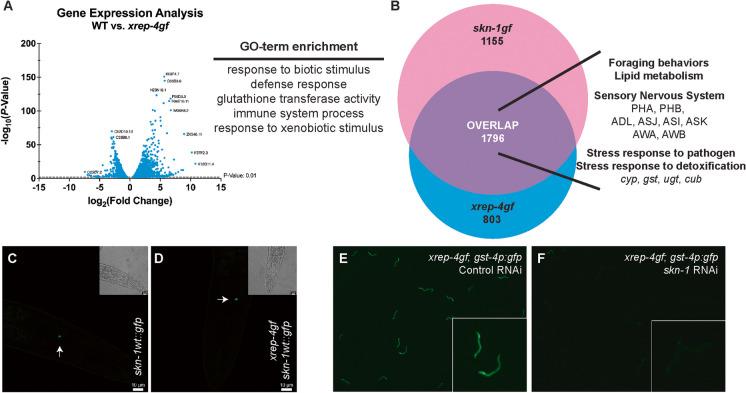
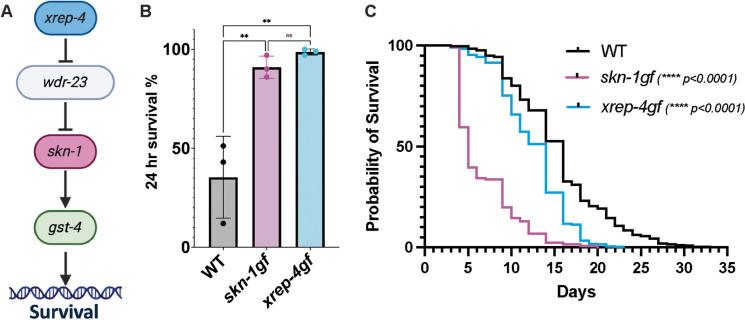
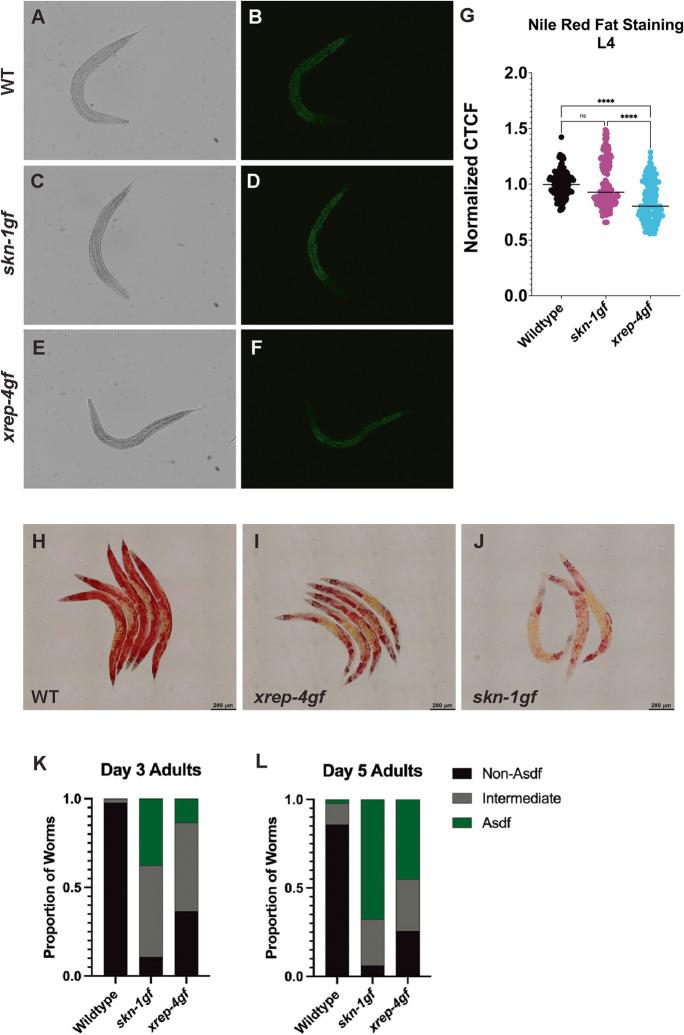
Molecular homeostats play essential roles across all levels of biological organization to ensure a return to normal function after responding to abnormal internal and environmental events. SKN-1 is an evolutionarily conserved cytoprotective transcription factor that is integral for the maintenance of cellular homeostasis upon exposure to a variety of stress conditions. Despite the essentiality of turning on SKN-1/NRF2 in response to exogenous and endogenous stress, animals with chronic activation of SKN-1 display premature loss of health with age, and ultimately, diminished lifespan. Previous genetic models of constitutive SKN-1 activation include gain-of-function alleles of skn-1 and loss-of-function alleles of wdr-23 that impede the turnover of SKN-1 by the ubiquitin proteasome. Here, we define a novel gain-of-function mutation in the xrep-4 locus that results in constitutive activation of SKN-1 in the absence of stress. Although each of these genetic mutations results in continuously unregulated transcriptional output from SKN-1, the physiological consequences of each model on development, stress resistance, reproduction, lipid homeostasis, and lifespan are distinct. Here, we provide a comprehensive assessment of the differential healthspan impacts across multiple models of constitutive SKN-1 activation. Although our results reveal the universal need to reign in the uncontrolled activity of cytoprotective transcription factors, we also define the unique signatures of each model of constitutive SKN-1 activation, which provides innovative solutions for the design of molecular "off-switches" of unregulated transcriptional homeostats.
分子动态平衡在所有生物组织层次上都起着至关重要的作用,以确保在响应异常的内部和环境事件后恢复正常功能。SKN-1 是一种进化上保守的细胞保护转录因子,对于在暴露于各种应激条件下维持细胞内稳态至关重要。尽管在响应外源和内源应激时激活 SKN-1/NRF2 至关重要,但慢性激活 SKN-1 的动物会随着年龄的增长而提前失去健康,并最终缩短寿命。SKN-1 持续激活的先前遗传模型包括 skn-1 的功能获得性等位基因和 wdr-23 的功能丧失性等位基因,这些等位基因通过泛素蛋白酶体阻碍 SKN-1 的周转。在这里,我们定义了 xrep-4 基因座中的一个新的功能获得性突变,该突变导致 SKN-1 在没有应激的情况下持续激活。尽管这些遗传突变都导致 SKN-1 的转录输出持续不受调控,但每个模型对发育、应激抗性、繁殖、脂质动态平衡和寿命的生理后果是不同的。在这里,我们对多个持续激活 SKN-1 的模型的差异健康寿命影响进行了全面评估。尽管我们的结果揭示了普遍需要控制细胞保护转录因子的不受控制的活性,但我们也定义了每个持续激活 SKN-1 的模型的独特特征,这为设计不受调控的转录动态平衡的分子“关闭开关”提供了创新的解决方案。
 Zotero 插件