
脯氨酰异构酶Pin1在机械感受器分化过程中稳定NeuroD。
The prolyl isomerase Pin1 stabilizes NeuroD during differentiation of mechanoreceptors.
作者信息
Zhao Liqun, Fong Steven H, Yang Qiaoyun, Jiang Yun-Jin, Korzh Vladimir, Liou Yih-Cherng
机构信息
Department of Biological Sciences, Faculty of Science, National University of Singapore, Singapore, Singapore.
Genes and Development Division, Institute of Molecular and Cell Biology, Agency for Science, Technology and Research (A-STAR), Singapore, Singapore.
出版信息
Front Cell Dev Biol. 2023 Sep 18;11:1225128. doi: 10.3389/fcell.2023.1225128. eCollection 2023.
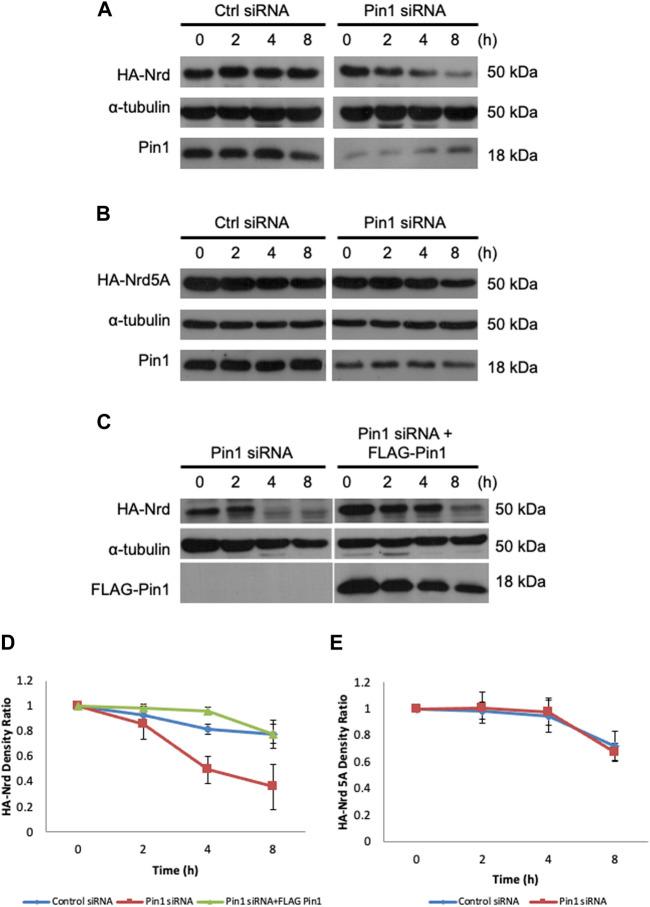
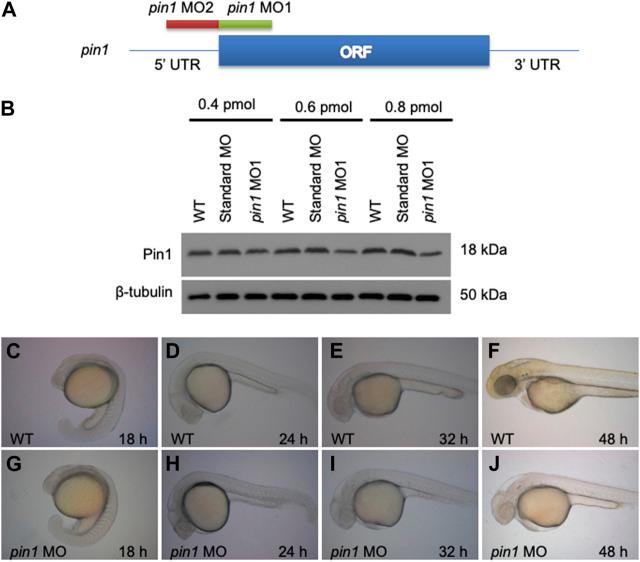
The peptidyl prolyl isomerase Pin1 plays vital roles in diverse cellular processes and pathological conditions. NeuroD is a differentiation and survival factor for a subset of neurons and pancreatic endocrine cells. Although multiple phosphorylation events are known to be crucial for NeuroD function, their mechanisms remain elusive. In this study, we demonstrate that zebrafish embryos deficient in Pin1 displayed phenotypes resembling those associated with NeuroD depletion, characterized by defects in formation of mechanosensory hair cells. Furthermore, zebrafish Pin1 interacts with NeuroD in a phosphorylation-dependent manner. In Pin1-deficient cell lines, NeuroD is rapidly degraded. However, the protein stability of NeuroD is restored upon overexpression of Pin1. These findings suggest that Pin1 functionally regulates NeuroD protein levels by post-phosphorylation isomerization during neuronal specification.
肽基脯氨酰异构酶Pin1在多种细胞过程和病理状况中发挥着至关重要的作用。NeuroD是一部分神经元和胰腺内分泌细胞的分化及存活因子。尽管已知多种磷酸化事件对NeuroD的功能至关重要,但其机制仍不清楚。在本研究中,我们证明Pin1缺陷的斑马鱼胚胎表现出与NeuroD缺失相关的表型,其特征为机械感觉毛细胞形成缺陷。此外,斑马鱼Pin1以磷酸化依赖的方式与NeuroD相互作用。在Pin1缺陷的细胞系中,NeuroD迅速降解。然而,Pin1过表达后,NeuroD的蛋白质稳定性得以恢复。这些发现表明,Pin1在神经元特化过程中通过磷酸化后异构化对NeuroD蛋白质水平进行功能调控。



 Zotero 插件