
血管生成素2、成纤维细胞生长因子23和骨形态发生蛋白10生物标志物特征可将心房颤动与其他伴随的心血管疾病区分开来。
An angiopoietin 2, FGF23, and BMP10 biomarker signature differentiates atrial fibrillation from other concomitant cardiovascular conditions.
作者信息
Chua Winnie, Cardoso Victor R, Guasch Eduard, Sinner Moritz F, Al-Taie Christoph, Brady Paul, Casadei Barbara, Crijns Harry J G M, Dudink Elton A M P, Hatem Stéphane N, Kääb Stefan, Kastner Peter, Mont Lluis, Nehaj Frantisek, Purmah Yanish, Reyat Jasmeet S, Schotten Ulrich, Sommerfeld Laura C, Zeemering Stef, Ziegler André, Gkoutos Georgios V, Kirchhof Paulus, Fabritz Larissa
机构信息
Institute of Cardiovascular Sciences, University of Birmingham, Birmingham, UK.
MRC Health Data Research UK (HDR), Midlands Site, London, UK.
出版信息
Sci Rep. 2023 Oct 5;13(1):16743. doi: 10.1038/s41598-023-42331-7.
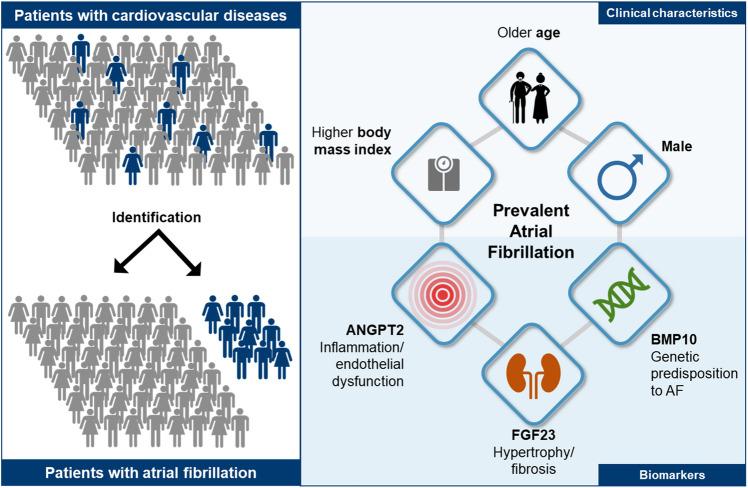
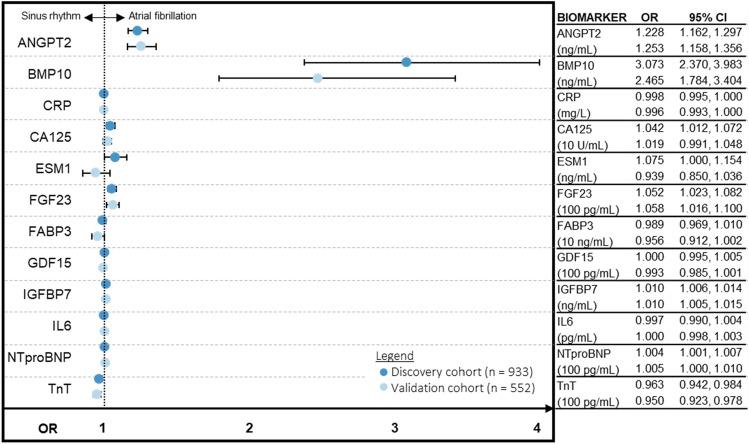
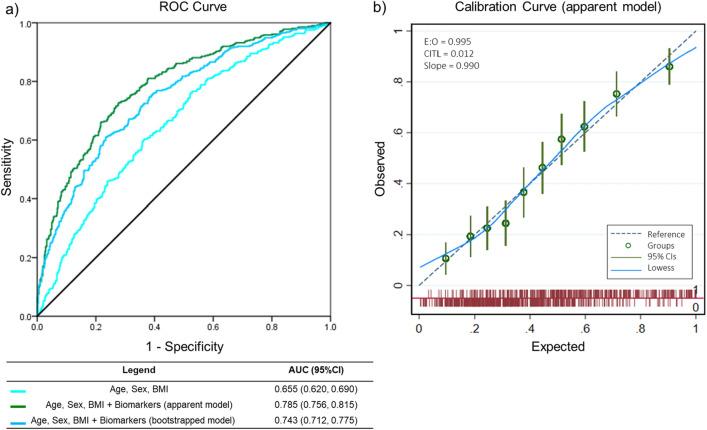
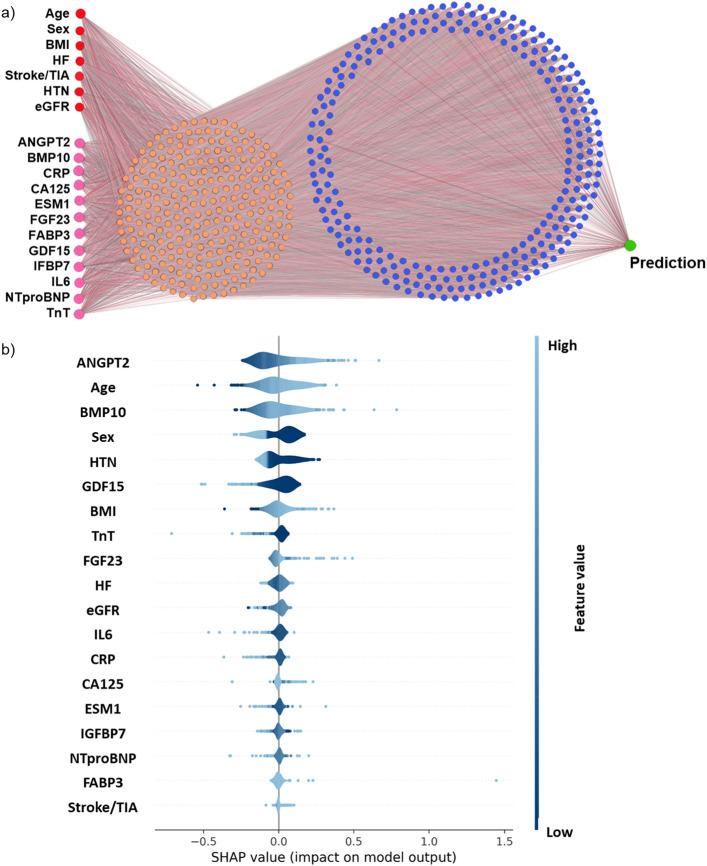
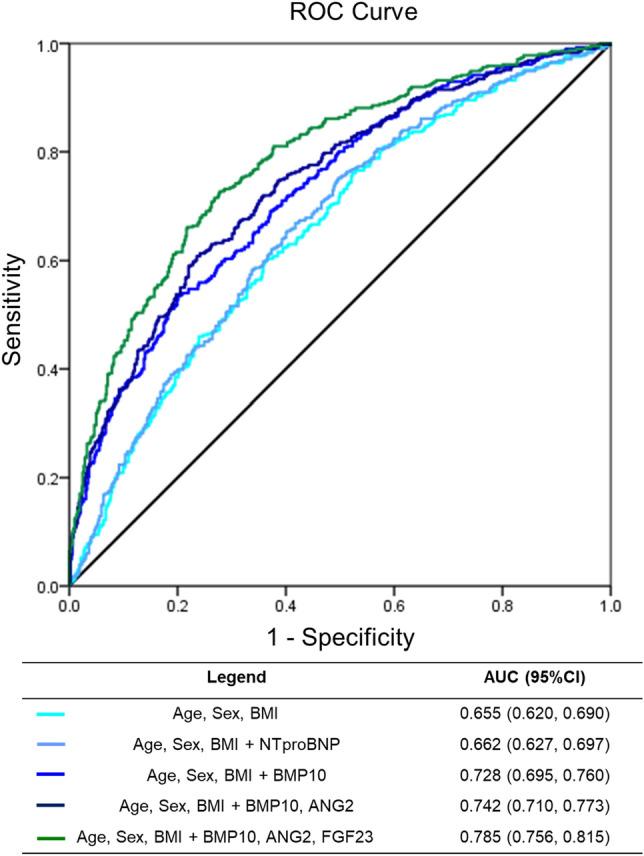
Early detection of atrial fibrillation (AF) enables initiation of anticoagulation and early rhythm control therapy to reduce stroke, cardiovascular death, and heart failure. In a cross-sectional, observational study, we aimed to identify a combination of circulating biomolecules reflecting different biological processes to detect prevalent AF in patients with cardiovascular conditions presenting to hospital. Twelve biomarkers identified by reviewing literature and patents were quantified on a high-precision, high-throughput platform in 1485 consecutive patients with cardiovascular conditions (median age 69 years [Q1, Q3 60, 78]; 60% male). Patients had either known AF (45%) or AF ruled out by 7-day ECG-monitoring. Logistic regression with backward elimination and a neural network approach considering 7 key clinical characteristics and 12 biomarker concentrations were applied to a randomly sampled discovery cohort (n = 933) and validated in the remaining patients (n = 552). In addition to age, sex, and body mass index (BMI), BMP10, ANGPT2, and FGF23 identified patients with prevalent AF (AUC 0.743 [95% CI 0.712, 0.775]). These circulating biomolecules represent distinct pathways associated with atrial cardiomyopathy and AF. Neural networks identified the same variables as the regression-based approach. The validation using regression yielded an AUC of 0.719 (95% CI 0.677, 0.762), corroborated using deep neural networks (AUC 0.784 [95% CI 0.745, 0.822]). Age, sex, BMI and three circulating biomolecules (BMP10, ANGPT2, FGF23) are associated with prevalent AF in unselected patients presenting to hospital. Findings should be externally validated. Results suggest that age and different disease processes approximated by these three biomolecules contribute to AF in patients. Our findings have the potential to improve screening programs for AF after external validation.
心房颤动(AF)的早期检测有助于启动抗凝治疗和早期节律控制治疗,以降低中风、心血管死亡和心力衰竭的风险。在一项横断面观察性研究中,我们旨在确定一组反映不同生物学过程的循环生物分子组合,以检测到医院就诊的心血管疾病患者中的现患房颤。通过查阅文献和专利确定的12种生物标志物,在一个高精度、高通量平台上对1485例连续的心血管疾病患者(中位年龄69岁[四分位间距60, 78];60%为男性)进行了定量检测。患者要么已知患有房颤(45%),要么通过7天心电图监测排除房颤。将考虑7个关键临床特征和12种生物标志物浓度的逐步向后消除逻辑回归和神经网络方法应用于随机抽样的发现队列(n = 933),并在其余患者(n = 552)中进行验证。除年龄、性别和体重指数(BMI)外,骨形态发生蛋白10(BMP10)、血管生成素2(ANGPT2)和成纤维细胞生长因子23(FGF23)可识别出现患房颤的患者(曲线下面积[AUC] 0.743 [95%置信区间0.712, 0.775])。这些循环生物分子代表了与心房心肌病和房颤相关的不同途径。神经网络识别出与基于回归的方法相同的变量。使用回归进行验证得到的AUC为0.719(95%置信区间0.677, 0.762),深度神经网络验证结果与之相符(AUC 0.784 [95%置信区间0.745, 0.822])。年龄、性别、BMI和三种循环生物分子(BMP10、ANGPT2、FGF23)与到医院就诊的未选择患者中的现患房颤相关。研究结果应进行外部验证。结果表明,年龄和这三种生物分子所代表的不同疾病过程与患者的房颤有关。我们的研究结果在外部验证后有可能改善房颤的筛查方案。
 Zotero 插件