
用于筛查紧张型头痛和偏头痛的日语问卷的开发与验证
Development and Validation of a Japanese-Language Questionnaire to Screen for Tension-Type Headaches and Migraines.
作者信息
Tanobe Kaho, Machida Minori, Motoya Ryo, Takeoka Atsushi, Danno Daisuke, Miyahara Junichi, Takeshima Takao, Kumano Hiroaki, Tayama Jun
机构信息
Psychology, Graduate School of Human Sciences, Waseda University, Saitama, JPN.
Clinical Psychology, Graduate School of Human Sciences, Waseda University, Saitama, JPN.
出版信息
Cureus. 2023 Sep 4;15(9):e44633. doi: 10.7759/cureus.44633. eCollection 2023 Sep.
Introduction Migraine and tension-type headache (TTH) are chronic diseases associated with significant socioeconomic losses and social and psychological impact (current global prevalence: 10% and 38%, respectively). Thus, they require accurate identification and classification. In clinical practice, validated screening tools able to quickly determine migraine and TTH with high sensitivity and specificity help provide an objective and multifaceted understanding of patients' headache symptoms. However, no tool has been developed or validated yet in Japan to ask multifaceted questions about headache-related symptoms in order to identify migraine and TTH and understand these symptoms. This study aimed to develop a questionnaire for screening TTH and migraine. Methods The study was conducted from March to June 2022 at a medical institution in Osaka, Japan. The questionnaire - comprising 24 questions that were generated based on the 3rd edition of the International Classification of Headache Disorders - was used to screen for migraine and TTH, aiming for a deeper understanding of related symptoms. The participants were patients aged ≥18 years with at least one of the following diagnoses: migraine, TTH. The participants were asked to respond in writing or online. The inclusion criteria were age ≥18 years; headache patients attending a hospital; and diagnoses of at least one of the following: migraine, TTH. The informativeness and discriminating ability of the screening items were evaluated using the item response theory. Items with a calculated discrimination ≥1.35 (high or very high) were retained for screening purposes. Basic questions required to screen for primary headaches were retained, despite their limited computational discrimination power. Ultimately, nine and eight screening items were finalized for migraine and TTH, respectively. The previous neurologists' clinical diagnosis of each patient was used as the gold standard reference for calculating sensitivity, specificity, and positive and negative predictive values regarding the screening items. Cohen's kappa coefficients with 95% CIs were also calculated to determine the agreement between the neurologists' clinical diagnosis and the questionnaire results. Results The study population comprised 69 patients aged 19-89 years who were assisted at a hospital division specializing in headache medicine and diagnosed by neurologists. Of these, 22 patients had migraine, 30 had TTH, and 17 had migraine/TTH. Comparing the neurologists' clinical diagnosis with our screening questionnaire results, the sensitivity and specificity were 72.7% and 86.7% for migraine and 50.0% and 86.4% for TTH, respectively. Conclusions Our brief screening tool was highly specific for diagnosing migraine and TTH in individuals with headache symptoms but lacked sufficient sensitivity, especially for TTH. The high specificity for migraine and TTH suggests that the screening tool we developed in this study can correctly identify those who do not have migraine and TTH. The sensitivity was also relatively high for migraine, suggesting that the tool can correctly identify migraine-positive individuals. However, the sensitivity for TTH was low. This tool could help clinicians in providing detailed course assessment of migraine symptoms and TTH symptoms; however, the issue of low sensitivity for TTH needs to be addressed.
引言
偏头痛和紧张型头痛(TTH)是慢性疾病,会造成重大的社会经济损失以及社会和心理影响(目前全球患病率分别为10%和38%)。因此,它们需要准确的识别和分类。在临床实践中,能够快速、高灵敏度和高特异性地确定偏头痛和TTH的经过验证的筛查工具,有助于对患者的头痛症状提供客观且多方面的了解。然而,日本尚未开发或验证任何用于询问与头痛相关症状的多方面问题以识别偏头痛和TTH并了解这些症状的工具。本研究旨在开发一种用于筛查TTH和偏头痛的问卷。
方法
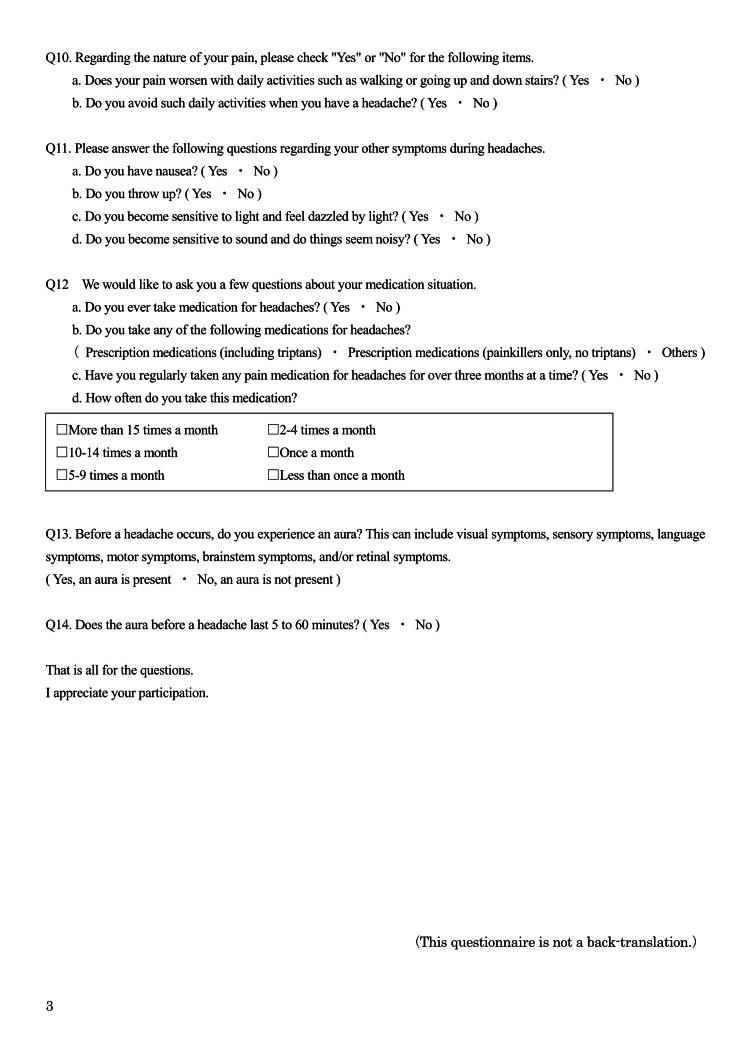
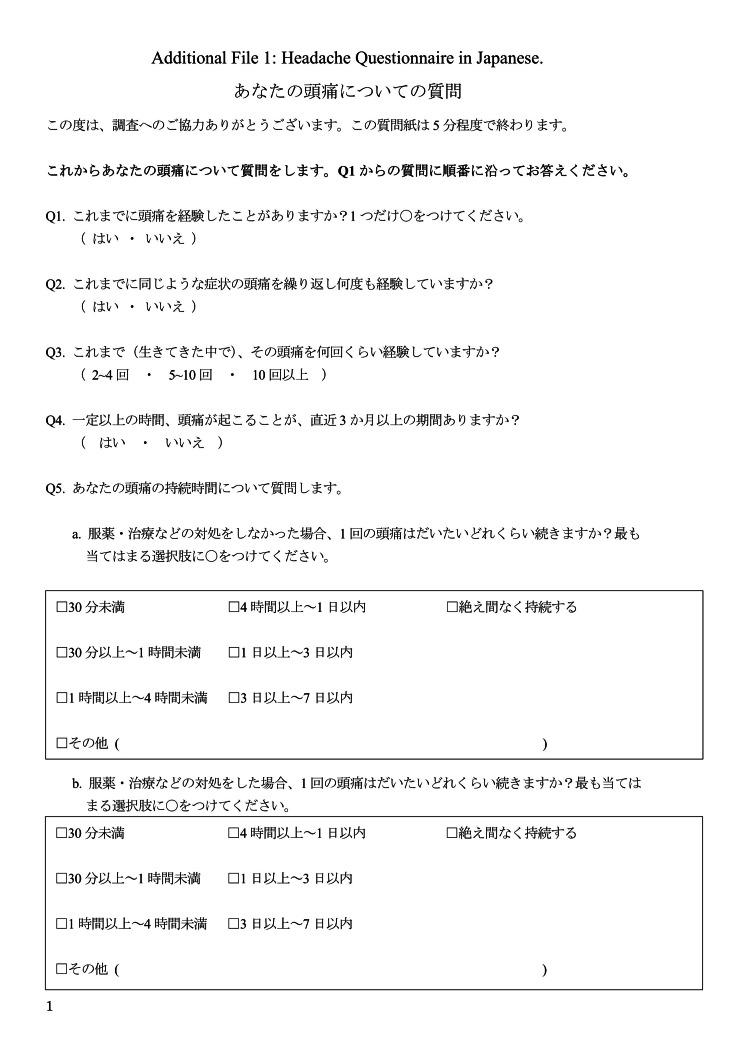
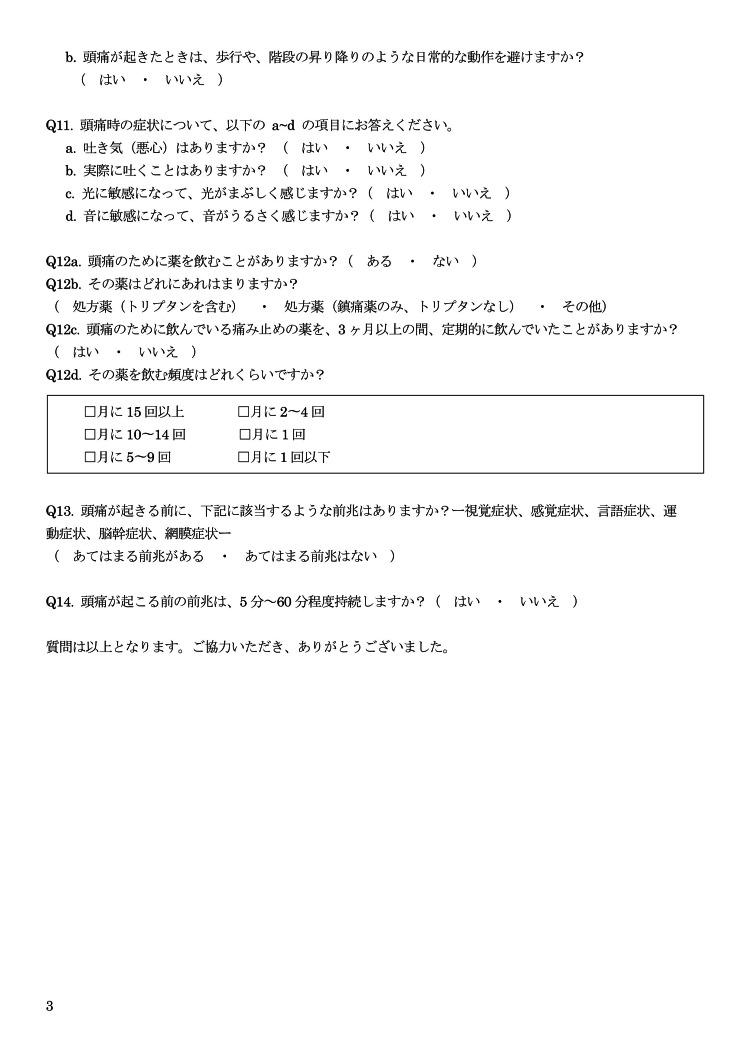
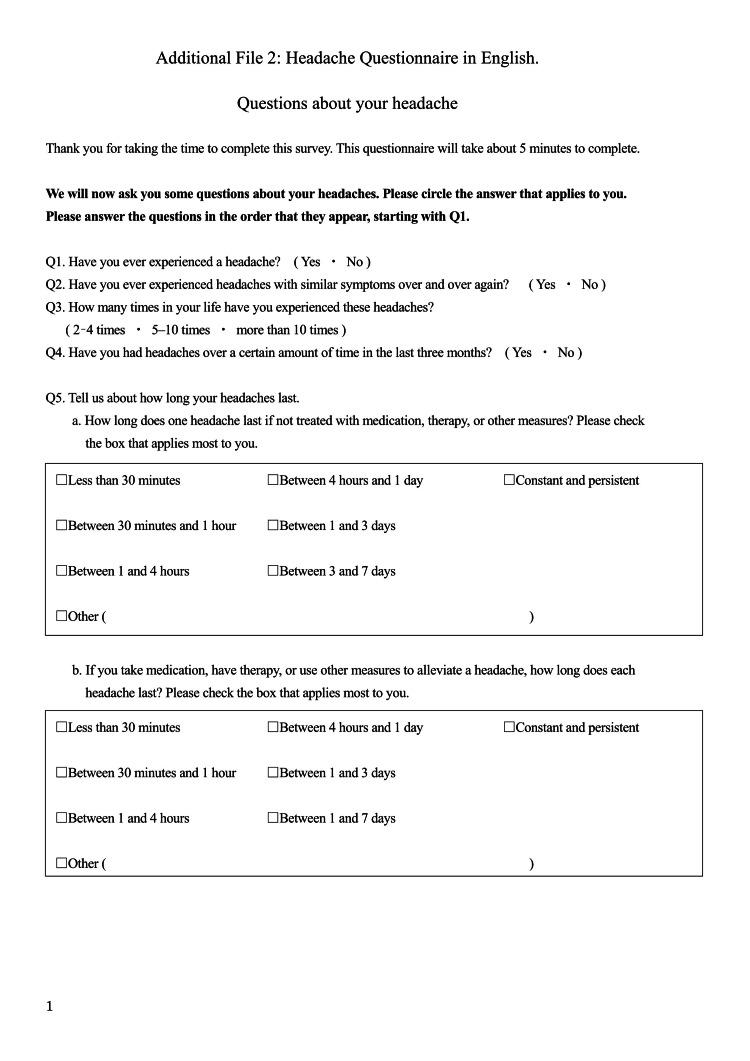
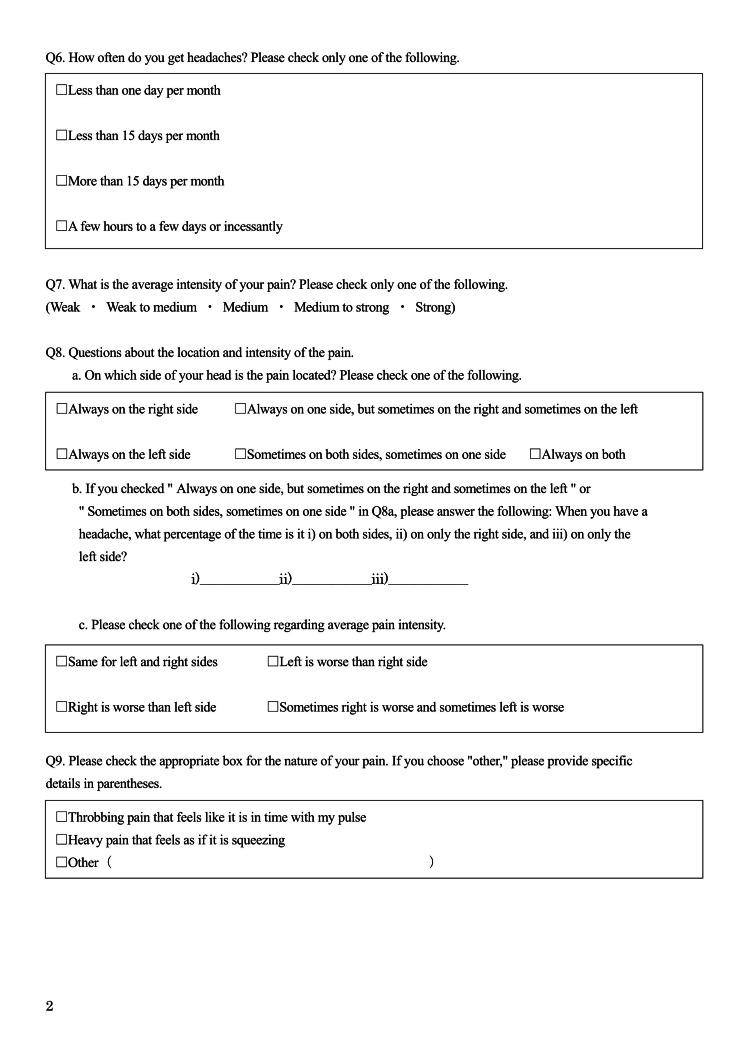
该研究于2022年3月至6月在日本大阪的一家医疗机构进行。该问卷包含基于《国际头痛疾病分类》第3版生成的24个问题,用于筛查偏头痛和TTH,旨在更深入地了解相关症状。参与者为年龄≥18岁且患有以下至少一种诊断的患者:偏头痛、TTH。参与者被要求以书面或在线方式作答。纳入标准为年龄≥18岁;在医院就诊的头痛患者;以及患有以下至少一种诊断:偏头痛、TTH。使用项目反应理论评估筛查项目的信息量和区分能力。计算出的区分度≥1.35(高或非常高)的项目被保留用于筛查目的。尽管基本问题的计算区分能力有限,但用于筛查原发性头痛所需的基本问题仍被保留。最终,分别确定了9个和8个用于偏头痛和TTH的筛查项目。将每位患者之前神经科医生的临床诊断用作计算筛查项目的灵敏度、特异性以及阳性和阴性预测值的金标准参考。还计算了具有95%置信区间的科恩kappa系数,以确定神经科医生的临床诊断与问卷结果之间的一致性。
结果
研究人群包括69名年龄在19 - 89岁之间的患者,他们在一家专门治疗头痛的医院科室接受治疗并由神经科医生进行诊断。其中,22名患者患有偏头痛,30名患有TTH,17名患有偏头痛/TTH。将神经科医生的临床诊断与我们的筛查问卷结果进行比较,偏头痛的灵敏度和特异性分别为72.7%和86.7%,TTH的灵敏度和特异性分别为50.0%和86.4%。
结论
我们的简短筛查工具对于诊断有头痛症状的个体中的偏头痛和TTH具有高度特异性,但缺乏足够的灵敏度,尤其是对于TTH。对偏头痛和TTH的高特异性表明,我们在本研究中开发的筛查工具可以正确识别那些没有偏头痛和TTH的人。对偏头痛的灵敏度也相对较高,表明该工具可以正确识别偏头痛阳性个体。然而,对TTH的灵敏度较低。该工具可以帮助临床医生对偏头痛症状和TTH症状进行详细的病程评估;然而,TTH灵敏度低的问题需要解决。

 Zotero 插件