
药物-微生物群相互作用:精准医学中一个新出现的优先事项。
Drug-microbiota interactions: an emerging priority for precision medicine.
作者信息
Zhao Qing, Chen Yao, Huang Weihua, Zhou Honghao, Zhang Wei
机构信息
Department of Clinical Pharmacology, Xiangya Hospital, Central South University, 87 Xiangya Road, Changsha, 410008, PR China.
Institute of Clinical Pharmacology, Central South University, Hunan Key Laboratory of Pharmacogenetics, 110 Xiangya Road, Changsha, 410078, PR China.
出版信息
Signal Transduct Target Ther. 2023 Oct 9;8(1):386. doi: 10.1038/s41392-023-01619-w.
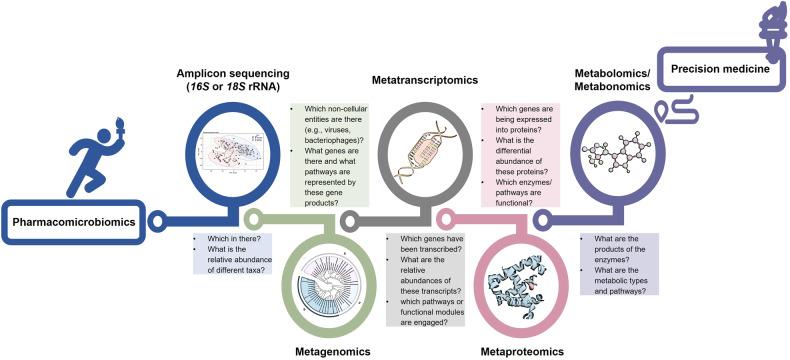
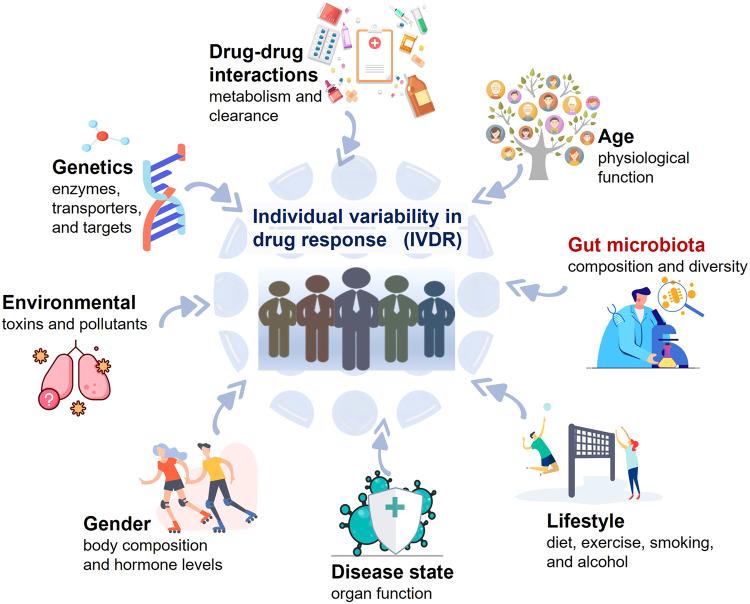
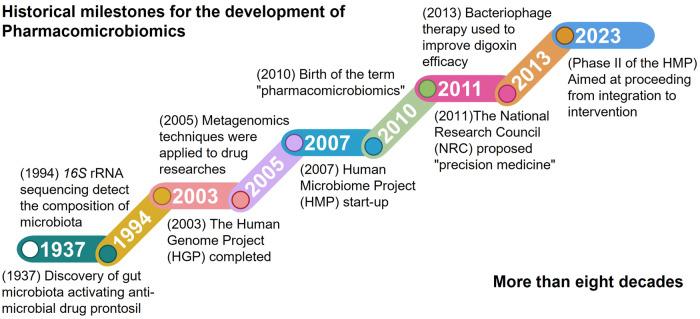
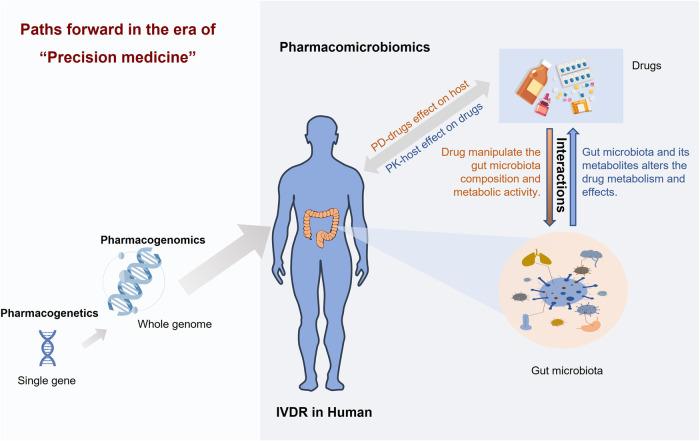
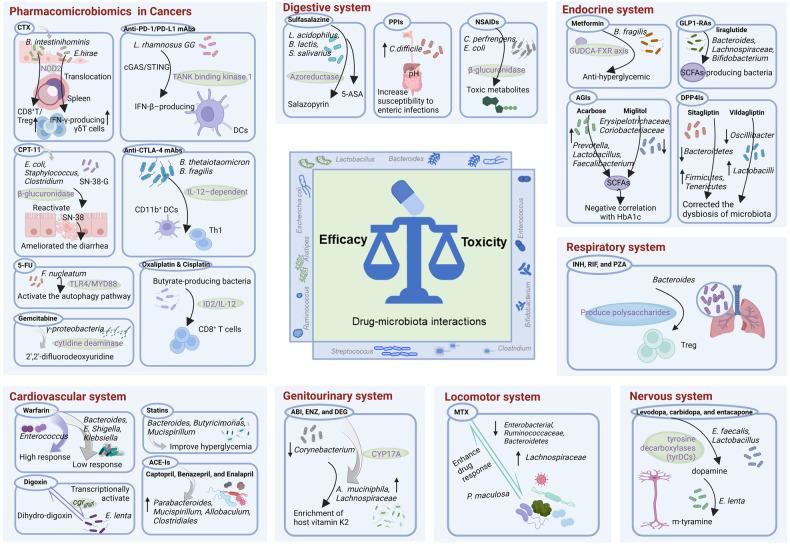
Individual variability in drug response (IVDR) can be a major cause of adverse drug reactions (ADRs) and prolonged therapy, resulting in a substantial health and economic burden. Despite extensive research in pharmacogenomics regarding the impact of individual genetic background on pharmacokinetics (PK) and pharmacodynamics (PD), genetic diversity explains only a limited proportion of IVDR. The role of gut microbiota, also known as the second genome, and its metabolites in modulating therapeutic outcomes in human diseases have been highlighted by recent studies. Consequently, the burgeoning field of pharmacomicrobiomics aims to explore the correlation between microbiota variation and IVDR or ADRs. This review presents an up-to-date overview of the intricate interactions between gut microbiota and classical therapeutic agents for human systemic diseases, including cancer, cardiovascular diseases (CVDs), endocrine diseases, and others. We summarise how microbiota, directly and indirectly, modify the absorption, distribution, metabolism, and excretion (ADME) of drugs. Conversely, drugs can also modulate the composition and function of gut microbiota, leading to changes in microbial metabolism and immune response. We also discuss the practical challenges, strategies, and opportunities in this field, emphasizing the critical need to develop an innovative approach to multi-omics, integrate various data types, including human and microbiota genomic data, as well as translate lab data into clinical practice. To sum up, pharmacomicrobiomics represents a promising avenue to address IVDR and improve patient outcomes, and further research in this field is imperative to unlock its full potential for precision medicine.
药物反应的个体差异(IVDR)可能是药物不良反应(ADR)和治疗时间延长的主要原因,从而导致巨大的健康和经济负担。尽管药物基因组学对个体遗传背景对药代动力学(PK)和药效学(PD)的影响进行了广泛研究,但遗传多样性仅能解释IVDR的有限比例。肠道微生物群(也称为第二基因组)及其代谢产物在调节人类疾病治疗效果中的作用已被近期研究所强调。因此,新兴的药物微生物组学领域旨在探索微生物群变异与IVDR或ADR之间的相关性。本综述介绍了肠道微生物群与用于治疗人类全身性疾病(包括癌症、心血管疾病(CVD)、内分泌疾病等)的经典治疗药物之间复杂相互作用的最新概况。我们总结了微生物群如何直接和间接地改变药物的吸收、分布、代谢和排泄(ADME)。相反,药物也可以调节肠道微生物群的组成和功能,导致微生物代谢和免疫反应的变化。我们还讨论了该领域的实际挑战、策略和机遇,强调迫切需要开发一种创新的多组学方法,整合包括人类和微生物群基因组数据在内的各种数据类型,并将实验室数据转化为临床实践。总之,药物微生物组学是解决IVDR和改善患者治疗效果的一条有前途的途径,该领域的进一步研究对于释放其在精准医学中的全部潜力至关重要。
 Zotero 插件