
褪黑素和维生素作为双酚类生殖毒性的保护剂:哪种最有效?系统评价和荟萃分析。
Melatonin and Vitamins as Protectors against the Reproductive Toxicity of Bisphenols: Which Is the Most Effective? A Systematic Review and Meta-Analysis.
机构信息
Departamento de Farmacia, Facultad de Química, Universidad Nacional Autónoma de México, Ciudad de México 04510, Mexico.
Laboratorio de Investigación y Posgrado en Tecnología Farmacéutica, Universidad Nacional Autónoma de México-FESC, Campus 1, Cuautitlán Izcalli 54714, Mexico.
出版信息
Int J Mol Sci. 2023 Oct 5;24(19):14930. doi: 10.3390/ijms241914930.
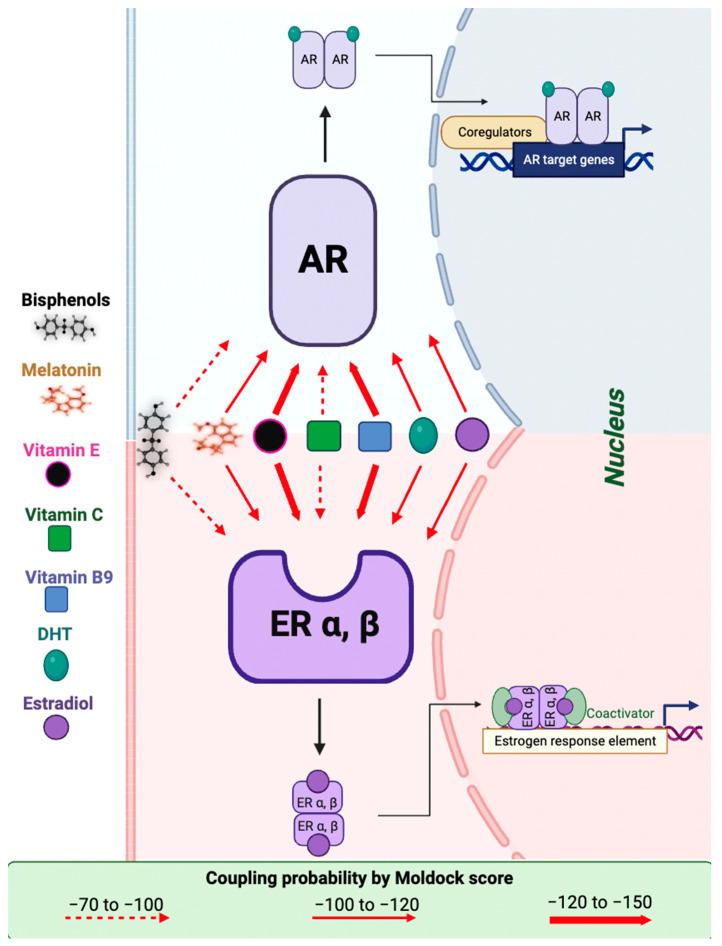
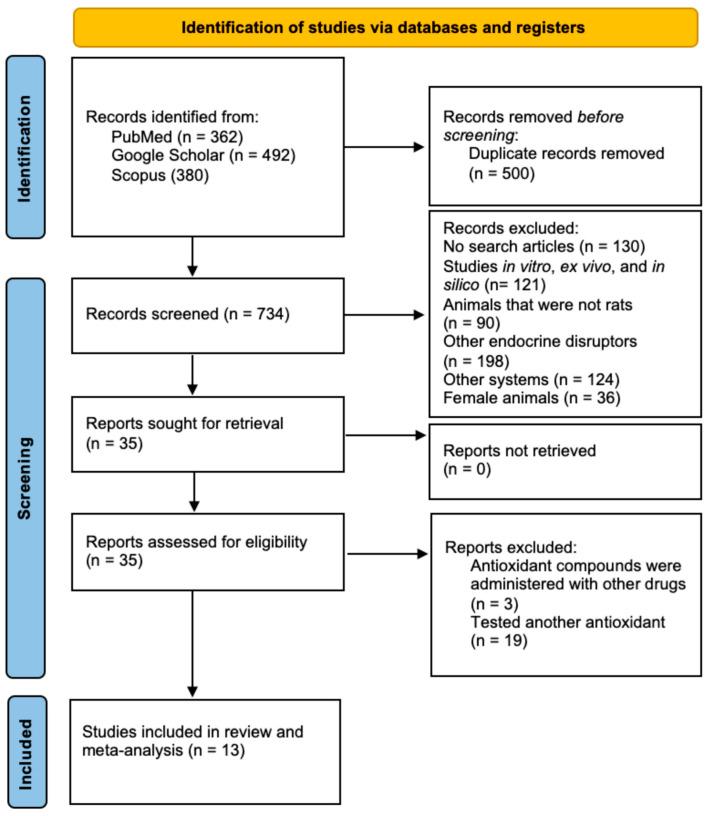
Bisphenols such as bisphenol A (BPA), S (BPS), C (BPC), F (BPF), AF (BPAF), tetrabromobisphenol, nonylphenol, and octylphenol are plasticizers used worldwide to manufacture daily-use articles. Exposure to these compounds is related to many pathologies of public health importance, such as infertility. Using a protector compound against the reproductive toxicological effects of bisphenols is of scientific interest. Melatonin and vitamins have been tested, but the results are not conclusive. To this end, this systematic review and meta-analysis compared the response of reproductive variables to melatonin and vitamin administration as protectors against damage caused by bisphenols. We search for controlled studies of male rats exposed to bisphenols to induce alterations in reproduction, with at least one intervention group receiving melatonin or vitamins (B, C, or E). Also, molecular docking simulations were performed between the androgen (AR) and estrogen receptors (ER), melatonin, and vitamins. About 1234 records were initially found; finally, 13 studies were qualified for review and meta-analysis. Melatonin plus bisphenol improves sperm concentration and viability of sperm and increases testosterone serum levels compared with control groups; however, groups receiving vitamins plus bisphenols had lower sperm concentration, total testis weight, and testosterone serum levels than the control. In the docking analysis, vitamin E had the highest negative MolDock score, representing the best binding affinity with AR and ER, compared with other vitamins and melatonin in the docking. Our findings suggest that vitamins could act as an endocrine disruptor, and melatonin is most effective in protecting against the toxic effects of bisphenols.
双酚类物质,如双酚 A (BPA)、S (BPS)、C (BPC)、F (BPF)、AF (BPAF)、四溴双酚、壬基酚和辛基酚,是全球用于制造日用品的增塑剂。接触这些化合物与许多具有公共卫生重要性的病理学有关,如不孕。使用一种保护化合物来对抗双酚类物质的生殖毒性作用具有科学意义。褪黑素和维生素已被测试,但结果并不确定。为此,本系统评价和荟萃分析比较了褪黑素和维生素作为保护剂对双酚类物质引起的生殖变量的反应。我们搜索了暴露于双酚类物质以诱导生殖改变的雄性大鼠的对照研究,至少有一个干预组接受褪黑素或维生素(B、C 或 E)。此外,还进行了雄激素 (AR) 和雌激素受体 (ER)、褪黑素和维生素之间的分子对接模拟。最初发现了大约 1234 条记录;最后,有 13 项研究符合审查和荟萃分析的条件。与对照组相比,褪黑素加双酚可提高精子浓度和精子活力,并增加血清睾酮水平;然而,与对照组相比,接受维生素加双酚的组的精子浓度、总睾丸重量和血清睾酮水平较低。在对接分析中,与其他维生素和褪黑素相比,维生素 E 的 MolDock 评分最高,代表与 AR 和 ER 的最佳结合亲和力。我们的研究结果表明,维生素可能作为一种内分泌干扰物,而褪黑素在保护双酚类物质的毒性作用方面最有效。


 Zotero 插件