Davis Lucy, Miller Rowan E, Wong Yien Ning Sophia
Royal Free Hospital, London NW3 2QG, UK.
Department of Medical Oncology, University College London Hospital, London NW1 3PG, UK.
Cancers (Basel). 2023 Sep 30;15(19):4814. doi: 10.3390/cancers15194814.
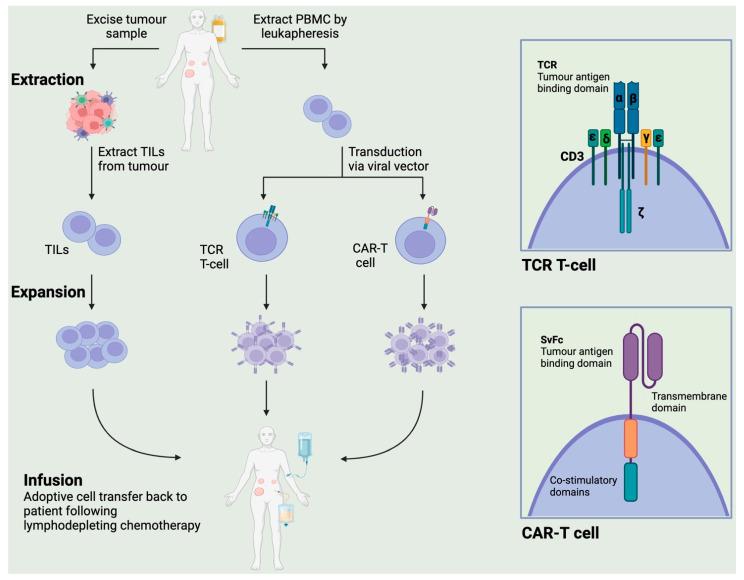
Ovarian cancers are typically poorly immunogenic and have demonstrated disappointing responses to immune checkpoint inhibitor (ICI) therapy. Adoptive cellular therapy (ACT) offers an alternative method of harnessing the immune system that has shown promise, especially with the success of chimeric antigen receptor T-cell (CAR-T) therapy in haematologic malignancies. So far, ACT has led to modest results in the treatment of solid organ malignancies. This review explores the possibility of ACT as an effective alternative or additional treatment to current standards of care in ovarian cancer. We will highlight the potential of ACTs, such as CAR-T, T-cell receptor therapy (TCR-T), tumour-infiltrating lymphocytes (TILs) and cell-based vaccines, whilst also discussing their challenges. We will present clinical studies for these approaches in the treatment of immunologically 'cold' ovarian cancer and consider the rationale for future research.
卵巢癌通常免疫原性较差,对免疫检查点抑制剂(ICI)治疗的反应令人失望。过继性细胞疗法(ACT)提供了一种利用免疫系统的替代方法,该方法已显示出前景,尤其是嵌合抗原受体T细胞(CAR-T)疗法在血液系统恶性肿瘤中的成功。到目前为止,ACT在实体器官恶性肿瘤的治疗中取得的效果一般。本综述探讨了ACT作为卵巢癌当前标准治疗的有效替代或辅助治疗方法的可能性。我们将强调CAR-T、T细胞受体疗法(TCR-T)、肿瘤浸润淋巴细胞(TILs)和基于细胞的疫苗等ACT的潜力,同时也讨论它们面临的挑战。我们将介绍这些方法在治疗免疫“冷”性卵巢癌方面的临床研究,并考虑未来研究的理论依据。

 Zotero 插件