
在西西伯利亚及俄罗斯其他地区种植的175个大豆育种系和品种的群体结构与遗传多样性
Population Structure and Genetic Diversity of the 175 Soybean Breeding Lines and Varieties Cultivated in West Siberia and Other Regions of Russia.
作者信息
Potapova Nadezhda A, Zlobin Alexander S, Perfil'ev Roman N, Vasiliev Gennady V, Salina Elena A, Tsepilov Yakov A
机构信息
Kurchatov Genomic Center, Institute of Cytology and Genetics, Siberian Branch of the Russian Academy of Sciences, 630090 Novosibirsk, Russia.
Institute for Information Transmission Problems (Kharkevich Institute) of the Russian Academy of Sciences, 127051 Moscow, Russia.
出版信息
Plants (Basel). 2023 Oct 6;12(19):3490. doi: 10.3390/plants12193490.
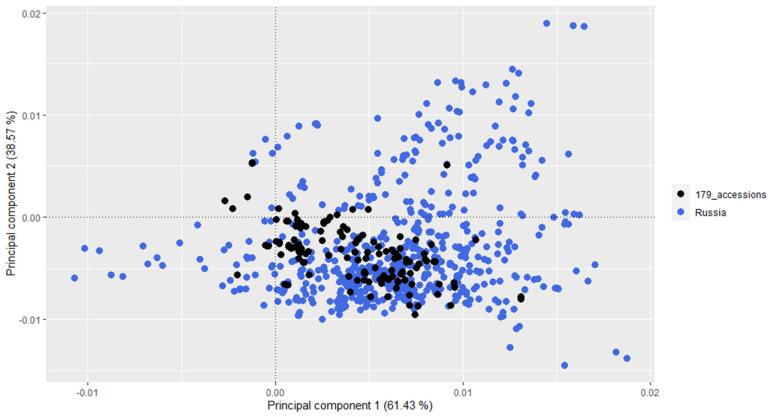
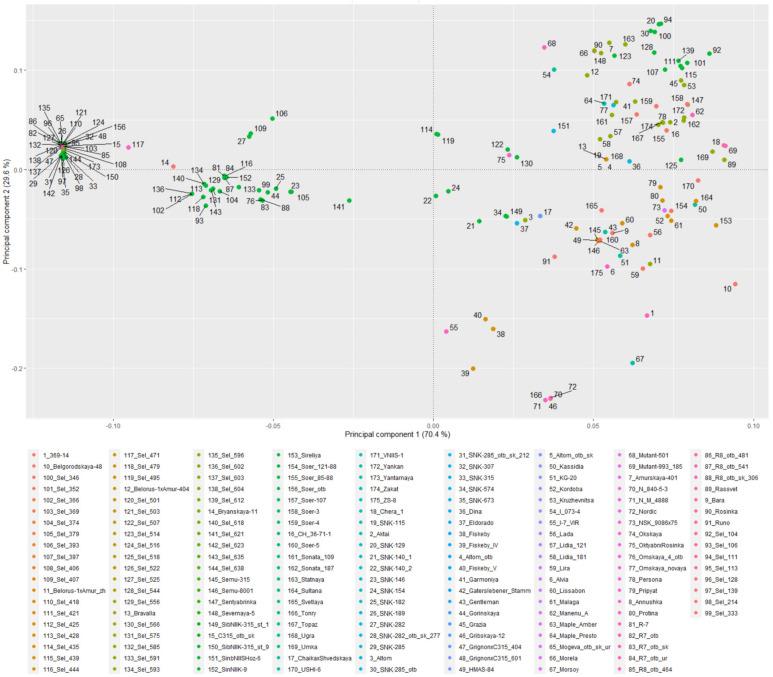
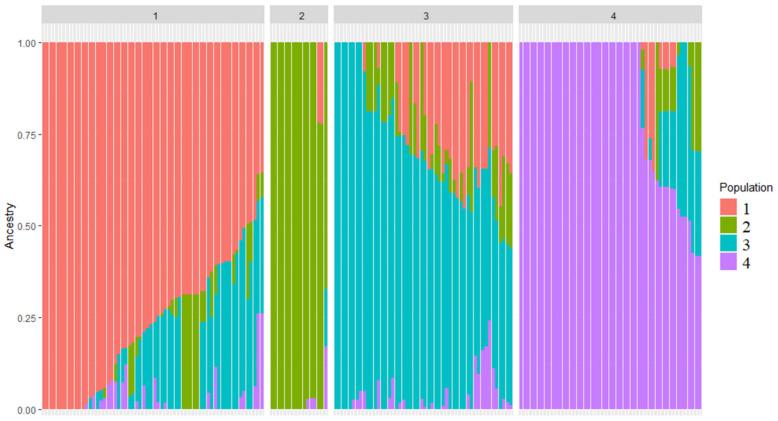
Soybean is a leguminous plant cultivated in many countries and is considered important in the food industry due to the high levels of oil and protein content in the beans. The high demand for soybeans and its products in the industry requires the expansion of cultivation areas. Despite climatic restrictions, West Siberia is gradually expanding its area of soybean cultivation. In this study, we present the first analysis of the population structure and genetic diversity of the 175 soybean breeding lines and varieties cultivated in West Siberia (103 accessions) and other regions of Russia (72 accessions), and we compare them with the cultivated soybean varieties from other geographical locations. Principal component analysis revealed several genetic clusters with different levels of genetic heterogeneity. Studied accessions are genetically similar to varieties from China, Japan, and the USA and are genetically distant to varieties from South Korea. Admixture analysis revealed four ancestry groups based on genetic ancestry and geographical origin, which are consistent with the regions of cultivation and origin of accessions and correspond to the principal component analysis result. Population statistics, including nucleotide diversity, Tajima's D, and linkage disequilibrium, are comparatively similar to those observed for studied accessions of a different origin. This study provides essential population and genetic information about the unique collection of breeding lines and varieties cultivated in West Siberia and other Russian regions to foster further evolutionary, genome-wide associations and functional breeding studies.
大豆是一种在许多国家种植的豆科植物,由于其豆中含有高水平的油脂和蛋白质,在食品工业中被认为很重要。该行业对大豆及其产品的高需求要求扩大种植面积。尽管存在气候限制,西西伯利亚仍在逐步扩大其大豆种植面积。在本研究中,我们首次分析了在西西伯利亚(103份种质)和俄罗斯其他地区(72份种质)种植的175个大豆育种系和品种的群体结构和遗传多样性,并将它们与来自其他地理位置的栽培大豆品种进行比较。主成分分析揭示了几个具有不同遗传异质性水平的遗传簇。所研究的种质在遗传上与来自中国、日本和美国的品种相似,而与来自韩国的品种在遗传上距离较远。混合分析基于遗传谱系和地理起源揭示了四个祖先群体,这与种质的种植和起源区域一致,并与主成分分析结果相符。包括核苷酸多样性、 Tajima's D和连锁不平衡在内的群体统计数据与不同起源的所研究种质观察到的数据相对相似。本研究提供了有关在西西伯利亚和俄罗斯其他地区种植的独特育种系和品种集合的重要群体和遗传信息,以促进进一步的进化、全基因组关联和功能育种研究。



 Zotero 插件