
盘点人类严重急性呼吸综合征冠状病毒2(SARS-CoV-2)刺突蛋白的突变:从新冠疫情初期到接近尾声
Taking stock of the mutations in human SARS-CoV-2 spike proteins: From early days to nearly the end of COVID-19 pandemic.
作者信息
Guruprasad Lalitha, Naresh Gatta Krs, Boggarapu Ganesh
机构信息
School of Chemistry, University of Hyderabad, Hyderabad, India.
出版信息
Curr Res Struct Biol. 2023 Oct 5;6:100107. doi: 10.1016/j.crstbi.2023.100107. eCollection 2023.
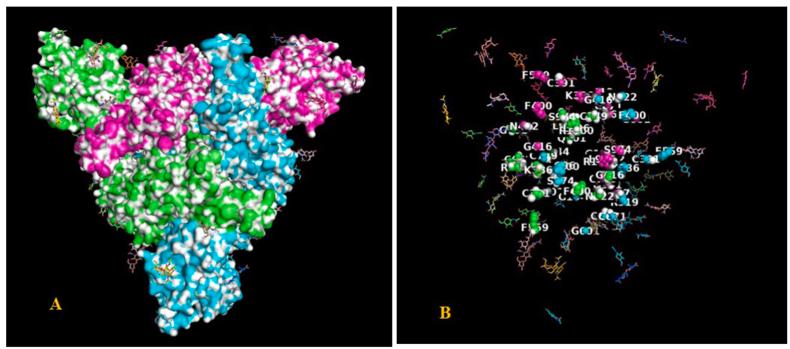
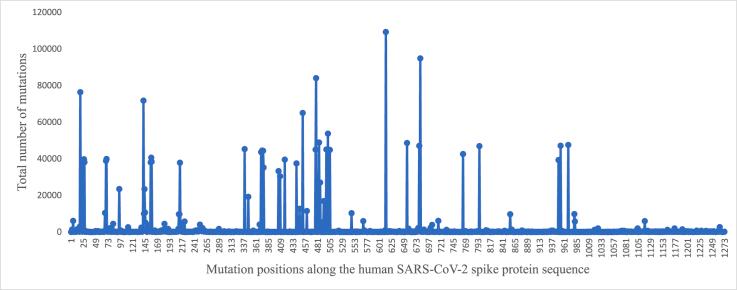
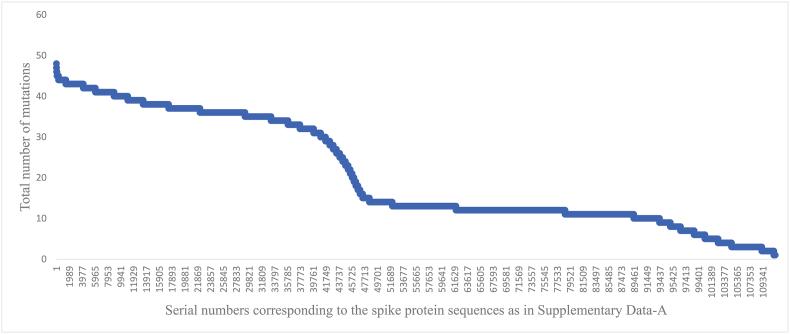
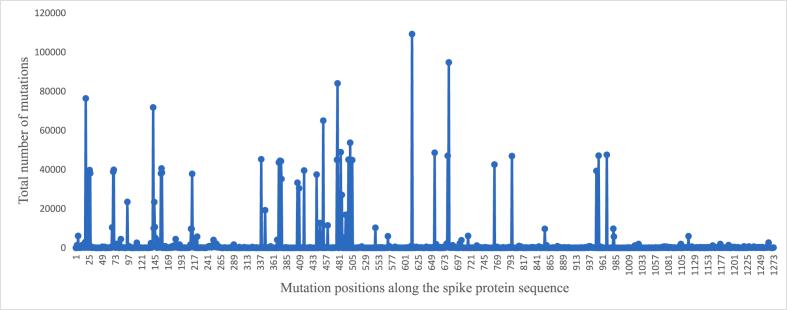
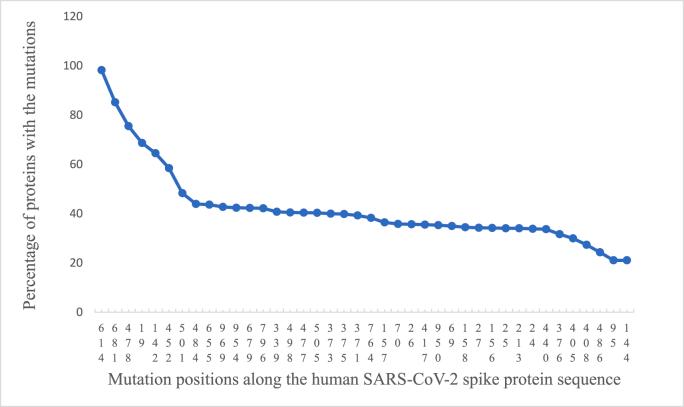
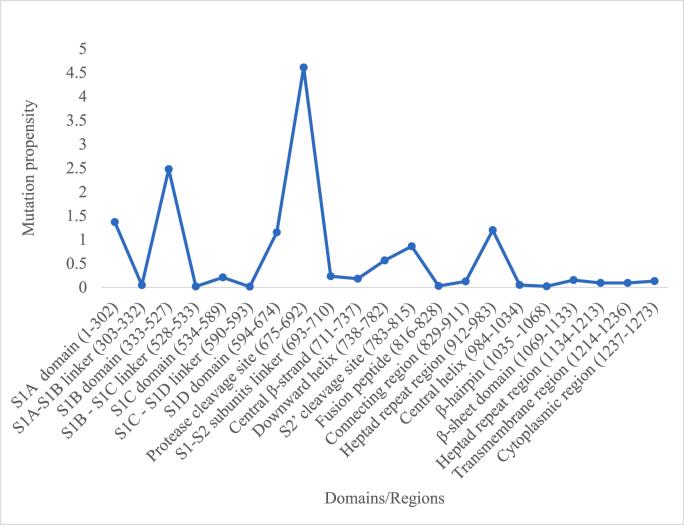
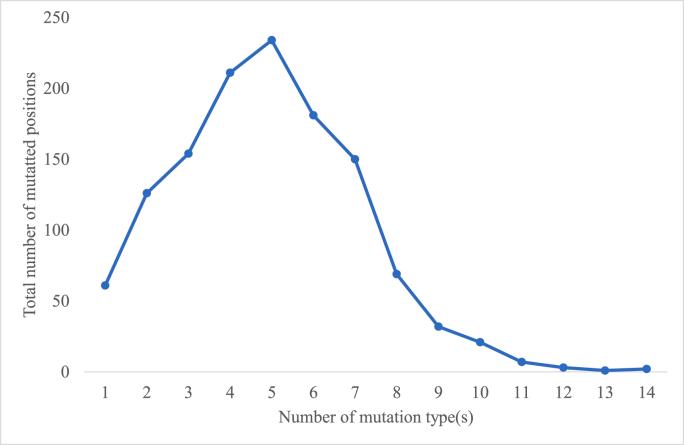
The severe acute respiratory syndrome coronavirus-2 (SARS-CoV-2), causative agent of the coronavirus disease-2019 (COVID-19) has resulted in several deaths and severe economic losses throughout the world. The spike protein in the virus binds to the human ACE-2 receptor in order to mediate virus-host interactions required for the viral transmission. Since first report of the SARS-CoV-2 sequence during December 2019 from patient infected with the virus in Wuhan, China, the virus has undergone rapid changes leading to mutations comprising substitutions, deletions and insertions in the sequence resulting in several variants of the virus that were more virulent and transmissible or less virulent but highly transmissible. The timely intervention with COVID-19 vaccines proved to be effective in controlling the number of infections. However, rapid mutations in the virus led to the lowering of vaccine efficacies being administered to people. In May 2023, the World Health Organization declared COVID-19 was not a public health emergency of international concern anymore. In order to take stock of mutations in the virus from early days to nearly end of COVID-19 pandemic, sequence analyses of the SARS-CoV-2 spike proteins available in the NCBI Virus database was carried out. The mutations and invariant residues in the SARS-CoV-2 spike protein sequences relative to the reference sequence were analysed. The location of the invariant residues and residues at interface of the protein chains in the spike protein trimer complex structure were examined. A total of 111,298 non-redundant SARS-CoV-2 spike protein sequences representing 2,345,585 spike proteins in the NCBI Virus database showed mutations at 1252 of the 1273 positions in the amino acid sequence. The mutations represented 6129 different mutation types in the sequences analysed. Besides, some sequences also contained insertion mutations. The SARS-CoV-2 spike protein sequences represented 1435 lineages. In addition, several spike protein sequences with mutations whose lineages were either 'not classified' or were 'unclassifiable' indicated the virus could still be evolving.
严重急性呼吸综合征冠状病毒2(SARS-CoV-2)是2019冠状病毒病(COVID-19)的病原体,已在全球导致多起死亡事件和严重的经济损失。病毒中的刺突蛋白与人类血管紧张素转换酶2(ACE-2)受体结合,以介导病毒传播所需的病毒-宿主相互作用。自2019年12月在中国武汉首次报告感染该病毒患者的SARS-CoV-2序列以来,该病毒经历了快速变化,导致序列中出现包括替换、缺失和插入在内的突变,产生了几种更具毒性和传染性或毒性较小但传播性很强的病毒变体。事实证明,及时接种COVID-19疫苗对于控制感染数量是有效的。然而,病毒的快速突变导致了接种疫苗的人群疫苗效力下降。2023年5月,世界卫生组织宣布COVID-19不再构成国际关注的突发公共卫生事件。为了梳理从COVID-19大流行早期到接近尾声时该病毒的突变情况,我们对NCBI病毒数据库中可用的SARS-CoV-2刺突蛋白进行了序列分析。分析了SARS-CoV-2刺突蛋白序列相对于参考序列的突变和不变残基。研究了刺突蛋白三聚体复合结构中不变残基的位置以及蛋白质链界面处的残基。NCBI病毒数据库中总共111298条非冗余SARS-CoV-2刺突蛋白序列代表2345585个刺突蛋白,其氨基酸序列的1273个位置中有1252个位置发生了突变。这些突变在分析的序列中代表6129种不同的突变类型。此外,一些序列还包含插入突变。SARS-CoV-2刺突蛋白序列代表1435个谱系。此外,一些有突变的刺突蛋白序列,其谱系要么“未分类”,要么“无法分类”,这表明该病毒可能仍在进化。
 Zotero 插件