
微小 RNA 作为神经肌肉疾病鉴别诊断的工具。
MicroRNAs as a Tool for Differential Diagnosis of Neuromuscular Disorders.
机构信息
Biotechnology Department, Faculty of Science, Cairo University, Giza, 12613, Egypt.
Biology Department, School of Sciences and Engineering, The American University in Cairo, Cairo, 11835, Egypt.
出版信息
Neuromolecular Med. 2023 Dec;25(4):603-615. doi: 10.1007/s12017-023-08763-0. Epub 2023 Oct 19.
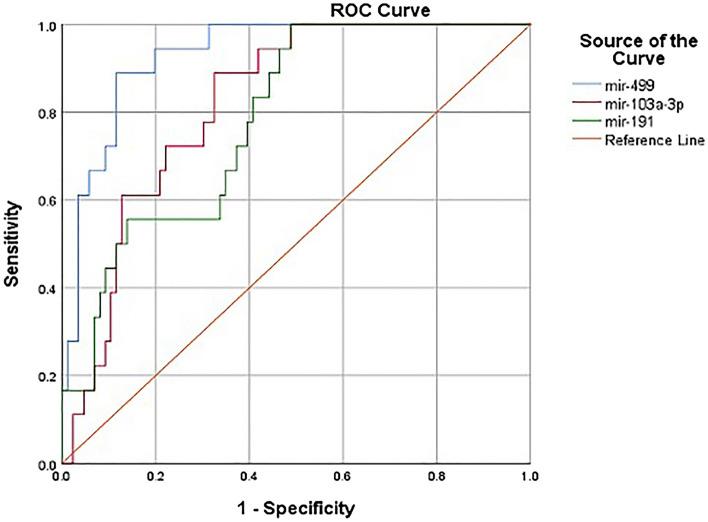
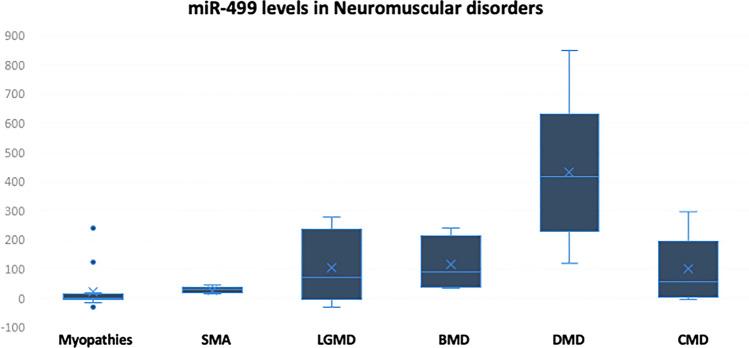
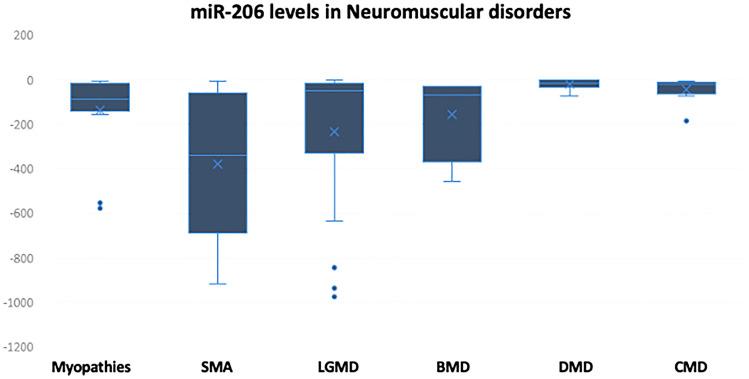
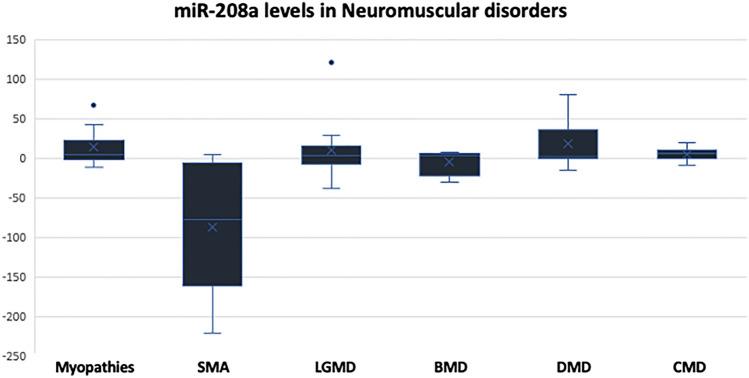
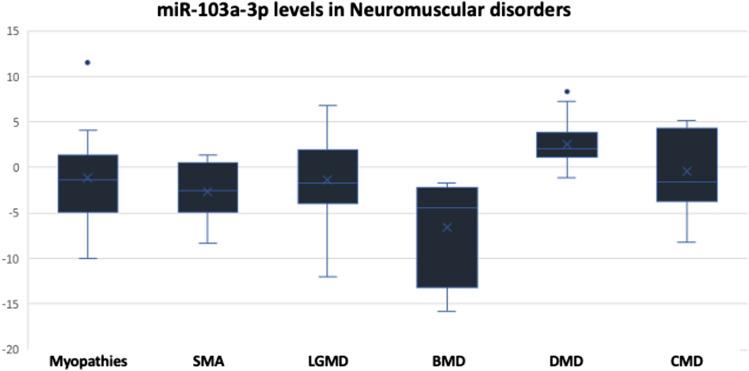
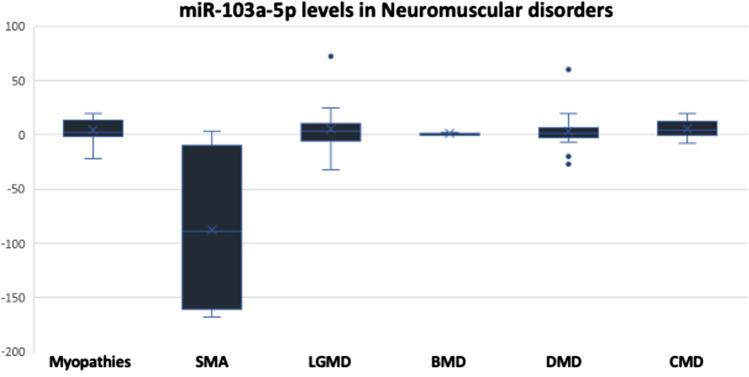
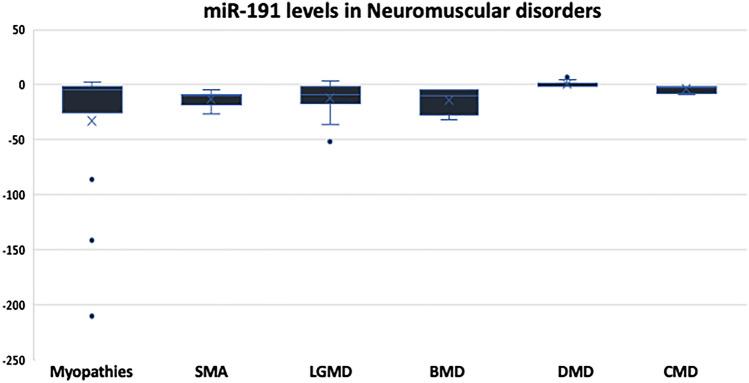
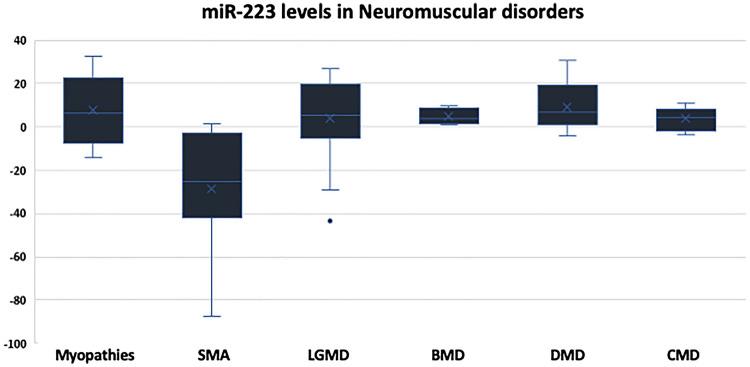
Neuromuscular disorders (NMD) are a class of progressive disorders that are characterized by wasting of the muscles. Some of the disorders like Duchenne muscular dystrophy (DMD), Becker muscular dystrophy (BMD), congenital muscular dystrophies (CMDs), limb-girdle muscular dystrophies (LGMD), and mild spinal muscular atrophy (SMA) type III share several presenting clinical features, and hence, diagnosis is usually a challenging task. In this study, the diagnostic potential of some species of microRNAs (miRNAs) that are known to play roles in normal and pathological contexts of myocytes (myomiRs) were evaluated to assess their potential in differential diagnosis of NMDs. In this study, seventy-four patients with different neuromuscular disorders along with thirty age-matched healthy control subjects were enrolled. Peripheral blood samples were collected from enrolled subjects followed by miRNA extraction and reverse transcription followed by quantification of the circulating levels of the studied miRNAs (miR-499, miR-206, miR-208a, miR-223, miR-191, miR-103a-3p, miR-103a-5p), by real-time PCR and statistical analysis. The data indicated that miR-499 level showed high circulating levels in DMD patients as well as in patients with other related disorders such as BMD. However, the levels of miR-499 were much higher in DMD patients and it can be used to diagnose DMD. In addition, miR-206 can selectively differentiate between DMD and all other disorders. The results also revealed that miR-208a and miR-223 were significantly dysregulated in SMA patients, and miR-103a-3p could distinguish DMD from BMD. The expression levels of some miRNA species can be utilized in the process of differential diagnosis of NMDs and can serve as a diagnostic biomarker, and such findings will pave the way towards generating targeted therapies.
神经肌肉疾病(NMD)是一类进行性疾病,其特征是肌肉萎缩。一些疾病,如杜氏肌营养不良症(DMD)、贝克肌营养不良症(BMD)、先天性肌营养不良症(CMD)、肢带型肌营养不良症(LGMD)和轻度脊髓性肌萎缩症(SMA)III 型,具有一些共同的临床表现,因此诊断通常是一项具有挑战性的任务。在这项研究中,评估了一些已知在肌细胞正常和病理情况下发挥作用的微小 RNA(miRNA)物种的诊断潜力,以评估它们在神经肌肉疾病的鉴别诊断中的潜在应用。在这项研究中,共纳入了 74 名患有不同神经肌肉疾病的患者和 30 名年龄匹配的健康对照者。从纳入的受试者中采集外周血样本,然后提取 miRNA 并进行逆转录,然后通过实时 PCR 定量研究的 miRNA(miR-499、miR-206、miR-208a、miR-223、miR-191、miR-103a-3p、miR-103a-5p)的循环水平,并进行统计分析。数据表明,miR-499 在 DMD 患者以及其他相关疾病(如 BMD)患者中显示出高水平的循环水平。然而,DMD 患者的 miR-499 水平要高得多,因此可以用于诊断 DMD。此外,miR-206 可以选择性地区分 DMD 和其他所有疾病。研究结果还表明,miR-208a 和 miR-223 在 SMA 患者中显著失调,miR-103a-3p 可以区分 DMD 和 BMD。一些 miRNA 物种的表达水平可用于神经肌肉疾病的鉴别诊断过程,并可作为诊断生物标志物,这些发现将为靶向治疗铺平道路。
 Zotero 插件