
细菌表面暴露的脂蛋白和分选酶介导的锚定在植物感染中的细胞表面蛋白。
Bacterial surface-exposed lipoproteins and sortase-mediated anchored cell surface proteins in plant infection.
机构信息
Departamento de Ingeniería Celular y Biocatálisis, Instituto de Biotecnología, Cuernavaca, México.
出版信息
Microbiologyopen. 2023 Oct;12(5):e1382. doi: 10.1002/mbo3.1382.
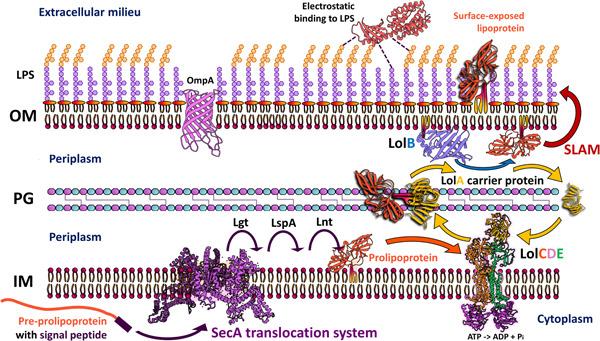
The bacterial cell envelope is involved in all stages of infection and the study of its components and structures is important to understand how bacteria interact with the extracellular milieu. Thanks to new techniques that focus on identifying bacterial surface proteins, we now better understand the specific components involved in host-pathogen interactions. In the fight against the deleterious effects of pathogenic bacteria, bacterial surface proteins (at the cell envelope) are important targets as they play crucial roles in the colonization and infection of host tissues. These surface proteins serve functions such as protection, secretion, biofilm formation, nutrient intake, metabolism, and virulence. Bacteria use different mechanisms to associate proteins to the cell surface via posttranslational modification, such as the addition of a lipid moiety to create lipoproteins and attachment to the peptidoglycan layer by sortases. In this review, we focus on these types of proteins (and provide examples of others) that are associated with the bacterial cell envelope by posttranslational modifications and their roles in plant infection.
细菌细胞包膜参与感染的各个阶段,研究其组成和结构对于了解细菌如何与细胞外环境相互作用至关重要。由于专注于识别细菌表面蛋白的新技术,我们现在更好地了解了宿主-病原体相互作用中涉及的特定成分。在对抗致病菌的有害影响方面,细菌表面蛋白(位于细胞包膜上)是重要的靶点,因为它们在定植和感染宿主组织中起着至关重要的作用。这些表面蛋白具有保护、分泌、生物膜形成、营养摄取、代谢和毒力等功能。细菌使用不同的机制通过翻译后修饰将蛋白质与细胞表面联系起来,例如添加脂质部分以形成脂蛋白,并通过分选酶附着在肽聚糖层上。在这篇综述中,我们重点介绍了这些通过翻译后修饰与细菌细胞包膜相关的蛋白质(并提供了其他蛋白质的例子),以及它们在植物感染中的作用。

 Zotero 插件