Department of Medical Disciplines, Faculty of Medicine and Pharmacy, University of Oradea, 410073 Oradea, Romania.
Faculty of Medicine and Pharmacy, University of Oradea, 410073 Oradea, Romania.
Medicina (Kaunas). 2023 Sep 25;59(10):1711. doi: 10.3390/medicina59101711.
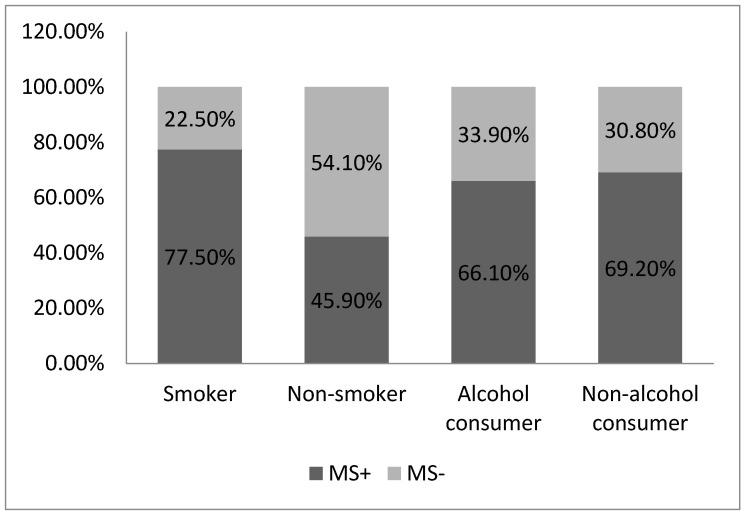
: This article highlights the relationship between metabolic syndrome and cardiovascular disease, providing a comprehensive overview of its risk factors and prevalence. Metabolic syndrome, characterized by a cluster of interconnected risk factors, significantly increases the risk of developing cardiovascular disease and type II diabetes. : This study, conducted over a one-year period, involved 117 patients aged between 30 and 79 years old. Various parameters were analyzed, such as gender, age, education level, provenance from urban or rural environment, smoking, alcohol consumption, dietary aspects, physical activity, and their contribution to the appearance of metabolic syndrome. Central adiposity and high blood pressure emerged as prominent elements of the condition. The findings underscore the importance of a healthy lifestyle in the prevention and management of metabolic syndrome. Encouraging regular physical activity, maintaining a balanced diet, rich in fresh vegetables and fruits, and avoiding harmful behaviors, such as smoking or alcohol consumption, are essential in reducing the risk of metabolic syndrome and its associated cardiovascular complications. : The study highlights the need for public health initiatives, as well as individualized preventive strategies to combat the rising prevalence of metabolic syndrome. Through promoting awareness of its risk factors and implementing effective interventions, healthcare professionals can contribute to better cardiovascular health worldwide. Further research in this area will continue to enhance our understanding of metabolic syndrome and refine preventive and therapeutic approaches for its management.
: 本文强调了代谢综合征与心血管疾病之间的关系,全面概述了其风险因素和流行情况。代谢综合征以一系列相互关联的风险因素为特征,显著增加了患心血管疾病和 2 型糖尿病的风险。 : 这项为期一年的研究涉及了 117 名年龄在 30 岁至 79 岁之间的患者。分析了各种参数,如性别、年龄、教育水平、城乡来源、吸烟、饮酒、饮食方面、身体活动,以及它们对代谢综合征出现的影响。中心性肥胖和高血压是该病症的突出要素。 : 这些发现强调了健康生活方式在预防和管理代谢综合征中的重要性。鼓励定期进行身体活动、保持富含新鲜蔬菜和水果的均衡饮食,避免吸烟或饮酒等有害行为,对于降低代谢综合征及其相关心血管并发症的风险至关重要。 : 该研究强调了公共卫生倡议以及个体化预防策略的必要性,以应对代谢综合征日益增加的流行趋势。通过提高对其风险因素的认识并实施有效的干预措施,医疗保健专业人员可以为全球范围内的心血管健康做出贡献。在该领域的进一步研究将继续增强我们对代谢综合征的理解,并完善其管理的预防和治疗方法。


 Zotero 插件