
遗传密码通过分裂和融合这两种基本细胞事件进行组装。
The Genetic Code Assembles via Division and Fusion, Basic Cellular Events.
作者信息
Yarus Michael
机构信息
Department of Molecular, Cellular and Developmental Biology, University of Colorado, Boulder, CO 80309-0347, USA.
出版信息
Life (Basel). 2023 Oct 17;13(10):2069. doi: 10.3390/life13102069.
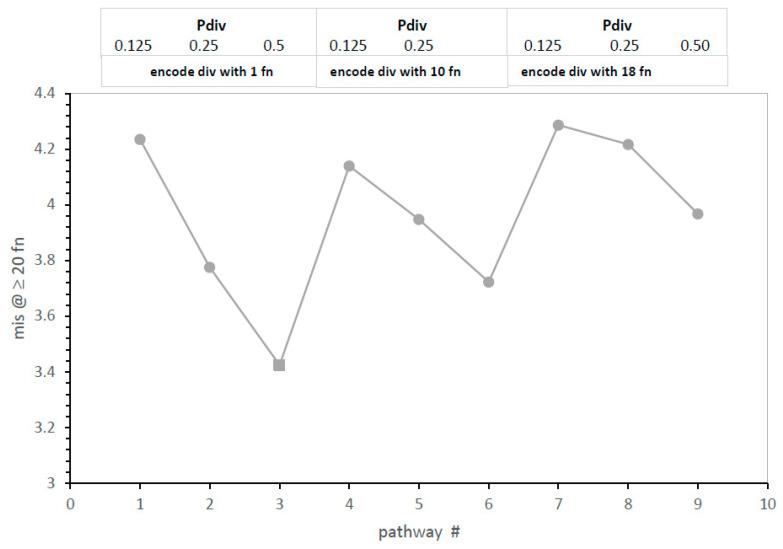
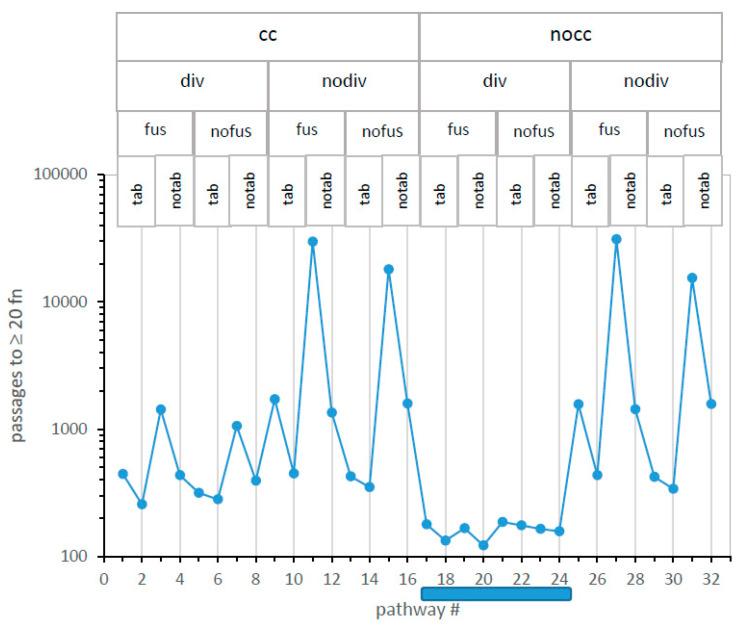
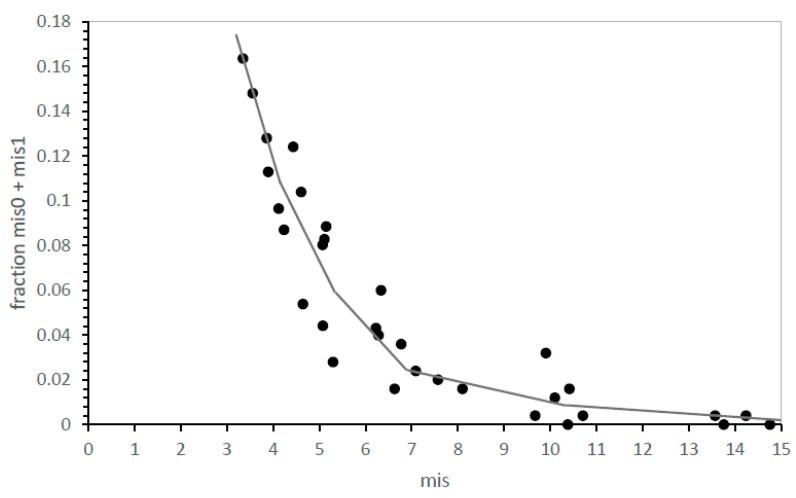
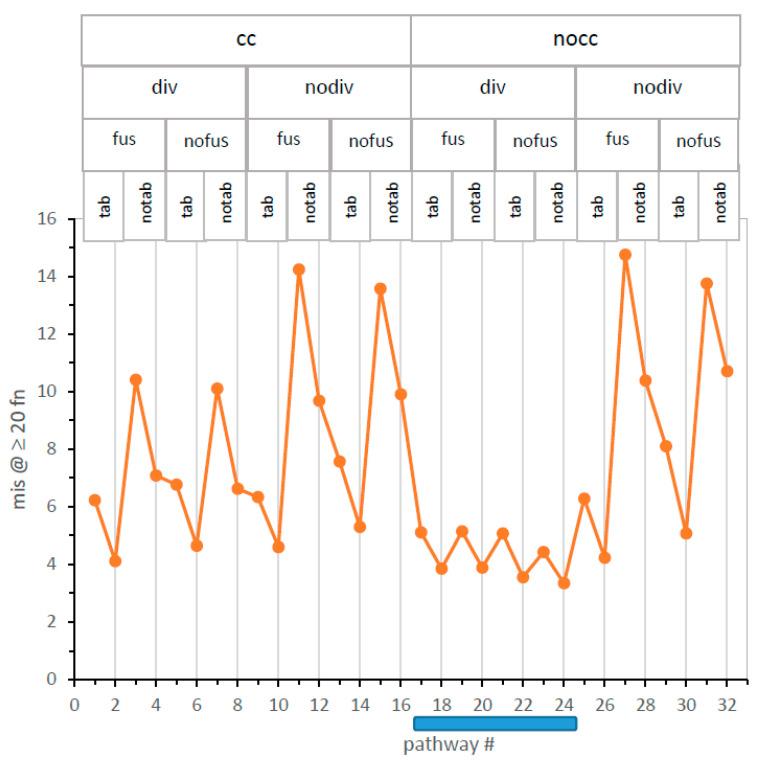
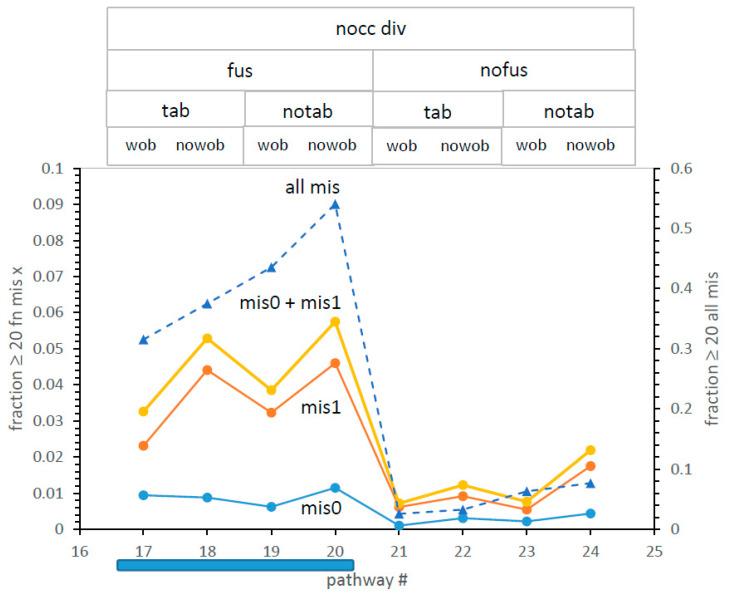
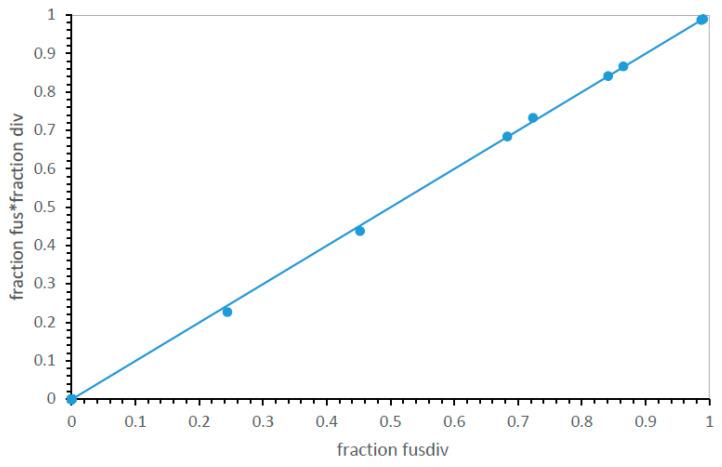
Standard Genetic Code (SGC) evolution is quantitatively modeled in up to 2000 independent coding 'environments'. Environments host multiple codes that may fuse or divide, with division yielding identical descendants. Code division may be selected-sophisticated gene products could be required for an orderly separation that preserves the coding. Several unforeseen results emerge: more rapid evolution requires unselective code division rather than its selective form. Combining selective and unselective code division, with/without code fusion, with/without independent environmental coding tables, and with/without wobble defines 2 = 32 possible pathways for SGC evolution. These 32 possible histories are compared, specifically, for evolutionary speed and code accuracy. Pathways differ greatly, for example, by ≈300-fold in time to evolve SGC-like codes. Eight of thirty-two pathways employing code division evolve quickly. Four of these eight that combine fusion and division also unite speed and accuracy. The two most precise, swiftest paths; thus the most likely routes to the SGC are similar, differing only in fusion with independent environmental codes. Code division instead of fusion with unrelated codes implies that exterior codes can be dispensable. Instead, a single ancestral code that divides and fuses can initiate fully encoded peptide biosynthesis. Division and fusion create a 'crescendo of competent coding', facilitating the search for the SGC and also assisting the advent of otherwise uniformly disfavored wobble coding. Code fusion can unite multiple codon assignment mechanisms. However, via code division and fusion, an SGC can emerge from a single primary origin via familiar cellular events.
标准遗传密码(SGC)的进化在多达2000个独立的编码“环境”中进行了定量建模。这些环境包含多个可能融合或分裂的密码,分裂会产生相同的后代。密码分裂可能是经过选择的——有序分离可能需要复杂的基因产物来保留编码。出现了几个意想不到的结果:更快的进化需要非选择性的密码分裂而不是其选择性形式。将选择性和非选择性密码分裂与/不与密码融合、与/不与独立的环境编码表以及与/不与摆动相结合,定义了SGC进化的2 = 32种可能途径。具体比较了这32种可能的历史,以了解进化速度和密码准确性。途径差异很大,例如,进化出类似SGC密码的时间相差约300倍。采用密码分裂的32种途径中有8种进化迅速。这8种途径中有4种结合了融合和分裂,同时兼具速度和准确性。两条最精确、最迅速的路径;因此,通向SGC的最可能途径相似,只是在与独立环境密码融合方面有所不同。密码分裂而非与无关密码融合意味着外部密码可能是可有可无的。相反,一个分裂和融合的单一祖先密码可以启动完全编码的肽生物合成。分裂和融合创造了一个“有能力编码的渐强”,有助于寻找SGC,也有助于原本普遍不受欢迎的摆动编码的出现。密码融合可以将多种密码子分配机制结合起来。然而,通过密码分裂和融合,一个SGC可以通过熟悉的细胞事件从单一的主要起源中出现。




 Zotero 插件