
Larreat(),一种可能对链脲佐菌素诱导的大鼠高血糖引发的氧化损伤具有肾保护作用的物质。
Larreat (), a Potential Nephroprotector against Oxidative Damage Provoked by STZ-Induced Hyperglycemia in Rats.
作者信息
Santiago-Balmaseda Eira, Segura-Cobos David, Garín-Aguilar María Eugenia, San Miguel-Chávez Rubén, Cristóbal-Luna José Melesio, Madrigal-Santillán Eduardo, Gutierrez-Rebolledo Gabriel Alfonso, Chamorro-Cevallos Germán Alberto, Pérez-Pastén-Borja Ricardo
机构信息
Laboratorio de Toxicología Molecular, Escuela Nacional de Ciencias Biologicas, Campus Unidad Profesional Adolfo Lopez Mateos, Instituto Politecnico Nacional, Ave. Wilfrido Massieu w/n and Closed Street Manuel Stampa, Col. Industrial Vallejo, Mexico City 07700, Mexico.
Laboratorio de Amibas Anfizoicas, Facultad de Estudios Superiores Iztacala, Universidad Nacional Autonoma de México. Ave. Barrios 1, Col. Reyes Iztacala, Tlalnepantla de Baz 54090, Mexico.
出版信息
Plants (Basel). 2023 Oct 14;12(20):3572. doi: 10.3390/plants12203572.
BACKGROUND
, known in Mexico as the "tree of the little hands", flower's infusion is used to treat kidney failure associated with diseases such as diabetes. The aim of this work is to evaluate the antioxidant effect of the methanolic extract of its flowers on oxidative damage in kidneys caused by streptozotocin in rats.
METHODS
The extract phytochemical profile was performed with HPLC. Antioxidant potential in vitro was determined with DPPH and total phenolic tests; antioxidant evaluation in vivo was performed in diabetic rats administered daily via the intragastric route (100 and 200 mg/kg) for 6 weeks; serum glucose/creatinine, food/water consumption, and urinary volume were measured. Relative weight, protein/DNA ratios and oxidative stress were measured in renal tissue.
RESULTS
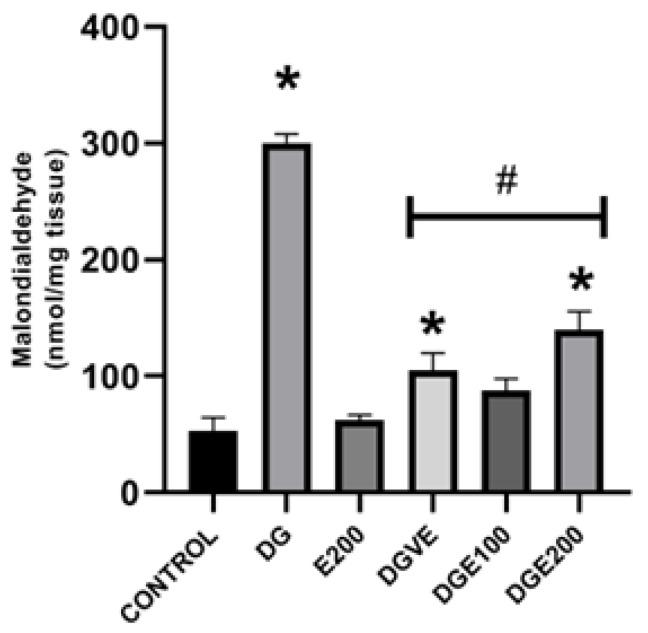
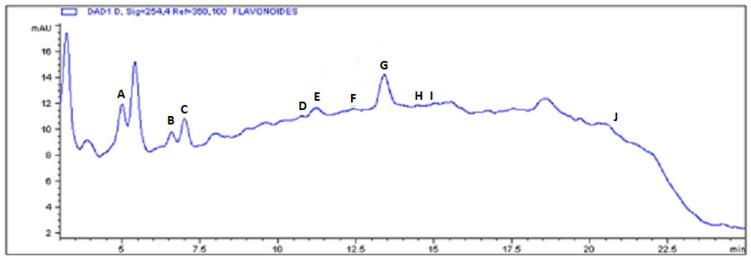
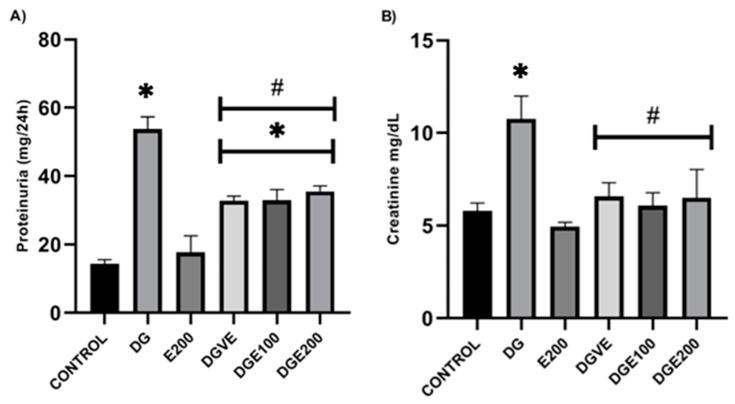
The extract showed 20.53% of total phenolic content and IC of 18.05 µg/mL in DPPH, and this was associated with ferulic acid, phloretin and α-amyrin. Both doses showed a moderate decrease in the protein/DNA ratio in renal tissue, and the same behavior was observed for total urinary protein loss and serum creatinine, while the best antioxidant effect was exerted by a lower dose, which increased catalase activity and decreased lipid peroxidation in the kidneys.
CONCLUSIONS
Results demonstrated that methanolic flower's extract improves renal function through antioxidant mechanisms during experimental diabetes.
背景
在墨西哥被称为“小手树”,其花的浸剂用于治疗与糖尿病等疾病相关的肾衰竭。本研究的目的是评估其花的甲醇提取物对链脲佐菌素诱导的大鼠肾脏氧化损伤的抗氧化作用。
方法
采用高效液相色谱法分析提取物的植物化学特征。通过DPPH和总酚含量测定体外抗氧化潜力;对糖尿病大鼠进行体内抗氧化评估,通过灌胃途径每日给药(100和200mg/kg),持续6周;测量血清葡萄糖/肌酐、食物/水消耗量和尿量。测定肾组织的相对重量、蛋白质/DNA比值和氧化应激。
结果
提取物的总酚含量为20.53%,DPPH法测得的IC为18.05μg/mL,这与阿魏酸、根皮素和α-香树脂醇有关。两种剂量均使肾组织中蛋白质/DNA比值适度降低,总尿蛋白丢失和血清肌酐也呈现相同变化,而较低剂量发挥了最佳抗氧化作用,可提高肾脏过氧化氢酶活性并降低脂质过氧化。
结论
结果表明,甲醇花提取物在实验性糖尿病期间通过抗氧化机制改善肾功能。




 Zotero 插件