
基于癌症分级的肝细胞癌预后模型
Prognostic model of hepatocellular carcinoma based on cancer grade.
作者信息
Zhang Guo-Xin, Ding Xiao-Sheng, Wang You-Li
机构信息
Department of General Surgery, Aviation General Hospital, Beijing 100010, China.
Department of Oncology, Beijing Tiantan Hospital, Capital Medical University, Beijing 100070, China.
出版信息
World J Clin Cases. 2023 Sep 26;11(27):6383-6397. doi: 10.12998/wjcc.v11.i27.6383.
BACKGROUND
Hepatocellular carcinoma (HCC) is the most common type of primary liver cancer. With highly invasive biological characteristics and a lack of obvious clinical manifestations, HCC usually has a poor prognosis and ranks fourth in cancer mortality. The aetiology and exact molecular mechanism of primary HCC are still unclear.
AIM
To select the characteristic genes that are significantly associated with the prognosis of HCC patients and construct a prognosis model of this malignancy.
METHODS
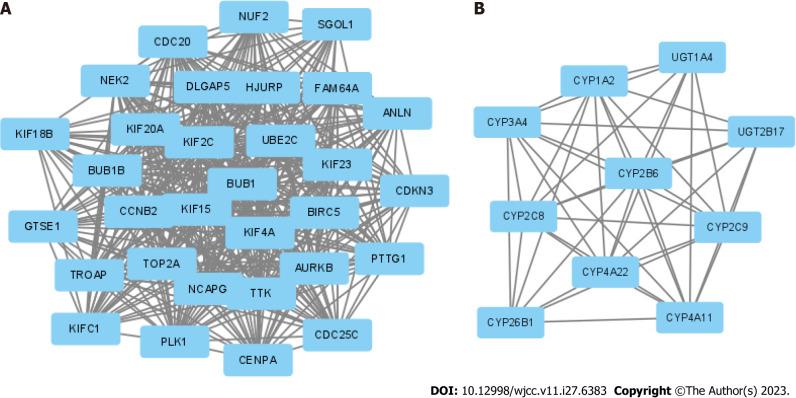
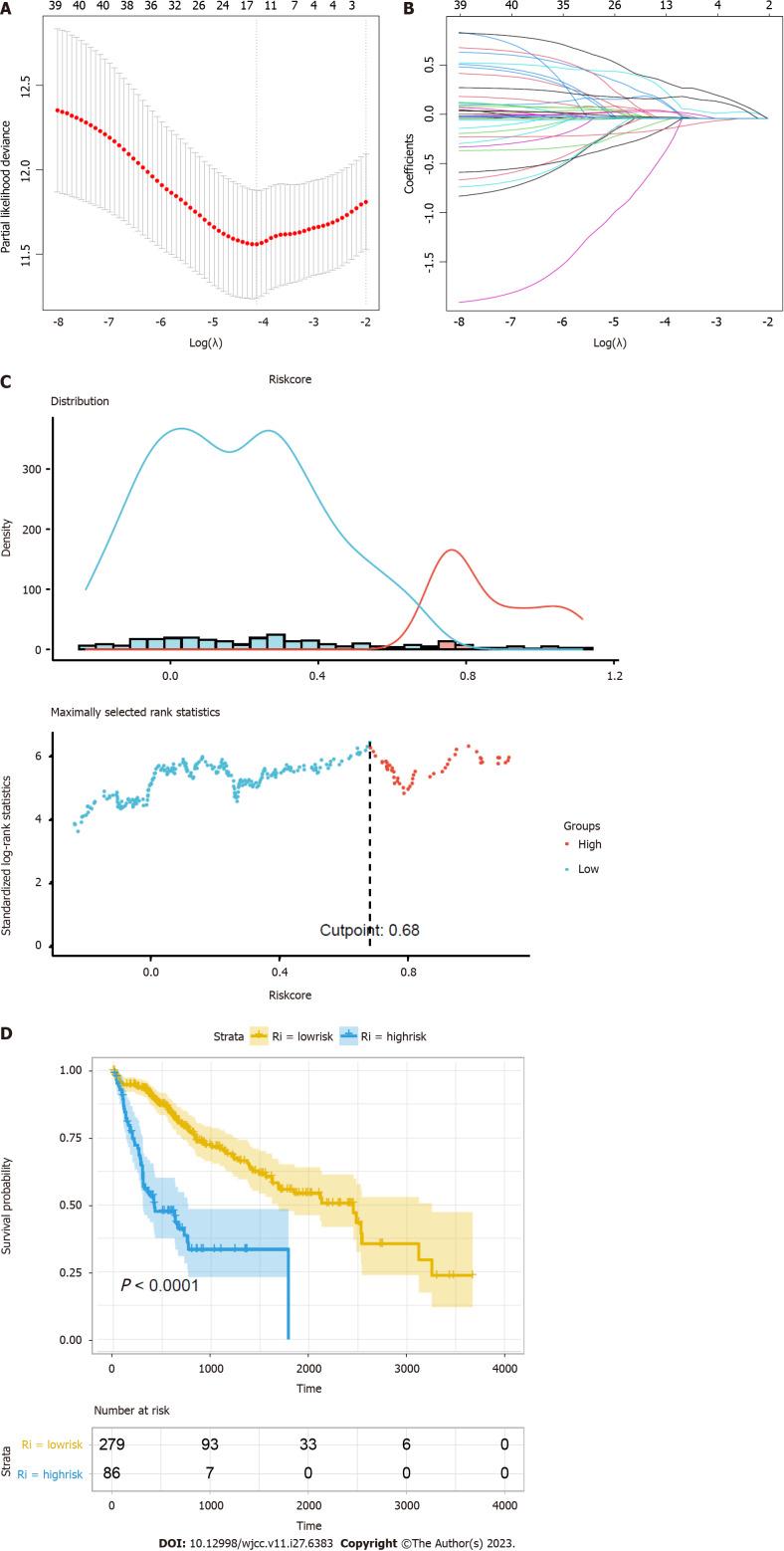
By comparing the gene expression levels of patients with different cancer grades of HCC, we screened out differentially expressed genes associated with tumour grade. By protein-protein interaction (PPI) network analysis, we obtained the top 2 PPI networks and hub genes from these differentially expressed genes. By using least absolute shrinkage and selection operator Cox regression, 13 prognostic genes were selected for feature extraction, and a prognostic risk model of HCC was established.
RESULTS
The model had significant prognostic ability in HCC. We also analysed the biological functions of these prognostic genes.
CONCLUSION
By comparing the gene profiles of patients with different stages of HCC, We have constructed a prognosis model consisting of 13 genes that have important prognostic value. This model has good application value and can be explained clinically.
背景
肝细胞癌(HCC)是原发性肝癌最常见的类型。由于具有高度侵袭性的生物学特性且缺乏明显的临床表现,HCC通常预后较差,在癌症死亡率中排名第四。原发性肝癌的病因及确切分子机制仍不清楚。
目的
筛选出与HCC患者预后显著相关的特征基因,并构建该恶性肿瘤的预后模型。
方法
通过比较不同癌症分级的HCC患者的基因表达水平,筛选出与肿瘤分级相关的差异表达基因。通过蛋白质-蛋白质相互作用(PPI)网络分析,从这些差异表达基因中获得前2个PPI网络和枢纽基因。使用最小绝对收缩和选择算子Cox回归,选择13个预后基因进行特征提取,建立HCC的预后风险模型。
结果
该模型在HCC中具有显著的预后能力。我们还分析了这些预后基因的生物学功能。
结论
通过比较不同阶段HCC患者的基因谱,我们构建了一个由13个具有重要预后价值的基因组成的预后模型。该模型具有良好的应用价值,且可从临床上进行解释。


 Zotero 插件