
具有抗肿瘤生物学效应的金属基纳米材料在增强癌症治疗方面的最新进展。
Recent progress of metal-based nanomaterials with anti-tumor biological effects for enhanced cancer therapy.
作者信息
Lei Huali, Pei Zifan, Jiang Chenyu, Cheng Liang
机构信息
Institute of Functional Nano & Soft Materials (FUNSOM), Jiangsu Key Laboratory for Carbon-Based Functional Materials and Devices Soochow University Suzhou China.
School of Optical and Electronic Information Suzhou City University Suzhou China.
出版信息
Exploration (Beijing). 2023 Jun 30;3(5):20220001. doi: 10.1002/EXP.20220001. eCollection 2023 Oct.
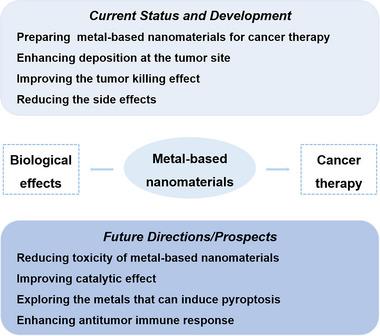
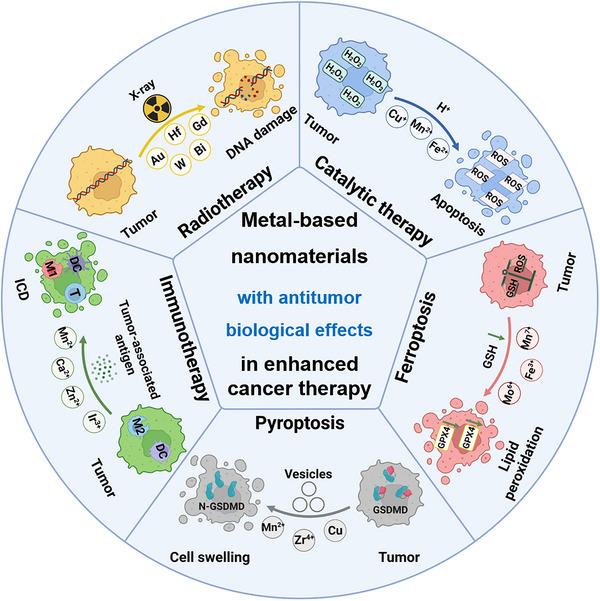
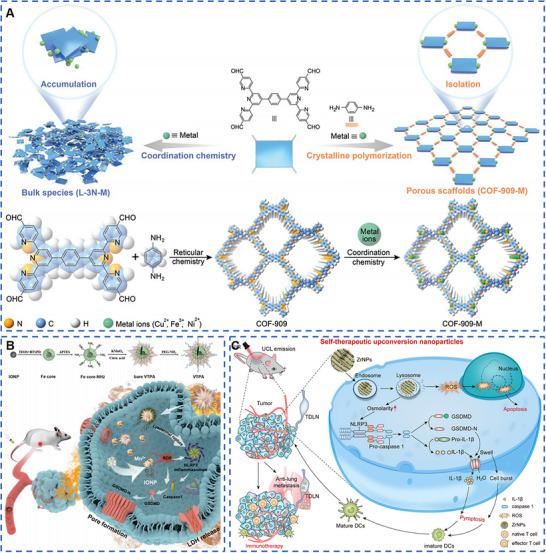
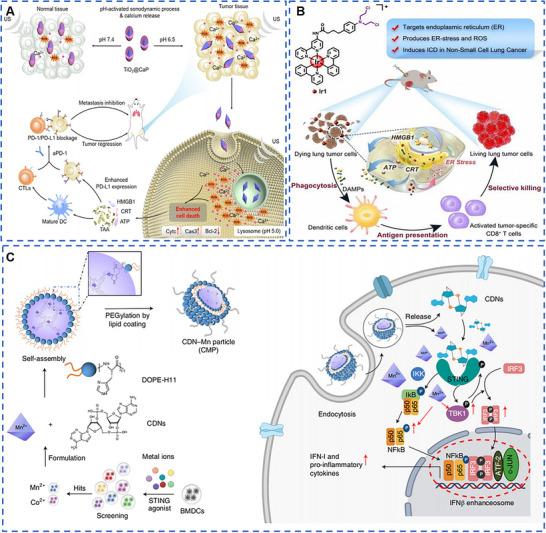
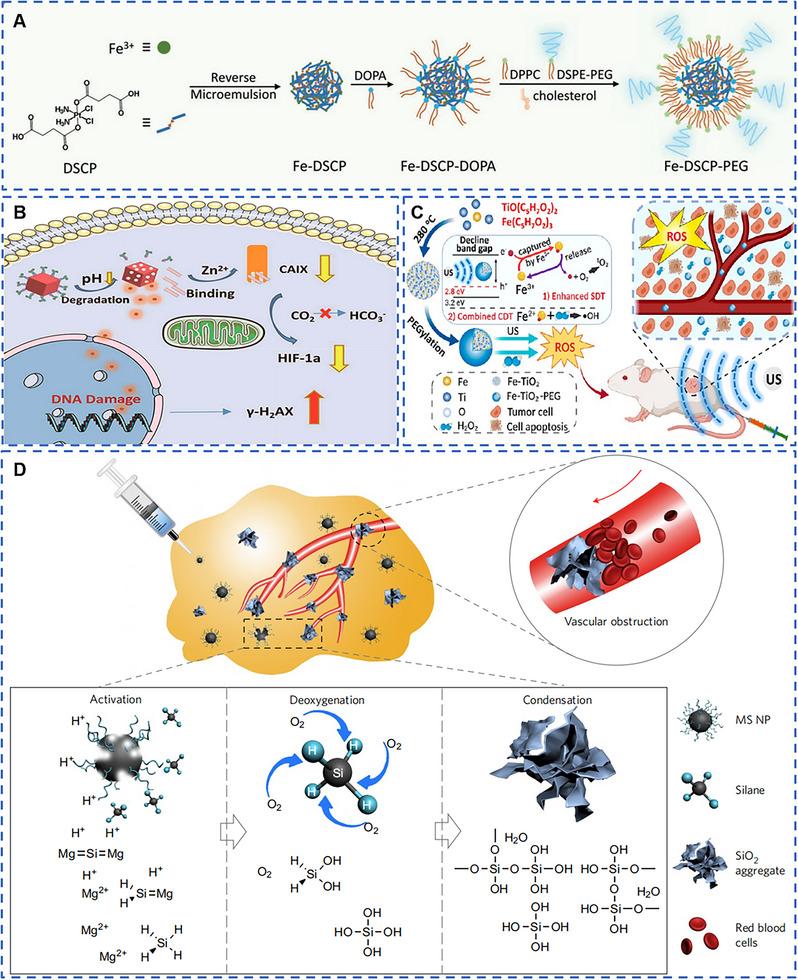
Metal-based nanomaterials have attracted broad attention recently due to their unique biological physical and chemical properties after entering tumor cells, namely biological effects. In particular, the abilities of Ca to modulate T cell receptors activation, K to regulate stem cell differentiation, Mn to activate the STING pathway, and Fe to induce tumor ferroptosis and enhance catalytic therapy, make the metal ions and metal-based nanomaterials play crucial roles in the cancer treatments. Therefore, due to the superior advantages of metal-based nanomaterials and the characteristics of the tumor microenvironment, we will summarize the recent progress of the anti-tumor biological effects of metal-based nanomaterials. Based on the different effects of metal-based nanomaterials on tumor cells, this review mainly focuses on the following five aspects: (1) metal-enhanced radiotherapy sensitization, (2) metal-enhanced catalytic therapy, (3) metal-enhanced ferroptosis, (4) metal-enhanced pyroptosis, and (5) metal-enhanced immunotherapy. At the same time, the shortcomings of the biological effects of metal-based nanomaterials on tumor therapy are also discussed, and the future research directions have been prospected. The highlights of promising biosafety, potent efficacy on biological effects for tumor therapy, and the in-depth various biological effects mechanism studies of metal-based nanomaterials provide novel ideas for the future biological application of the nanomaterials.
基于金属的纳米材料近年来因其进入肿瘤细胞后独特的生物物理和化学性质,即生物学效应,而受到广泛关注。特别是,钙调节T细胞受体激活的能力、钾调节干细胞分化的能力、锰激活STING通路的能力以及铁诱导肿瘤铁死亡并增强催化治疗的能力,使得金属离子和基于金属的纳米材料在癌症治疗中发挥关键作用。因此,鉴于基于金属的纳米材料的卓越优势以及肿瘤微环境的特点,我们将总结基于金属的纳米材料抗肿瘤生物学效应的最新进展。基于基于金属的纳米材料对肿瘤细胞的不同作用,本综述主要聚焦于以下五个方面:(1)金属增强放射治疗增敏作用,(2)金属增强催化治疗,(3)金属增强铁死亡,(4)金属增强焦亡,以及(5)金属增强免疫治疗。同时,还讨论了基于金属的纳米材料对肿瘤治疗生物学效应的不足之处,并对未来的研究方向进行了展望。基于金属的纳米材料具有良好的生物安全性、对肿瘤治疗生物学效应的强大功效以及深入的各种生物学效应机制研究,这些亮点为纳米材料未来的生物学应用提供了新思路。

 Zotero 插件