
生理视角下的MYC功能与调控
MYC function and regulation in physiological perspective.
作者信息
Jha Rajiv Kumar, Kouzine Fedor, Levens David
机构信息
Gene Regulation Section, Laboratory of Pathology, Center for Cancer Research, National Cancer Institute (NCI), Bethesda, MD, United States.
出版信息
Front Cell Dev Biol. 2023 Oct 24;11:1268275. doi: 10.3389/fcell.2023.1268275. eCollection 2023.
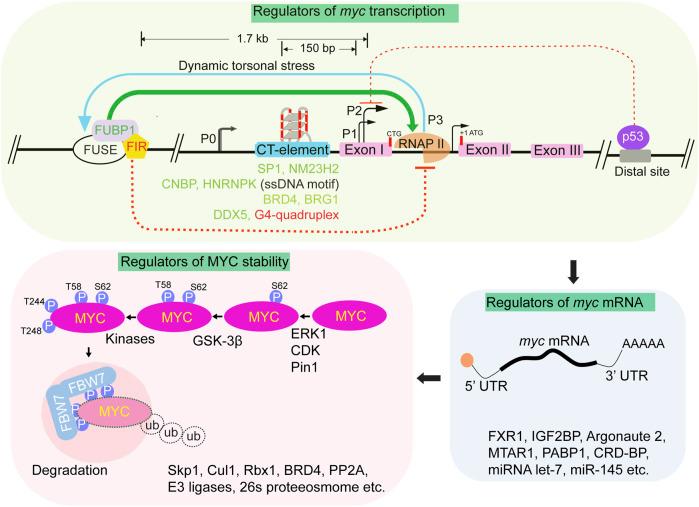
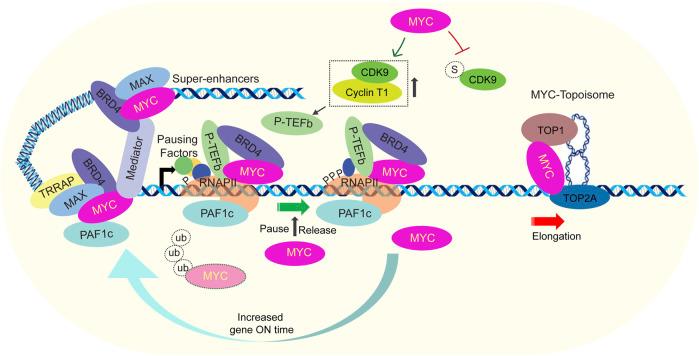
MYC, a key member of the Myc-proto-oncogene family, is a universal transcription amplifier that regulates almost every physiological process in a cell including cell cycle, proliferation, metabolism, differentiation, and apoptosis. MYC interacts with several cofactors, chromatin modifiers, and regulators to direct gene expression. MYC levels are tightly regulated, and deregulation of MYC has been associated with numerous diseases including cancer. Understanding the comprehensive biology of MYC under physiological conditions is an utmost necessity to demark biological functions of MYC from its pathological functions. Here we review the recent advances in biological mechanisms, functions, and regulation of MYC. We also emphasize the role of MYC as a global transcription amplifier.
MYC是Myc原癌基因家族的关键成员,是一种普遍的转录增强因子,可调节细胞内几乎所有的生理过程,包括细胞周期、增殖、代谢、分化和凋亡。MYC与多种辅因子、染色质修饰因子和调节因子相互作用以指导基因表达。MYC的水平受到严格调控,MYC失调与包括癌症在内的多种疾病相关。了解生理条件下MYC的全面生物学特性对于区分MYC的生物学功能与其病理功能至关重要。在此,我们综述了MYC在生物学机制、功能和调控方面的最新进展。我们还强调了MYC作为全局转录增强因子的作用。

 Zotero 插件