
潜在的解释钠-葡萄糖共转运蛋白 2 抑制剂心脏肾脏获益的作用机制。
Potential Underlying Mechanisms Explaining the Cardiorenal Benefits of Sodium-Glucose Cotransporter 2 Inhibitors.
机构信息
Division of Cardiac Surgery, Keenan Research Centre for Biomedical Science, Li Ka Shing Knowledge Institute of St. Michael's Hospital, Toronto, ON, Canada.
Department of Surgery, University of Toronto, Toronto, ON, Canada.
出版信息
Adv Ther. 2024 Jan;41(1):92-112. doi: 10.1007/s12325-023-02652-5. Epub 2023 Nov 9.
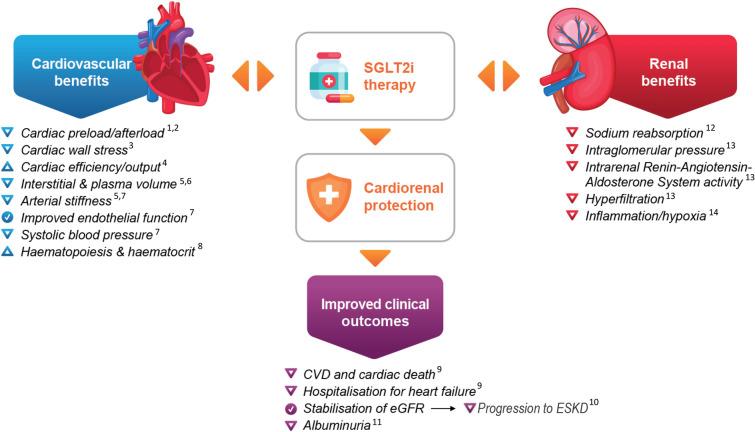
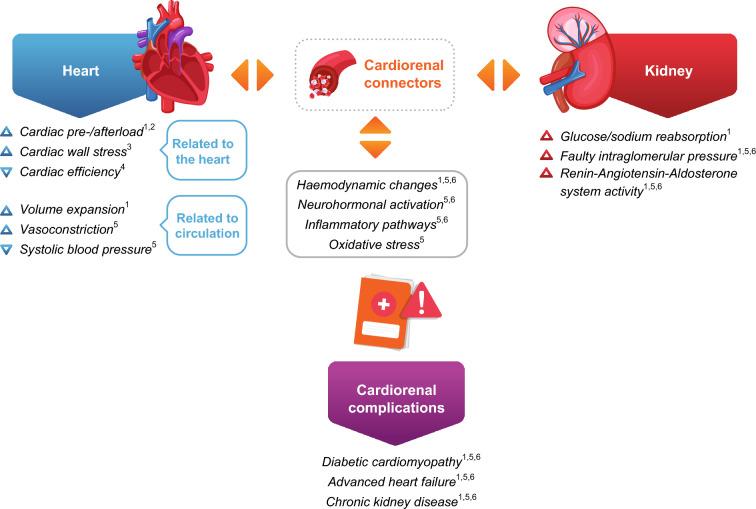
There is a bidirectional pathophysiological interaction between the heart and the kidneys, and prolonged physiological stress to the heart and/or the kidneys can cause adverse cardiorenal complications, including but not limited to subclinical cardiomyopathy, heart failure and chronic kidney disease. Whilst more common in individuals with Type 2 diabetes, cardiorenal complications also occur in the absence of diabetes. Sodium-glucose cotransporter 2 inhibitors (SGLT2i) were initially approved to reduce hyperglycaemia in patients with Type 2 diabetes. Recently, these agents have been shown to significantly improve cardiovascular and renal outcomes in patients with and without Type 2 diabetes, demonstrating a robust reduction in hospitalisation for heart failure and reduced risk of progression of chronic kidney disease, thus gaining approval for use in treatment of heart failure and chronic kidney disease. Numerous potential mechanisms have been proposed to explain the cardiorenal effects of SGLT2i. This review provides a simplified summary of key potential cardiac and renal mechanisms underlying the cardiorenal benefits of SGT2i and explains these mechanisms in the clinical context. Key mechanisms related to the clinical effects of SGLT2i on the heart and kidneys explained in this publication include their impact on (1) tissue oxygen delivery, hypoxia and resultant ischaemic injury, (2) vascular health and function, (3) substrate utilisation and metabolic health and (4) cardiac remodelling. Knowing the mechanisms responsible for SGLT2i-imparted cardiorenal benefits in the clinical outcomes will help healthcare practitioners to identify more patients that can benefit from the use of SGLT2i.
心脏和肾脏之间存在双向病理生理相互作用,心脏和/或肾脏的长期生理压力可导致不良的心肾并发症,包括但不限于亚临床心肌病、心力衰竭和慢性肾脏病。虽然 2 型糖尿病患者更常见,但即使没有糖尿病,也会发生心肾并发症。钠-葡萄糖共转运蛋白 2 抑制剂(SGLT2i)最初被批准用于降低 2 型糖尿病患者的高血糖。最近,这些药物已被证明可显著改善伴或不伴 2 型糖尿病患者的心血管和肾脏结局,显著降低心力衰竭住院率和慢性肾脏病进展风险,从而获得心力衰竭和慢性肾脏病治疗的批准。已经提出了许多潜在的机制来解释 SGLT2i 的心脏和肾脏作用。这篇综述提供了 SGLT2i 的心脏和肾脏益处的关键潜在心脏和肾脏机制的简化总结,并在临床背景下解释了这些机制。与 SGLT2i 对心脏和肾脏的临床效果相关的关键机制包括:(1) 组织氧输送、缺氧和由此产生的缺血性损伤;(2) 血管健康和功能;(3) 底物利用和代谢健康;(4) 心脏重构。了解 SGLT2i 带来的心脏和肾脏益处的机制有助于医疗保健从业者识别更多可从 SGLT2i 获益的患者。
 Zotero 插件