
端粒作为先天免疫和炎症的热点。
Telomeres as hotspots for innate immunity and inflammation.
机构信息
Department of Biochemistry and Molecular Genetics, University of Colorado School of Medicine, 12801 E. 17th Ave, Aurora, CO 80045, USA; The Salk Institute for Biological Studies, 10010 North Torrey Pines Rd, La Jolla, CA 92037, USA.
The Salk Institute for Biological Studies, 10010 North Torrey Pines Rd, La Jolla, CA 92037, USA.
出版信息
DNA Repair (Amst). 2024 Jan;133:103591. doi: 10.1016/j.dnarep.2023.103591. Epub 2023 Nov 5.
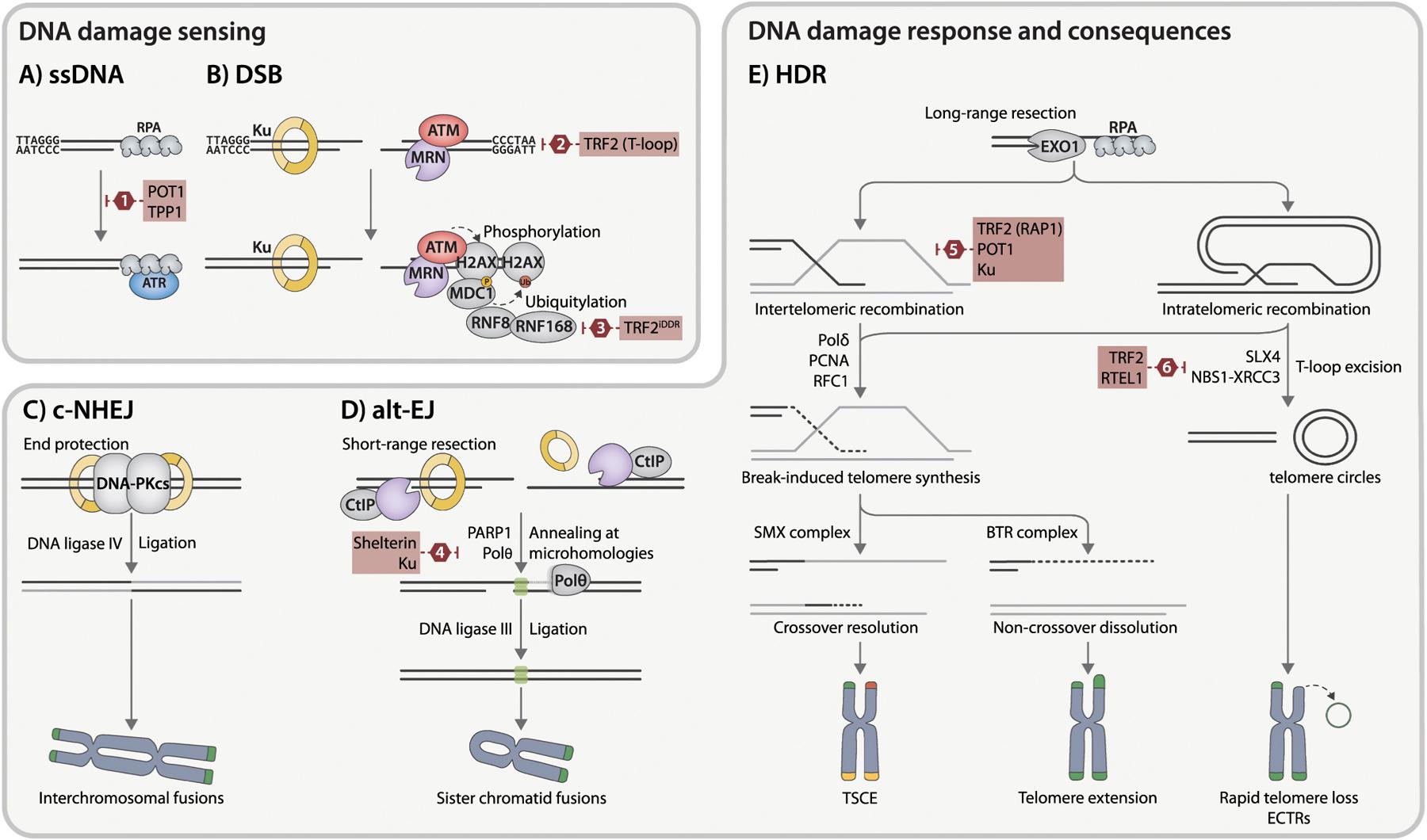
Aging is marked by the gradual accumulation of deleterious changes that disrupt organ function, creating an altered physiological state that is permissive for the onset of prevalent human diseases. While the exact mechanisms governing aging remain a subject of ongoing research, there are several cellular and molecular hallmarks that contribute to this biological process. This review focuses on two factors, namely telomere dysfunction and inflammation, which have emerged as crucial contributors to the aging process. We aim to discuss the mechanistic connections between these two distinct hallmarks and provide compelling evidence highlighting the loss of telomere protection as a driver of pro-inflammatory states associated with aging. By reevaluating the interplay between telomeres, innate immunity, and inflammation, we present novel perspectives on the etiology of aging and its associated diseases.
衰老是由有害变化的逐渐积累引起的,这些变化破坏了器官功能,导致生理状态发生改变,从而容易患上常见的人类疾病。虽然控制衰老的确切机制仍然是正在进行的研究的主题,但有几个细胞和分子特征有助于这一生物过程。这篇综述集中讨论了两个因素,即端粒功能障碍和炎症,它们已成为衰老过程的关键因素。我们旨在讨论这两个不同特征之间的机制联系,并提供有力的证据,强调端粒保护的丧失是与衰老相关的促炎状态的驱动因素。通过重新评估端粒、先天免疫和炎症之间的相互作用,我们提出了衰老及其相关疾病病因的新观点。

 Zotero 插件